Australia Travel Checklist: ETA, Packing, Money and Internet
A good Australia trip starts with the details that are hard to fix at the airport. Work through entry permission, insurance, mobile data, money and luggage in this order, then book the experiences that shape your itinerary.
This article contains affiliate links. If you buy through them, we may earn a commission at no extra cost to you. Our first-hand views are our own.
Australia travel preparation timeline
| When | What to finish | Why now |
|---|---|---|
| As soon as dates are likely | Passport, entry-permission research, flights and cancellable accommodation | Names and passport details must agree across bookings |
| Four to eight weeks before | Insurance, major tours, domestic flights and mobile-data choice | Popular dates and refundable options can narrow |
| One week before | Packing, card notices, offline documents and weather check | You can still replace missing items |
| Before boarding | Arrival address, declaration notes, charged devices and backup payment | These are useful during the flight and at the border |
Check your passport and entry permission first
Australia does not use one entry document for every passport. Your nationality, passport, reason for travel and length of stay determine whether you need an ETA, eVisitor or another visa. Our Australia ETA and visa guide starts with the government visa finder rather than assuming every reader is eligible for the mobile app.
Use the guide to identify the correct application route before scanning a passport or paying any charge.

The app screenshot below shows the mobile route used by eligible ETA applicants; it is not the correct route for every nationality.

Keep the passport used for the application with you. Save the accommodation address for the first night and a plain-language list of food, medicines and outdoor products in your bag. The Incoming Passenger Card guide explains what to prepare before the cabin crew hands out the form.
Choose flights around the arrival city, not one departure country
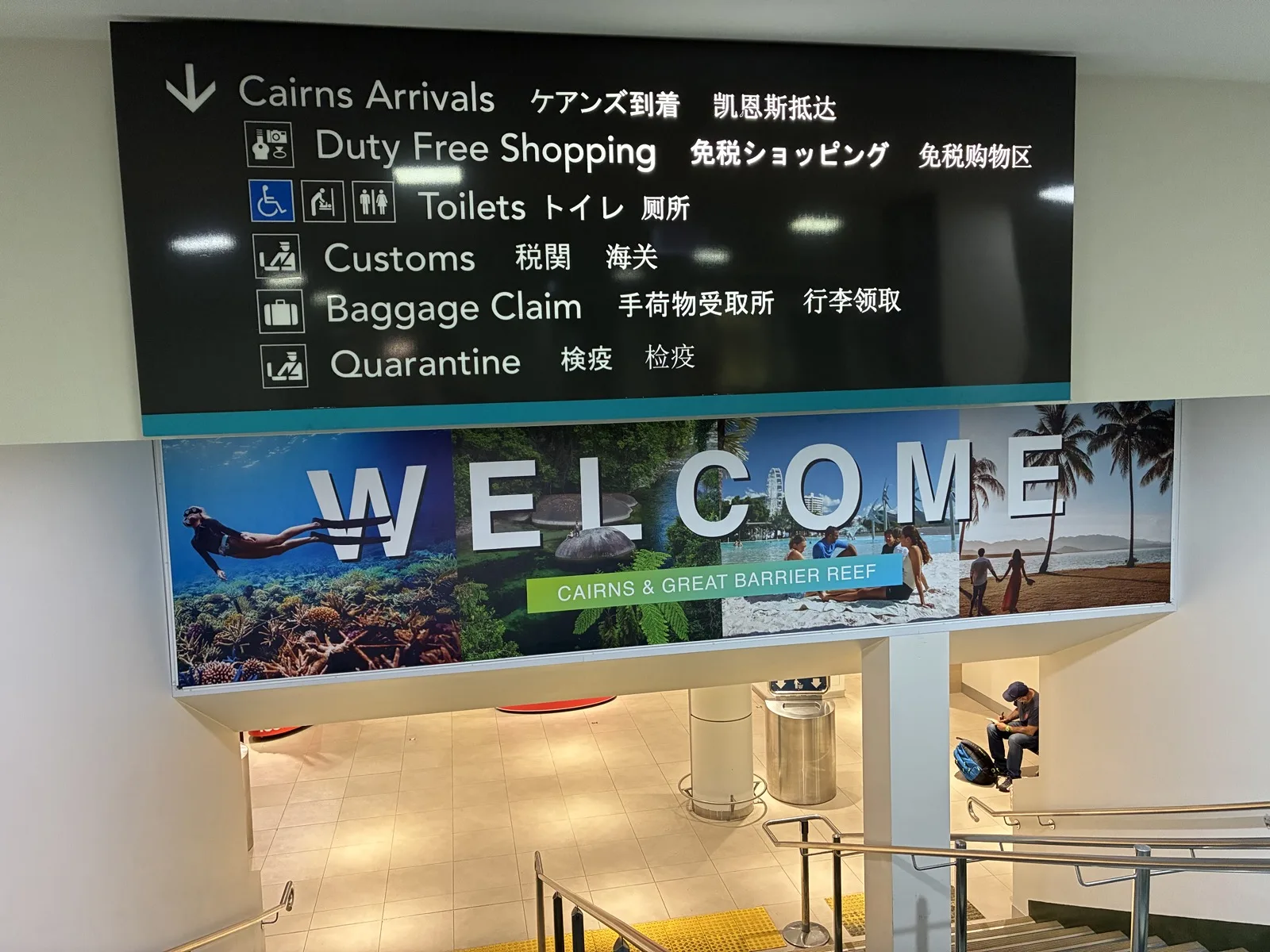
Sydney has far more international connections, while Cairns can be reached directly from selected overseas cities or through an Australian gateway. Compare the whole route: connection time, baggage transfer, arrival terminal and transport to the first hotel. The Sydney and Cairns flight guide explains this arrival-first method.
If both cities are on the itinerary, allow the domestic flight and two airport transfers in the time and money budget. Our Sydney and Cairns itinerary guide shows why seven days is a practical minimum for a compact two-city trip.
Pack documents, power and weather layers
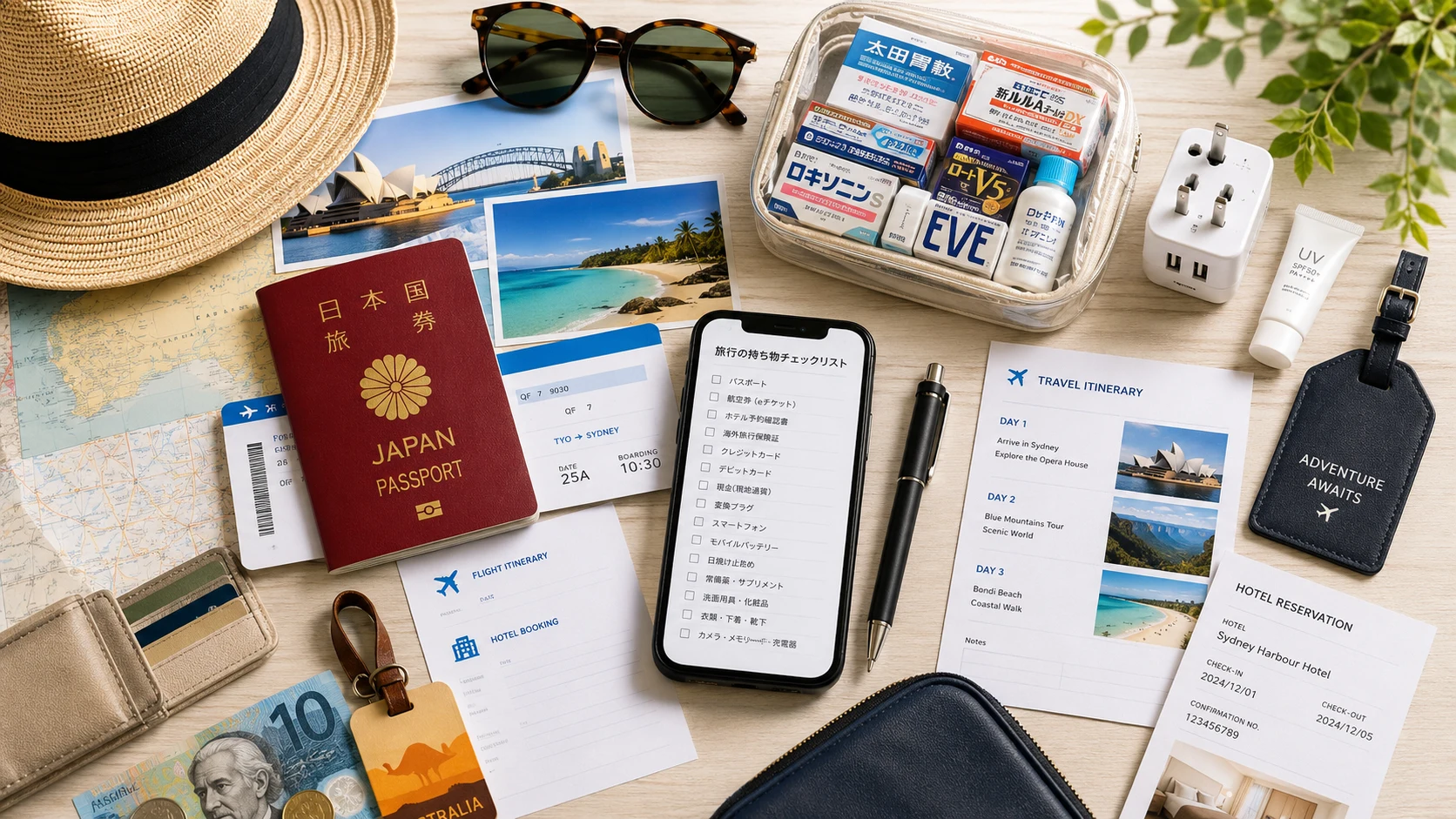
Carry your passport, entry approval, insurance details, prescriptions and first-night address where you can reach them. Pack critical medicines and spare lithium batteries in line with airline rules rather than in a bag that may be checked unexpectedly.
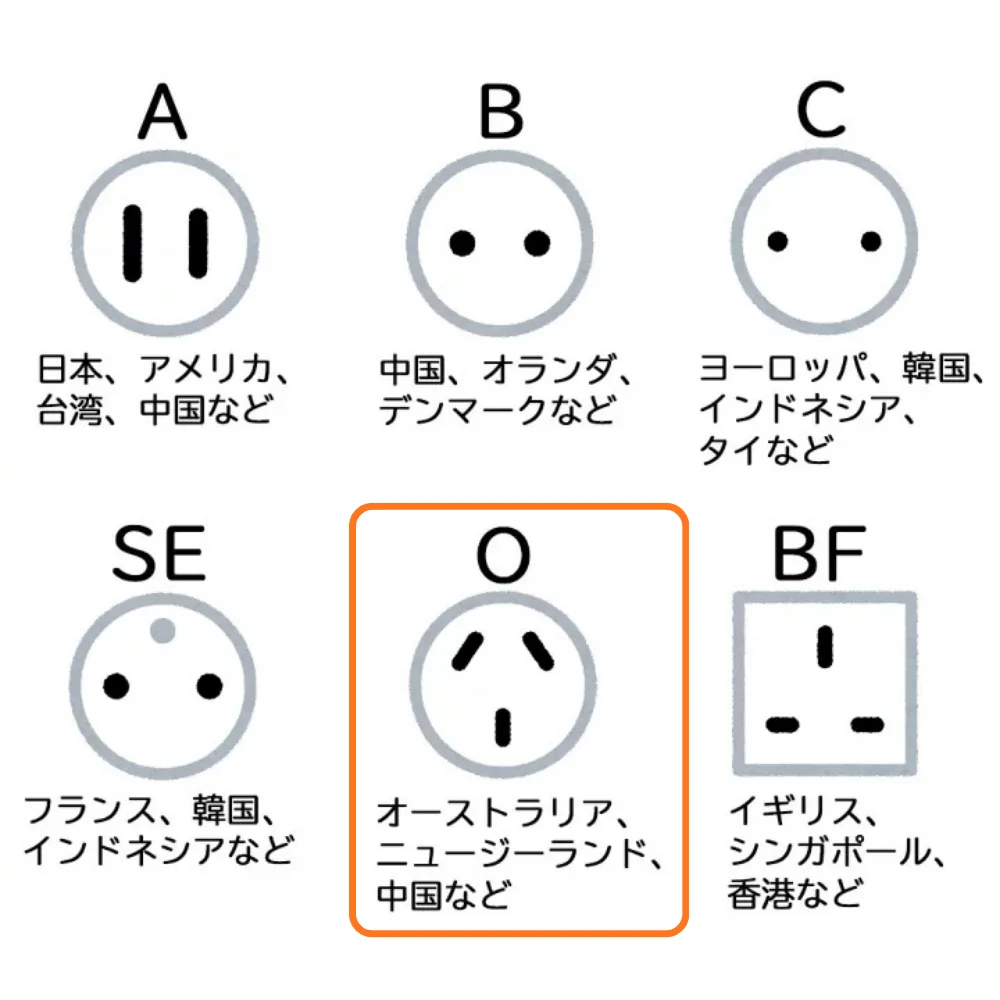
Australia uses Type I sockets. Many phone and laptop chargers accept 100–240V, but the label on your own charger is the deciding evidence. A plug adaptor changes the socket shape; it does not convert voltage.
Seasons and rainfall differ sharply between Sydney and tropical Cairns. Use the monthly Sydney and Cairns weather guide before finalising shoes, sun protection and rainwear.

Separate insurance needs from card benefits
Medical costs, ambulance, cancellation, luggage, rental-vehicle excess and planned activities are separate questions. Card benefits may depend on how the trip was paid for and may not cover every traveller. Compare the policy wording issued in your country rather than assuming a card logo provides the same cover worldwide.
Our travel insurance guide for Australia lists the coverage points to check without recommending an unapproved product.

Set up mobile data before landing
Roaming is the least disruptive, an eSIM avoids swapping a physical SIM, an Australian prepaid service can provide a local number, and a portable hotspot can share data across several devices. Check phone compatibility, coverage outside cities, tethering and the real data allowance.
For an unlocked compatible phone, Holafly’s Australia eSIM plans are one option to compare. Plan length, fair-use rules, hotspot allowance and refunds can change, so read the checkout terms for your dates.
Check Holafly Australia eSIM plansThe Australia internet guide compares roaming, travel eSIMs, Australian prepaid services and portable hotspots without treating one choice as best for everyone.

Prepare cards, AUD cash and a backup
Contactless card payments are common in Sydney and Cairns, but card surcharges, ATM fees and hotel pre-authorisations can affect the total. Carry two independently issued payment methods and a small AUD cash backup. If available in your country, the Wise card guide for Australia explains conversion, ATMs and practical limitations.
Record accommodation and activities in AUD before converting to your home currency. That keeps price comparisons stable even when exchange rates move.

Book tours only after the itinerary is stable
Compare the exact operator, guide language, meeting point, transfer, meal, equipment and cancellation deadline. The same city can contain very different products. Our first-hand guides cover a Green Island cruise, a Kuranda Skyrail and railway day, a Sydney Opera House tour and a Sydney Harbour cruise.
For platform differences, read the separate Sydney and Cairns booking-platform comparisons. The Australia safety guide also covers emergency numbers, late-night transport and tropical conditions worth saving before departure.
Frequently asked questions
Does every traveller need an ETA for Australia?
No. Check the visa or travel authority for your passport and purpose of travel before applying.
What should I pack for Australia?
Begin with documents, cards, medicines, insurance details, a Type I adaptor, weather layers and a working data plan.
Is an eSIM or portable WiFi better?
An eSIM works well for one compatible phone. A hotspot can share data, while an Australian prepaid service may suit travellers who need a local number.
How much cash should I take?
Cards cover most urban purchases. A small AUD reserve is more useful than carrying a large amount of cash.
Summary
Finish passport and entry checks first, then protect the trip with suitable insurance, working mobile data, two payment methods and luggage that matches the season. Book flights and major activities only after the route is realistic.
Keep copies of approvals, first-night accommodation, prescriptions and declarations available offline. That small folder solves more arrival problems than another last-minute travel gadget.