Queen Victoria Building Sydney: Opening Hours and What to See
The Queen Victoria Building is more than a place to shop in central Sydney. We walked through the QVB in April 2026 to see its grand arcades, clocks, stained glass and central dome.
This article contains affiliate links. If you book through them, we may earn a commission at no extra cost to you. Our first-hand views are our own.
Opening hours, free entry and time to allow
There is no admission fee to enter the QVB. You can see the exterior, arcades, clocks, stained glass and dome without buying anything, although the building also contains shops, cafes and restaurants.
- Entry
- Free
- Monday–Wednesday
- 9 am–6 pm
- Thursday
- 9 am–9 pm
- Friday–Saturday
- 9 am–6 pm
- Sunday
- 11 am–5 pm
- Time to allow
- 30–45 minutes; one hour or more with shopping or a cafe
Level 1 and Level 2 currently open from 10 am Monday to Saturday. Individual retailers and dining venues can keep different hours, and public holiday trading may change. Check the QVB's current opening hours if a particular shop or meal is part of your visit.
Getting to the QVB
The Queen Victoria Building occupies the block between George, York, Market and Druitt streets. Its street address is 455 George Street, Sydney NSW 2000.
- Train: use Town Hall Station; Exit 1 is marked QVB
- Light rail: alight at QVB on the L2 or L3 line, directly outside on George Street
- Bus: use a service stopping near Town Hall or QVB and check the final walk from your stop
- On foot: walk from Hyde Park, Pitt Street Mall or Darling Harbour through the central business district
- Taxi or rideshare: use Queen Victoria Building, 455 George Street as the destination
Town Hall Station's official interchange map identifies Exit 1 for the QVB. The building can also be reached from the station through the underground shopping connections, which is useful in wet weather.
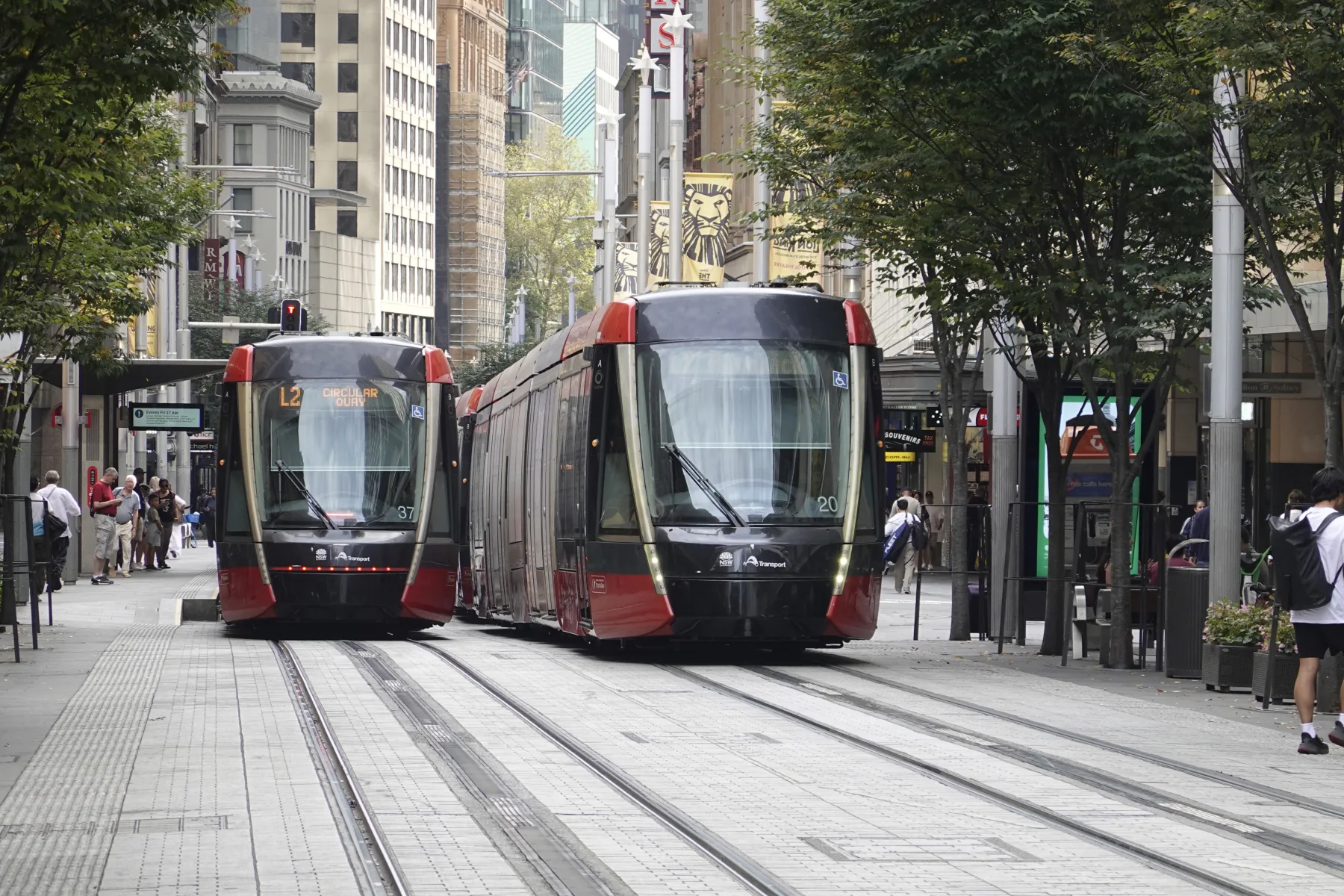
The QVB stop is named after the building and sits immediately outside it. Transport for NSW currently shows both the L2 Randwick and L3 Kingsford lines serving the stop.
Check the building's entrances and your walking route on Google Maps.
Our route from Hyde Park
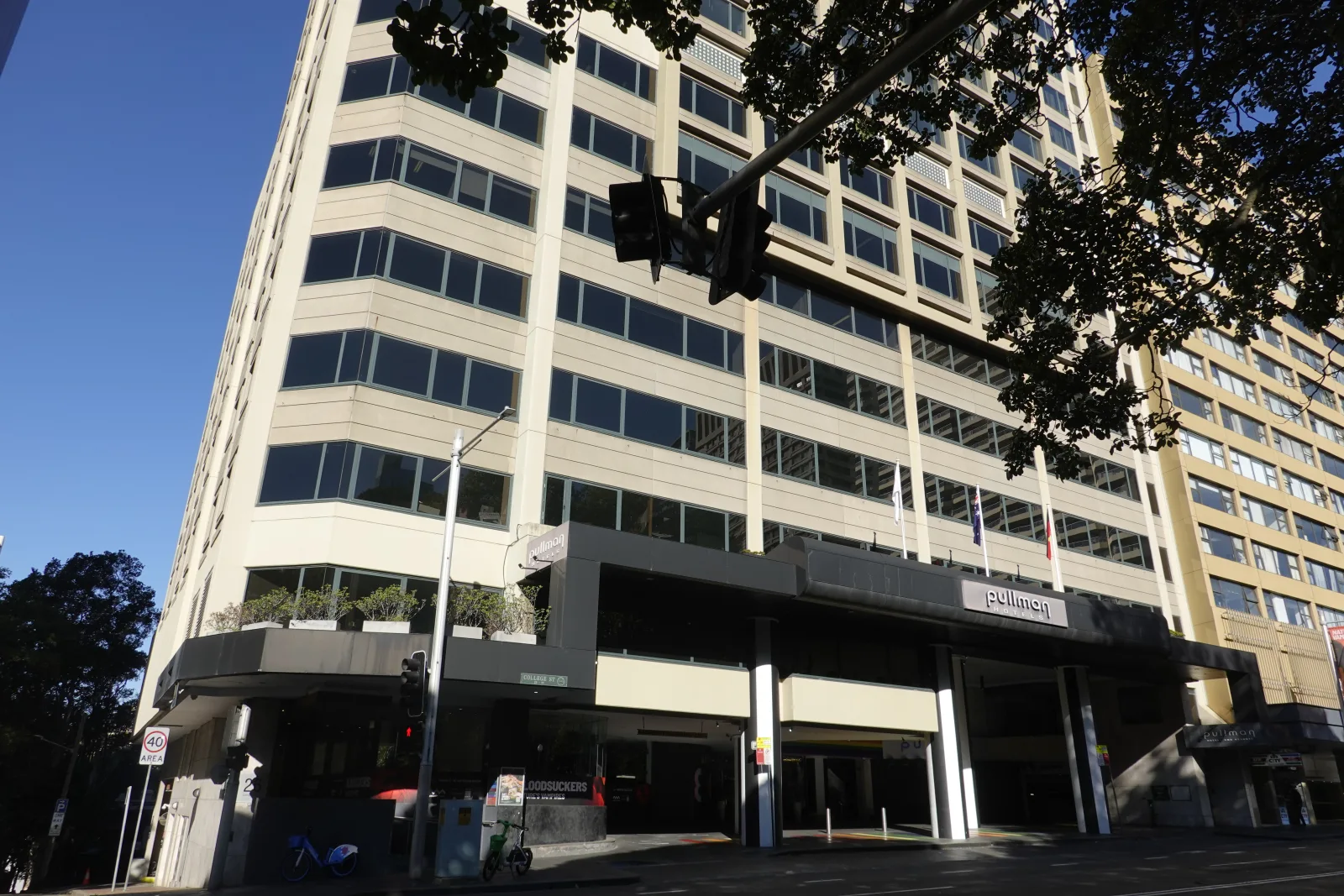
We visited on 17 April 2026. From Pullman Sydney Hyde Park, we crossed the park and took a short bus ride towards Town Hall and the QVB.
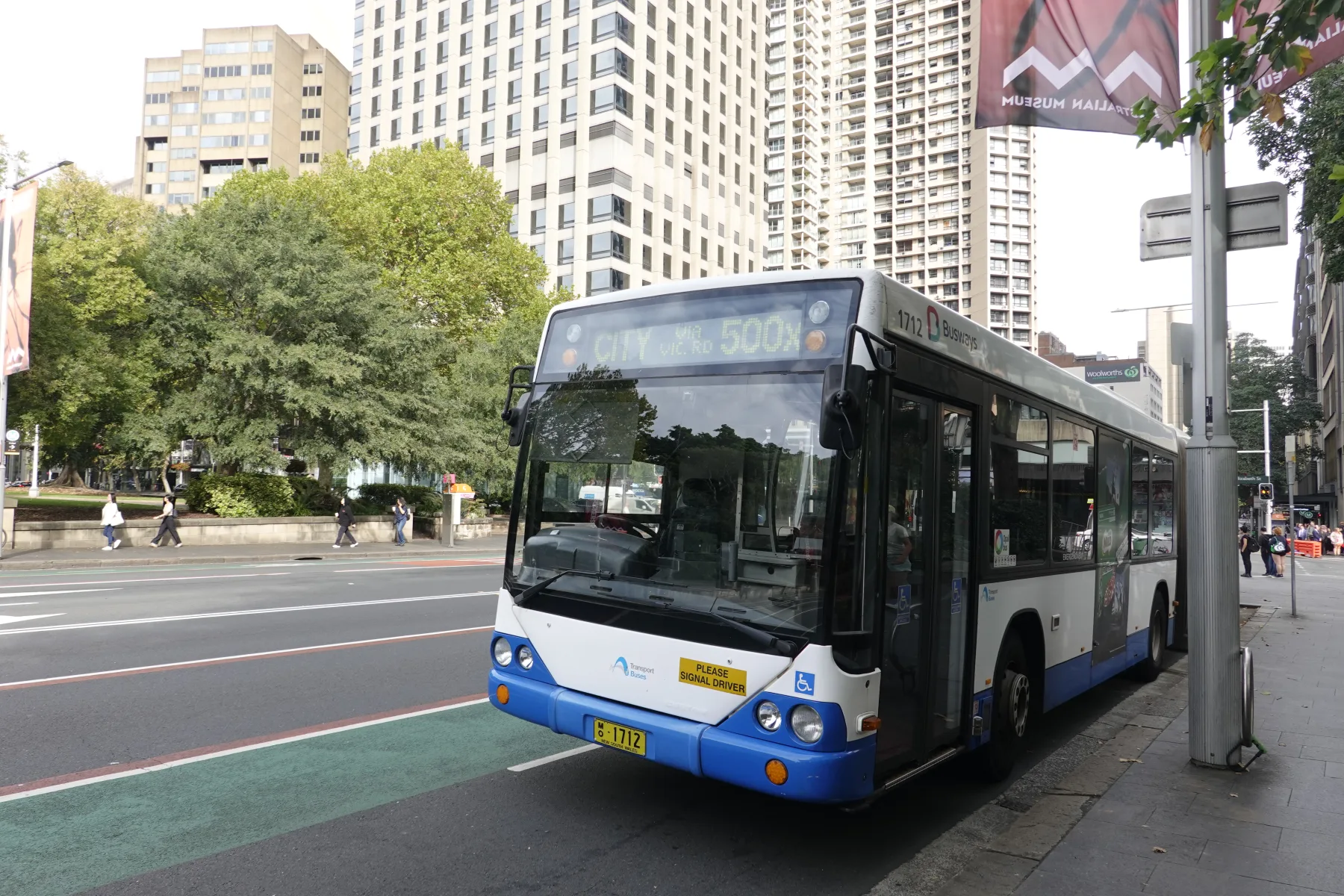
The journey was short enough to walk, but the bus gave our family a break before another afternoon on foot. We checked the destination display and map before boarding because different services use different stops around Town Hall.
Our hotel stood opposite Hyde Park, within walking distance of the QVB and other central sights. The room, rooftop pool and four-night stay are covered in the review below.
If you are crossing Hyde Park on the same day, our St Mary's Cathedral Sydney guide covers the free sandstone landmark on the park's eastern side. The QVB lies to the west, making the two stops part of a straightforward city walk.
The sandstone exterior and QVB history
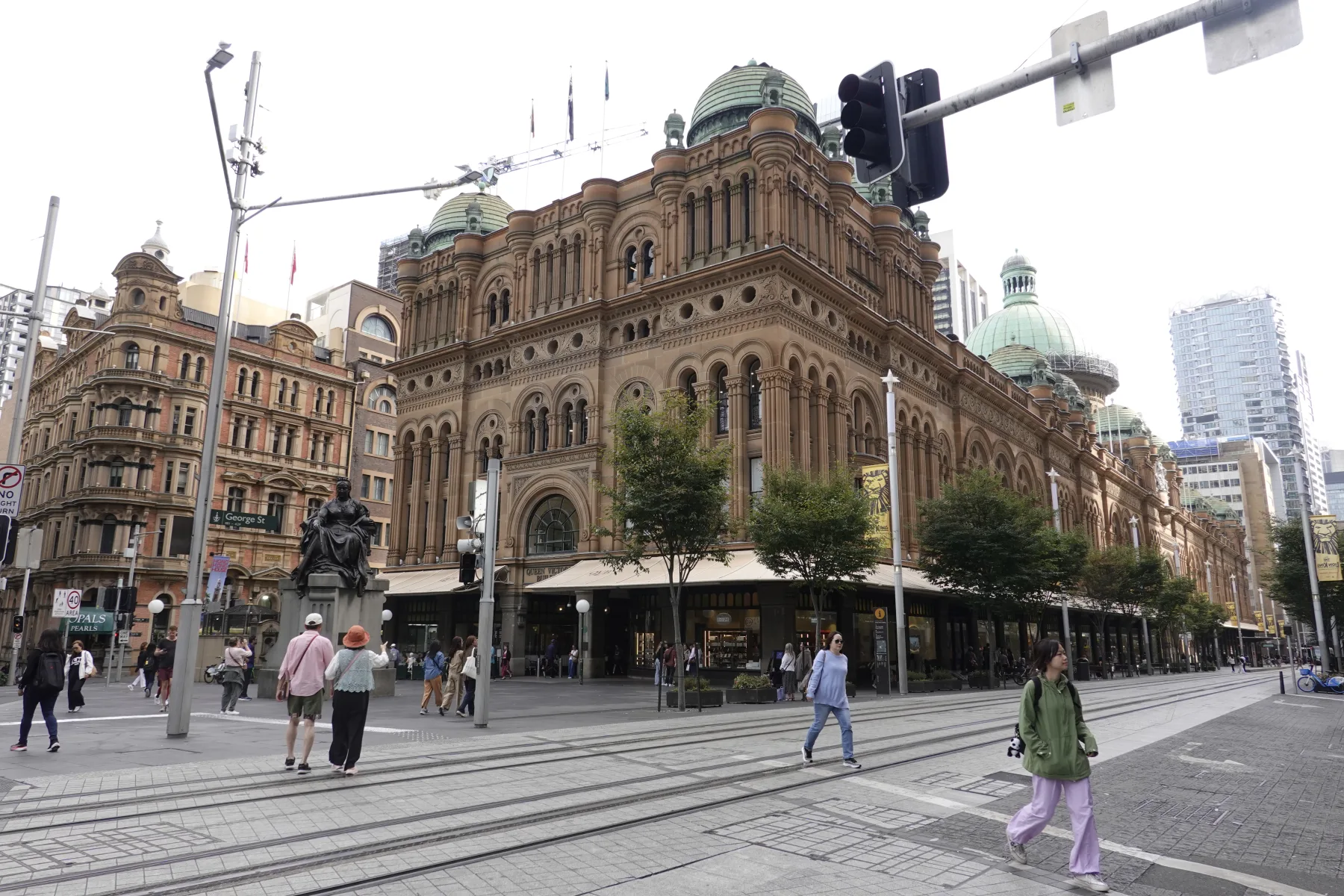
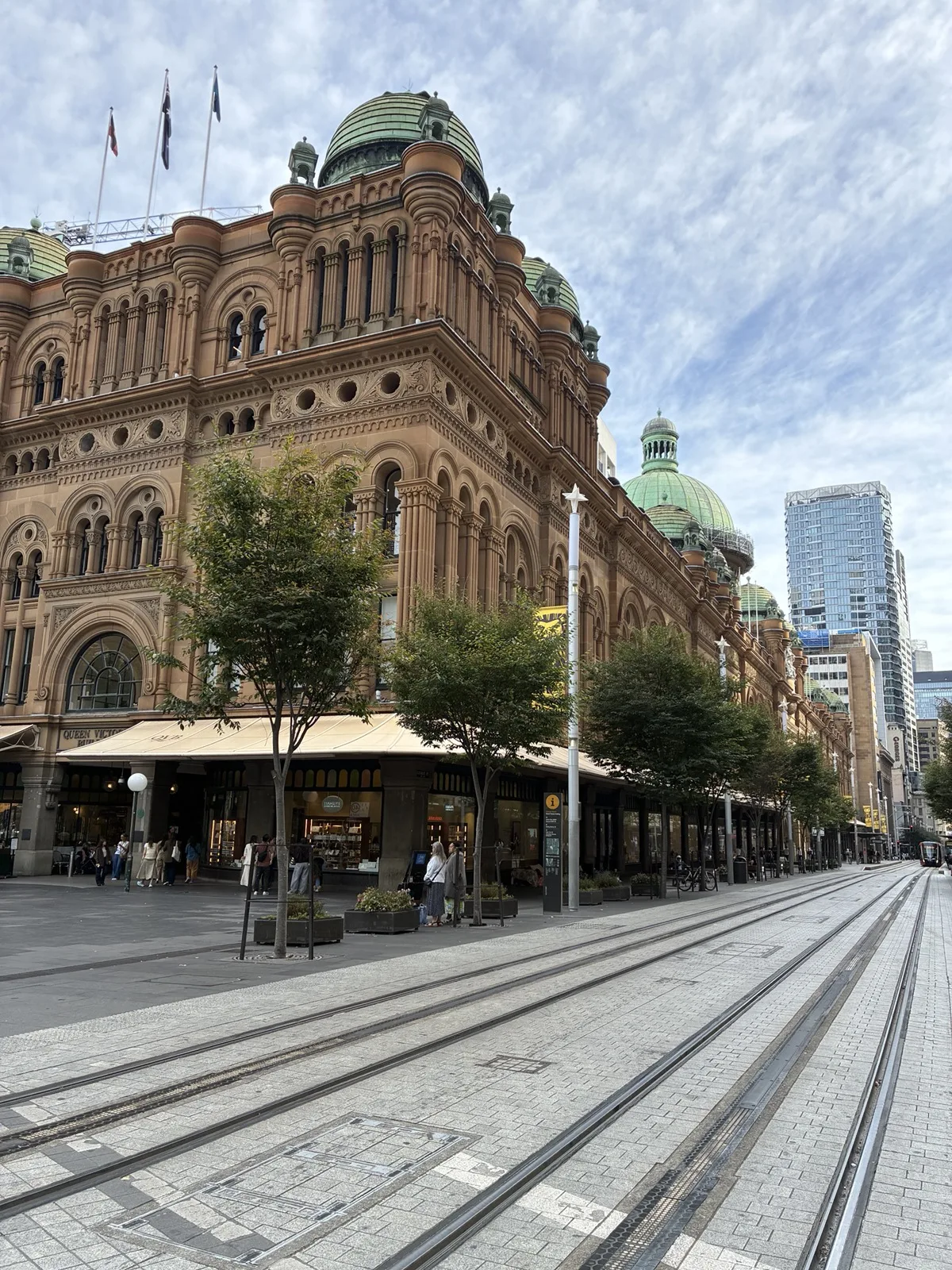
The QVB stands out from the office towers around it through its reddish sandstone, round arches, roof turrets and copper-clad dome. Even before going inside, it looks very different from a modern shopping centre.
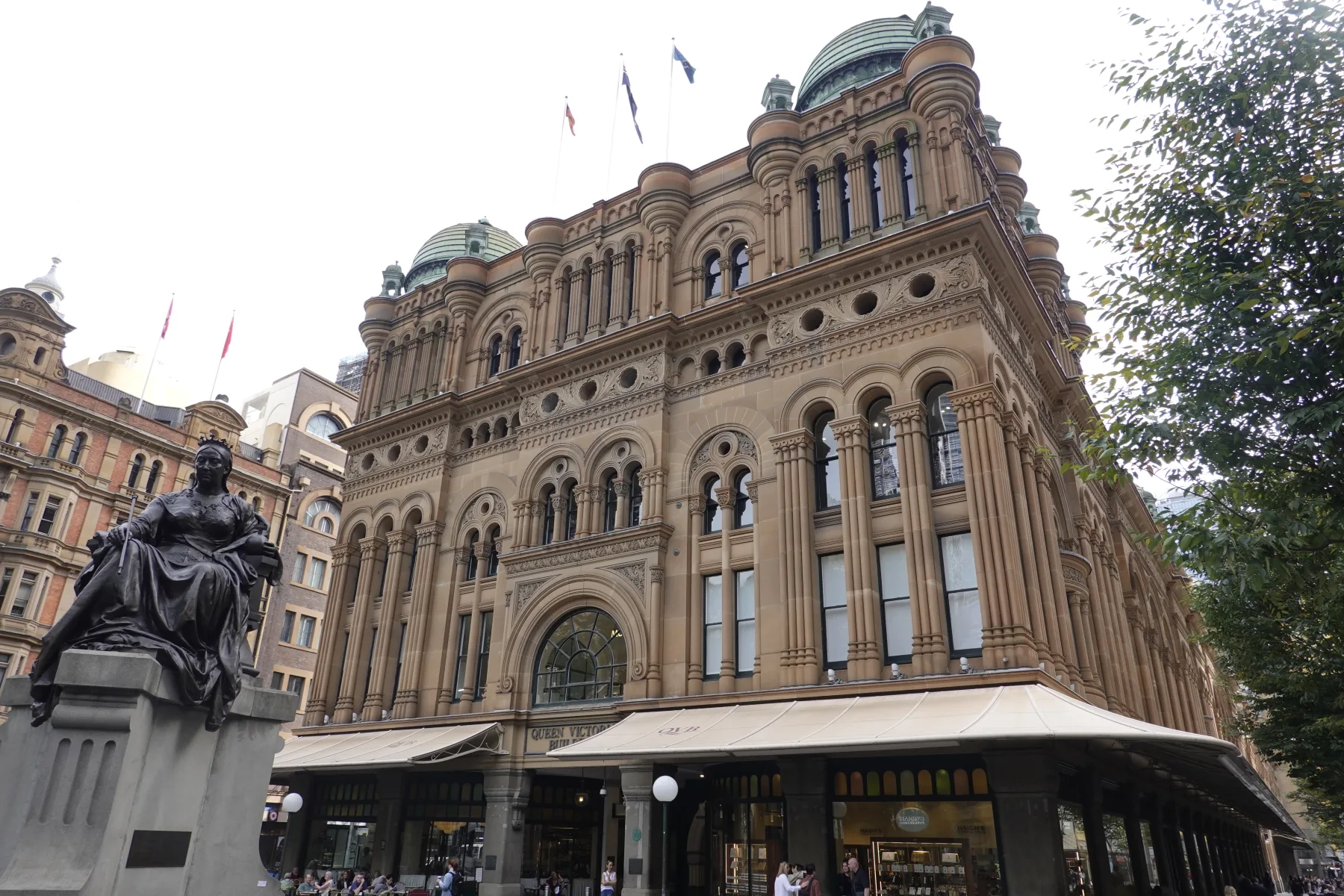
The building was designed by Sydney City Architect George McRae and constructed between 1893 and 1898 on the site of the former markets. A Romanesque design was selected from four proposals, and the building was named in honour of Queen Victoria's Diamond Jubilee.
The QVB's official history records that it originally housed a concert hall, coffee shops, showrooms, warehouses and tradespeople. After major alterations and years in which demolition was considered, a large restoration led to its reopening in 1986.
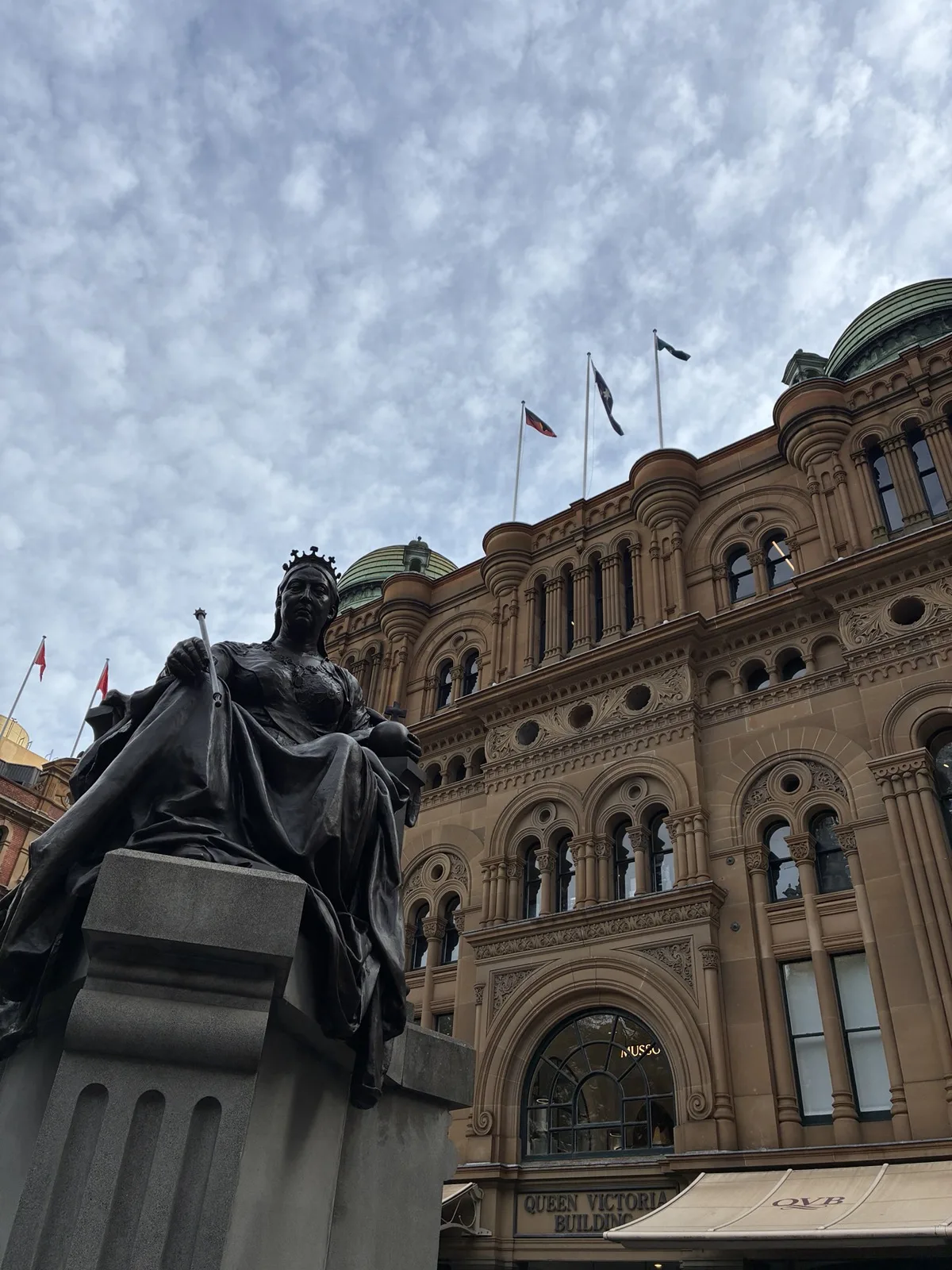
A statue of Queen Victoria stands outside the Druitt Street end. From its base, the statue, arched windows and layers of sandstone detail fit into a single upward view.
Grand arcades beneath the glass roof
Inside, patterned floors, coloured glass, white arches and black balustrades replace the heavier mood of the exterior. We found enough architectural detail to make a visit worthwhile without planning any shopping.
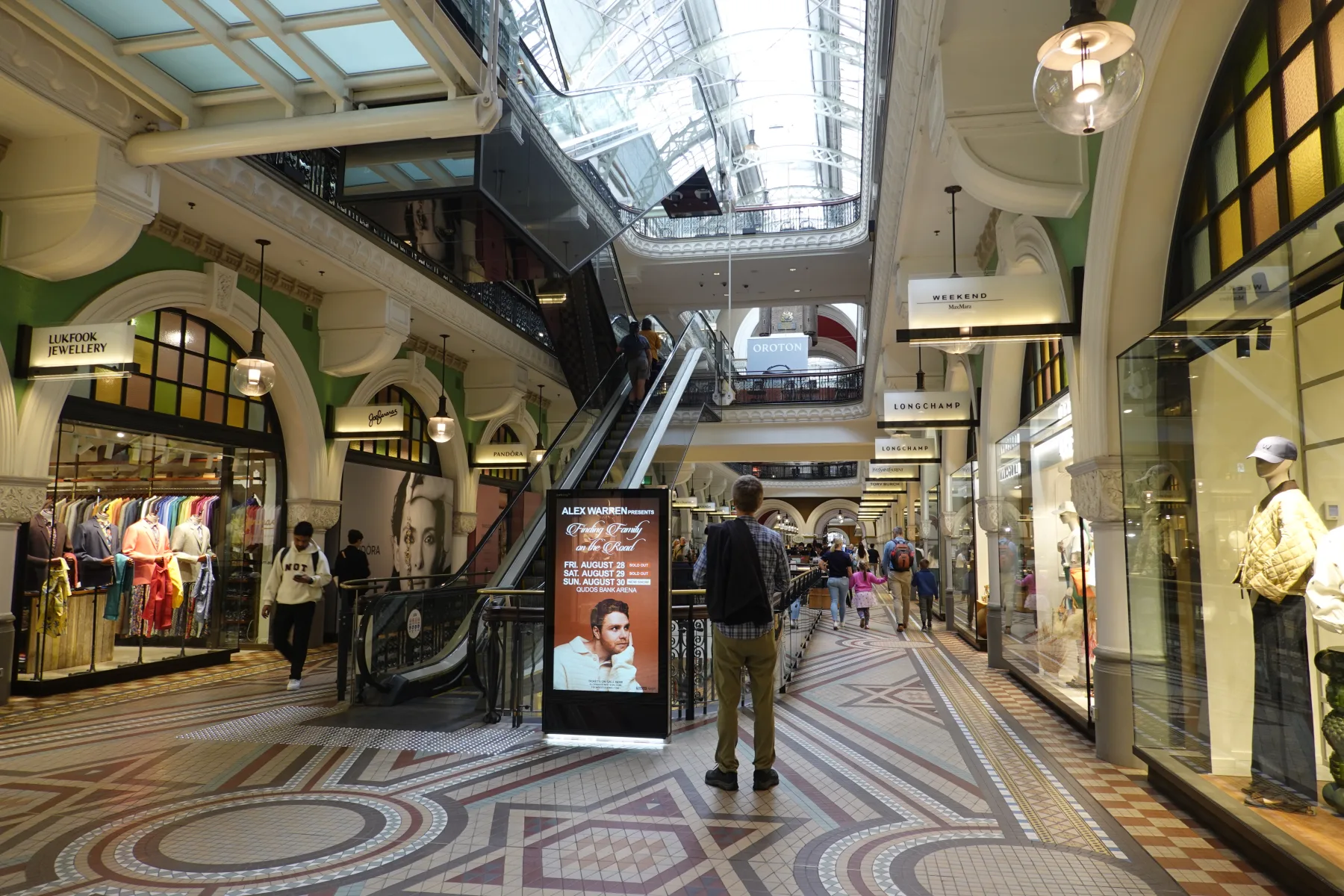
Looking up from the ground floor brought several gallery levels and the glass roof into the same view. The details changed as we moved, so we stopped at different points rather than walking straight from one end to the other.
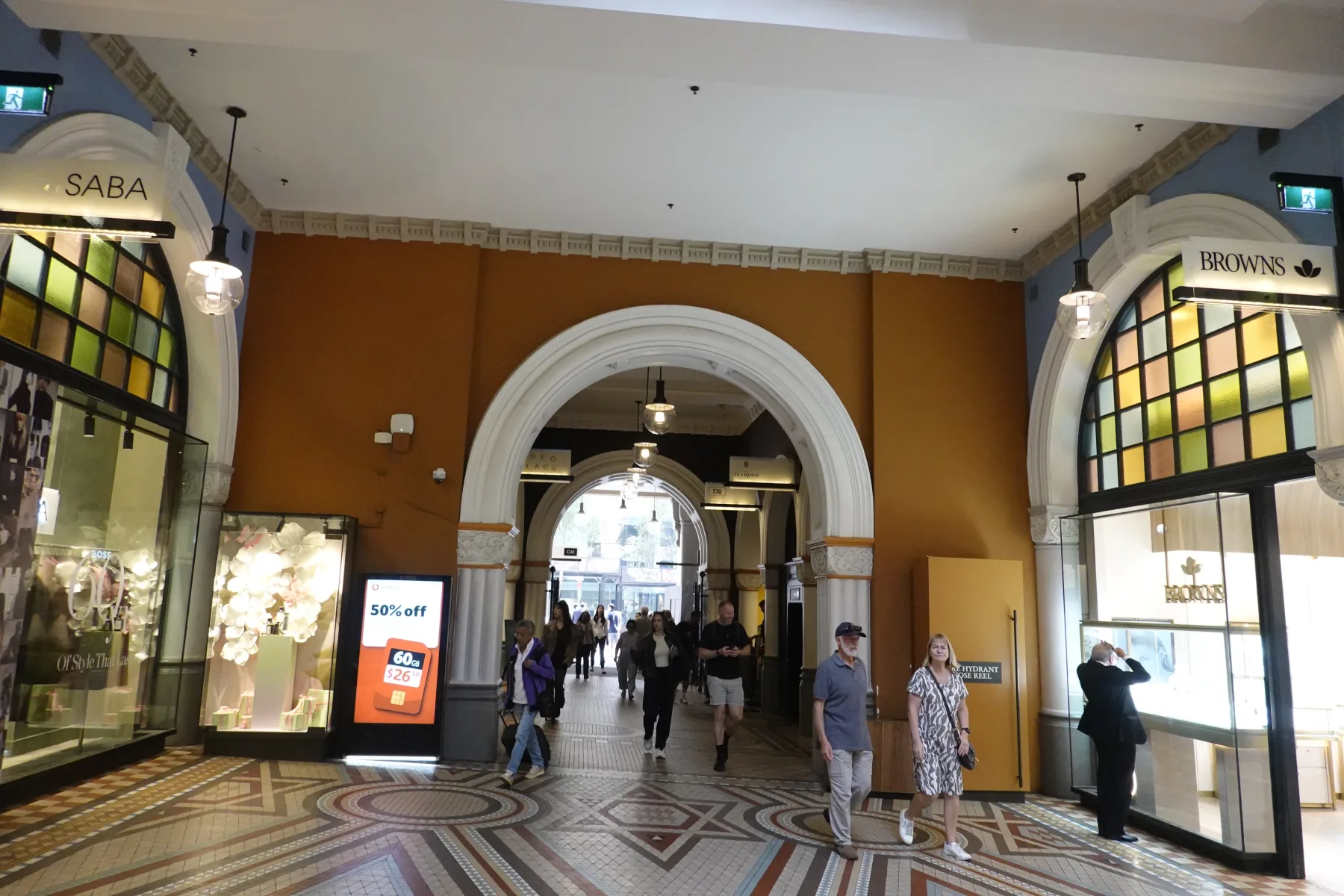
Half-round windows above the shopfronts add colour to the entrances. Natural light also shifts through the long interior, making some sections feel brighter than others.
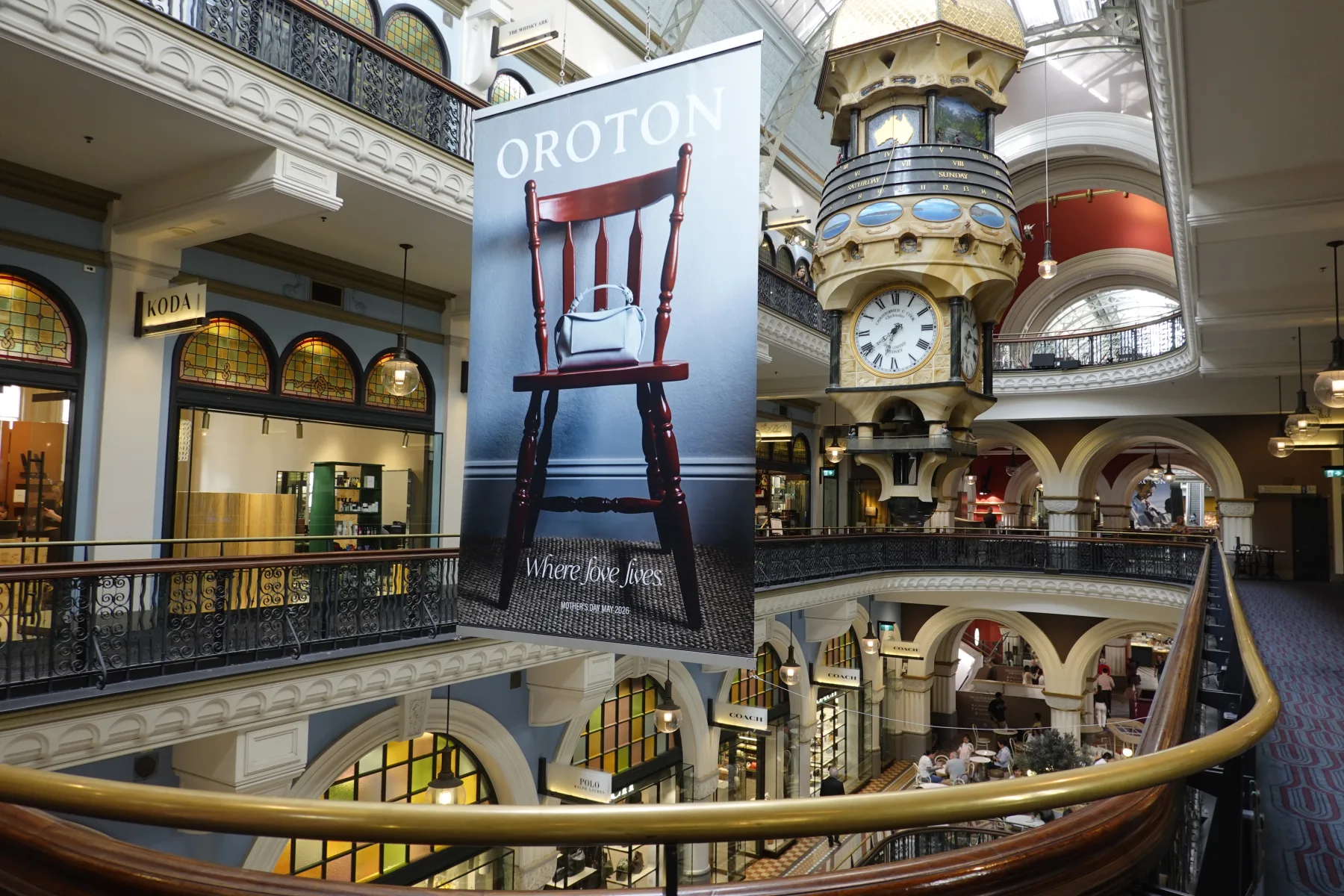
From an upper level, the open galleries, black rails, patterned floors and Great Australian Clock overlap in one view. Walking only a short distance changed the composition because the building is layered vertically as well as along its length.
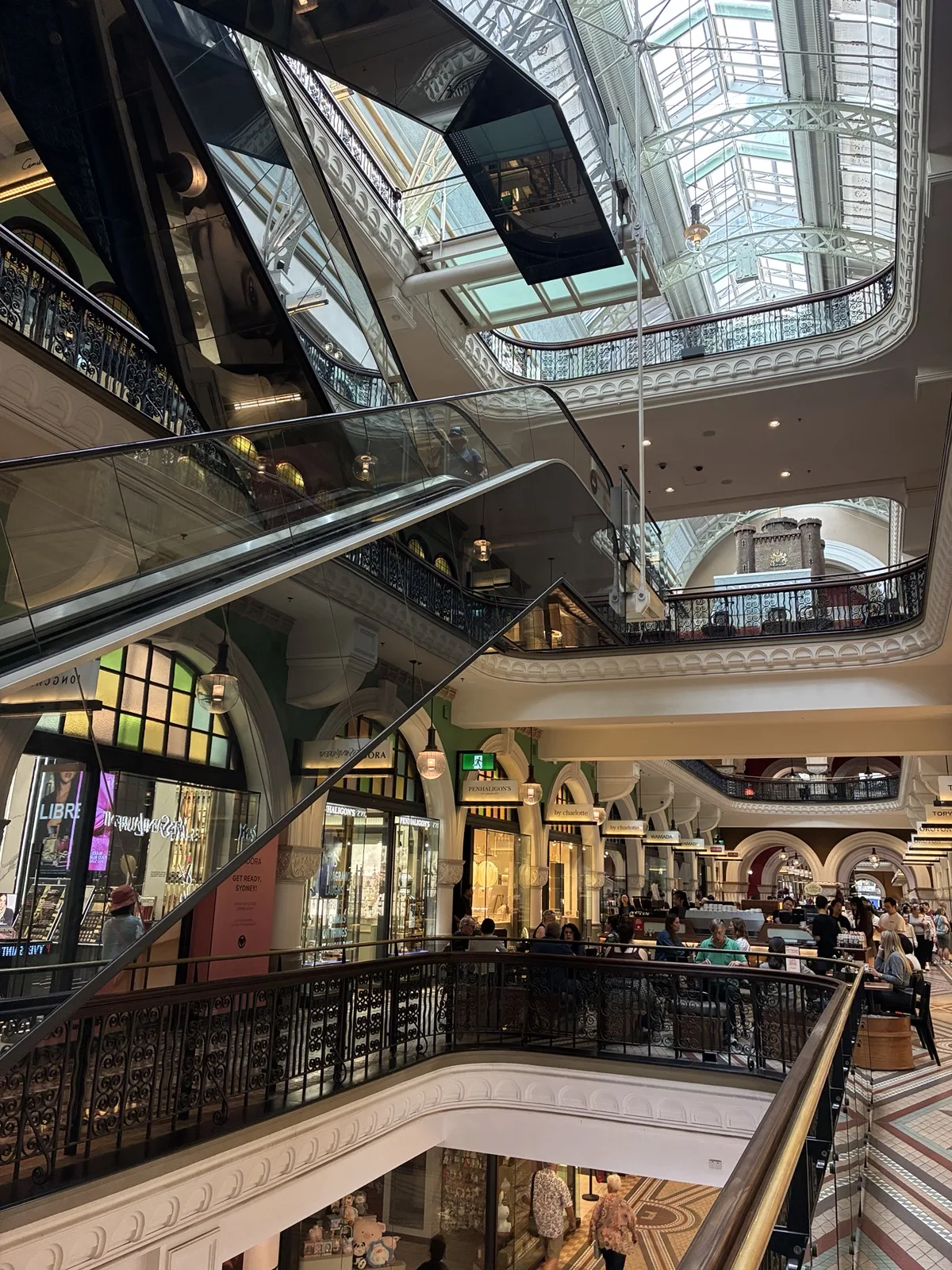
Escalators make it quick to move between floors, but the view from each gallery is different. We went up and down several times to see the clocks, balustrades and shopfronts from new angles.
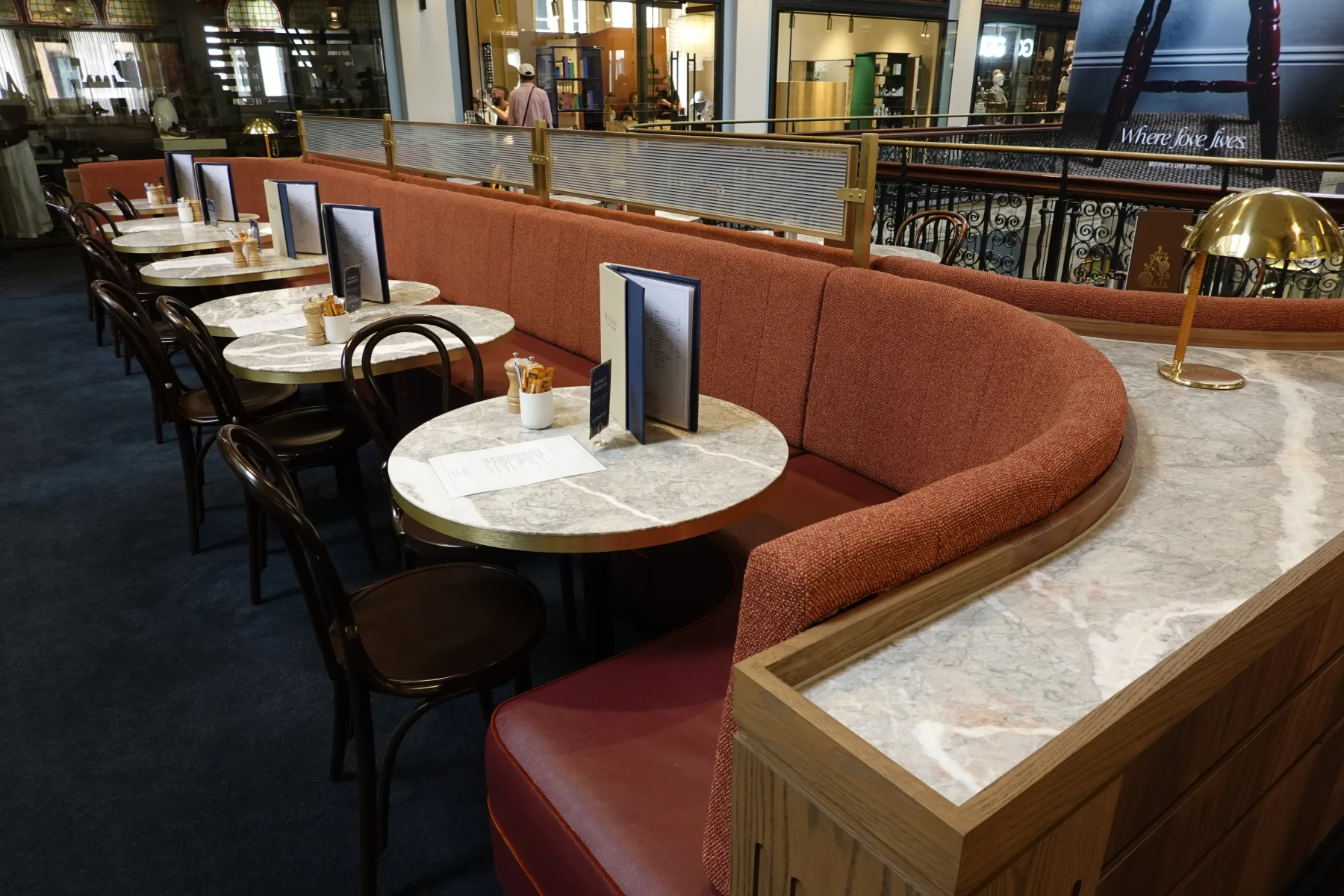
Cafe seating occupies parts of the open arcade, providing a place to pause among the historic interior. We also found a large elephant sculpture framed by coloured glass in one gallery; temporary displays like this can make each level feel different.
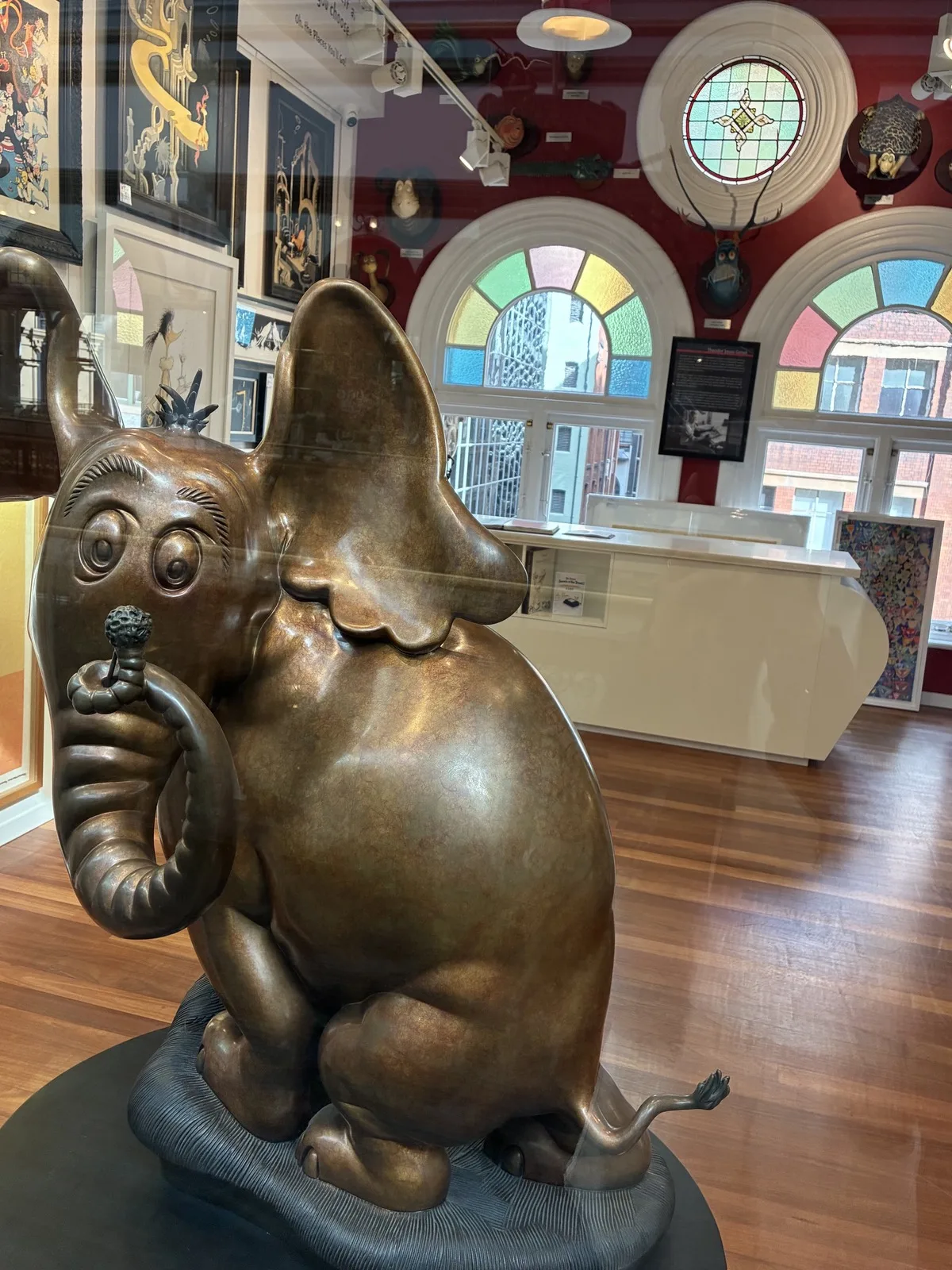
The exact mix of shops, dining and temporary displays changes, so use the centre information and directory if you are looking for a specific venue.
The Great Australian Clock
The first monumental clock to catch our attention was the Great Australian Clock, suspended across several levels beneath a gold-coloured dome.
Scenes from Australian history are built into the clock. Changing floors revealed different parts of its faces, painted panels and dome; no single position showed every detail.
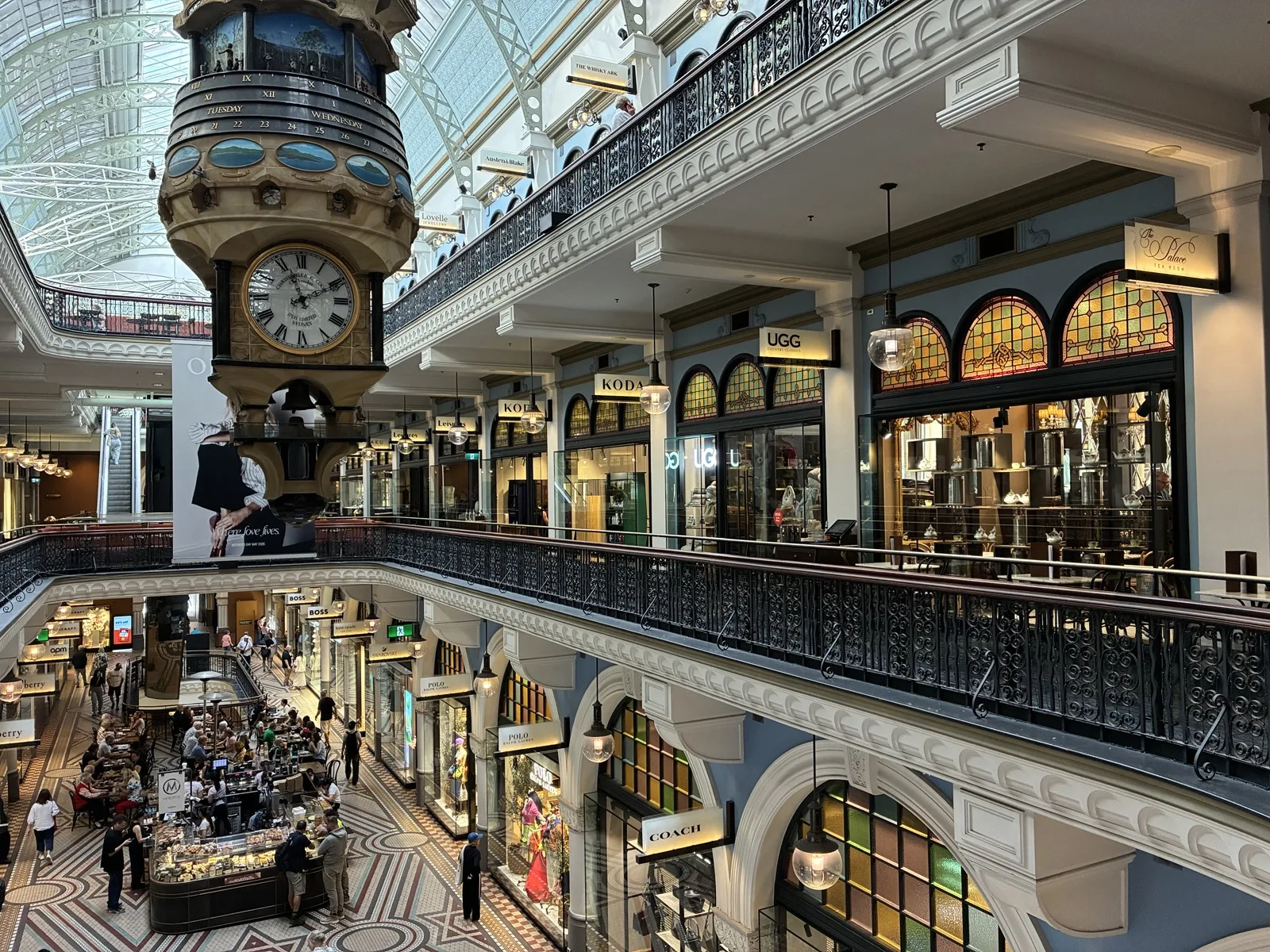
The side galleries showed how large the clock is in relation to the shops and open void. We preferred these angled views because they included the depth of the building rather than only the clock face.
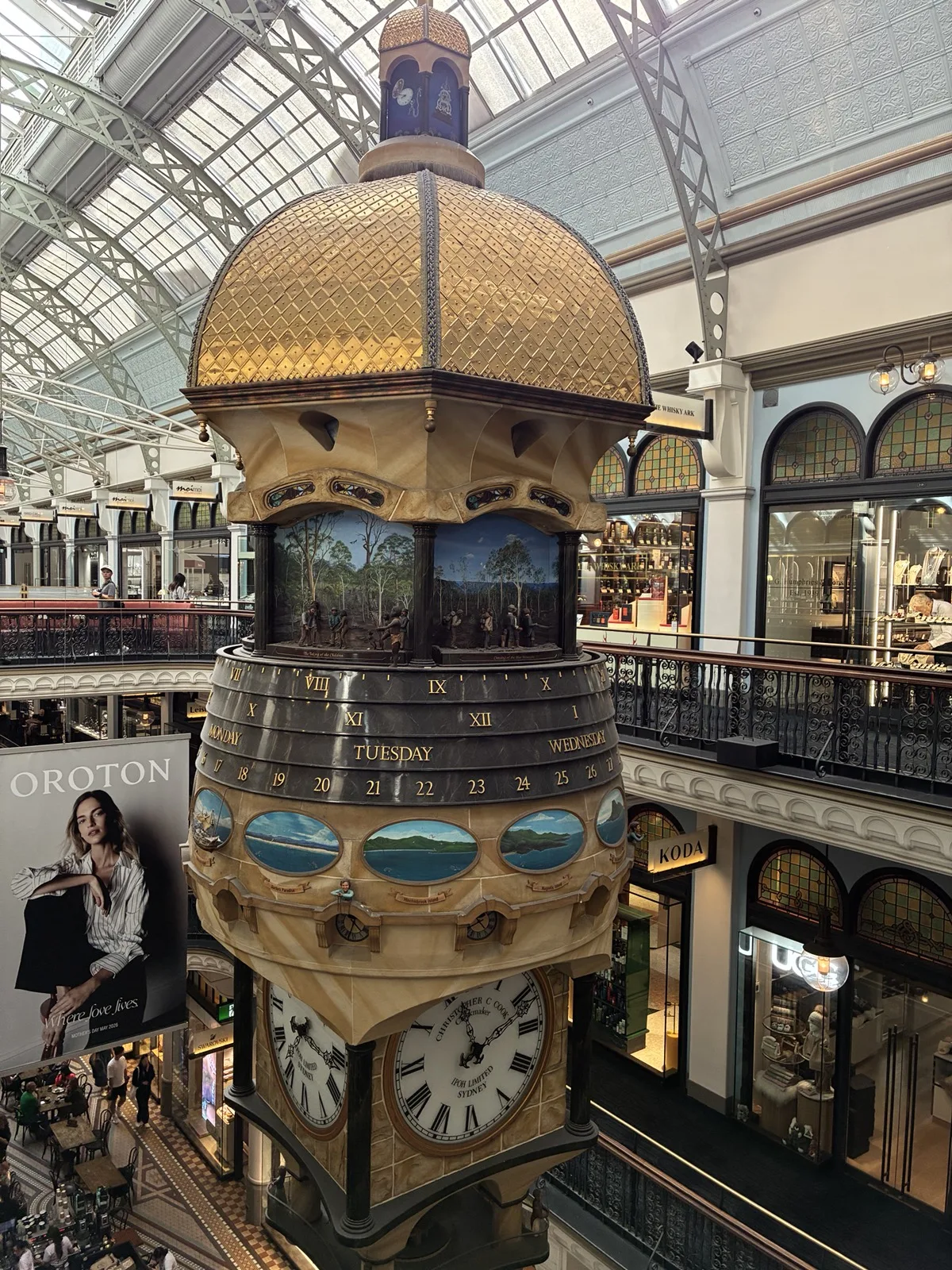
From the nearest gallery, we could see the day and date displays and smaller painted scenes. It is worth viewing the clock from the ground floor first, then moving upstairs for the details.
The castle-shaped Royal Clock
The Royal Clock looks completely different. Four clock faces sit beneath towers and battlements, with scenes connected to British royal history built into the structure.
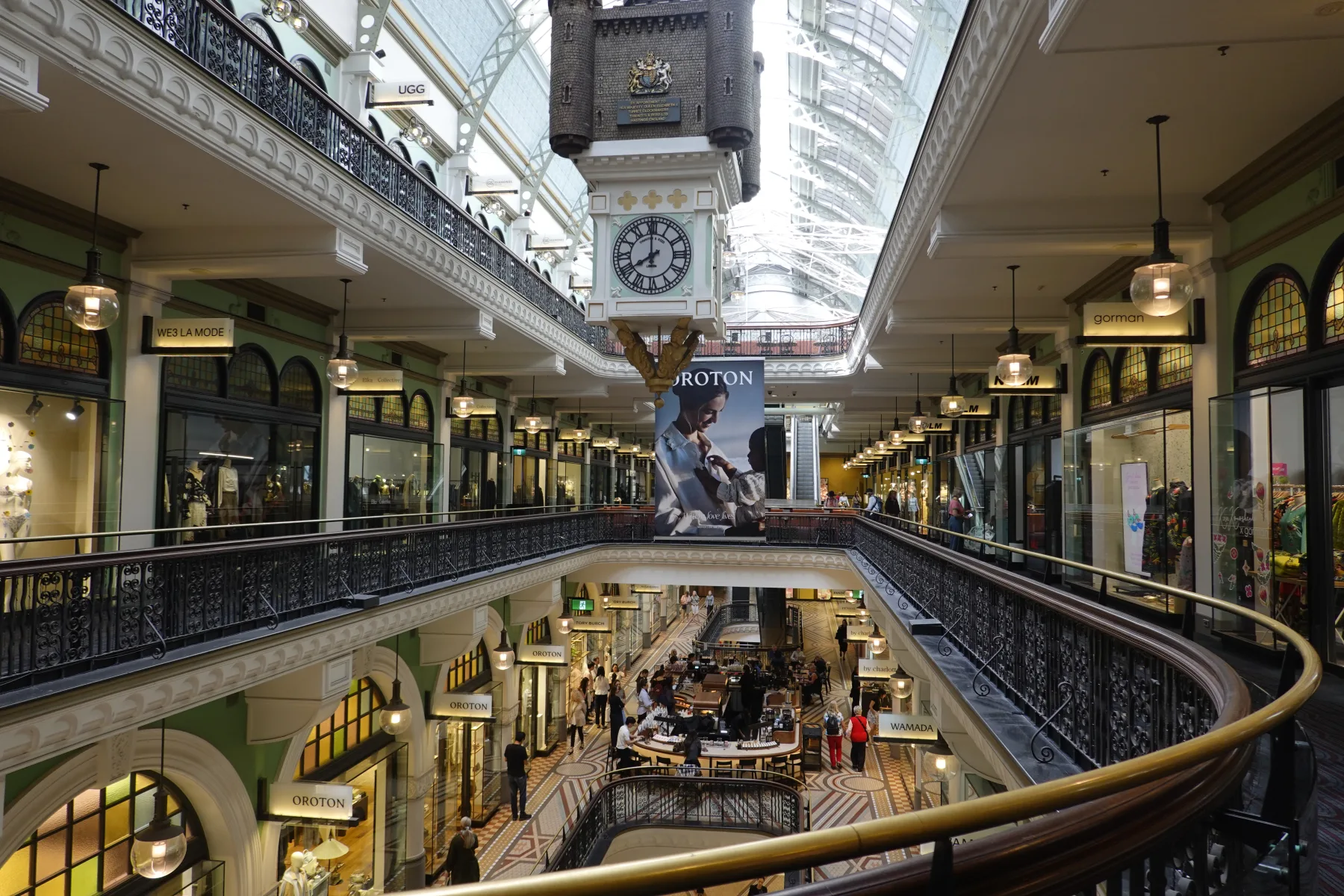
From a more distant gallery, the clock seemed to float above the shops and cafes on the ground floor. This was also one of the clearest views of the building's stacked levels.
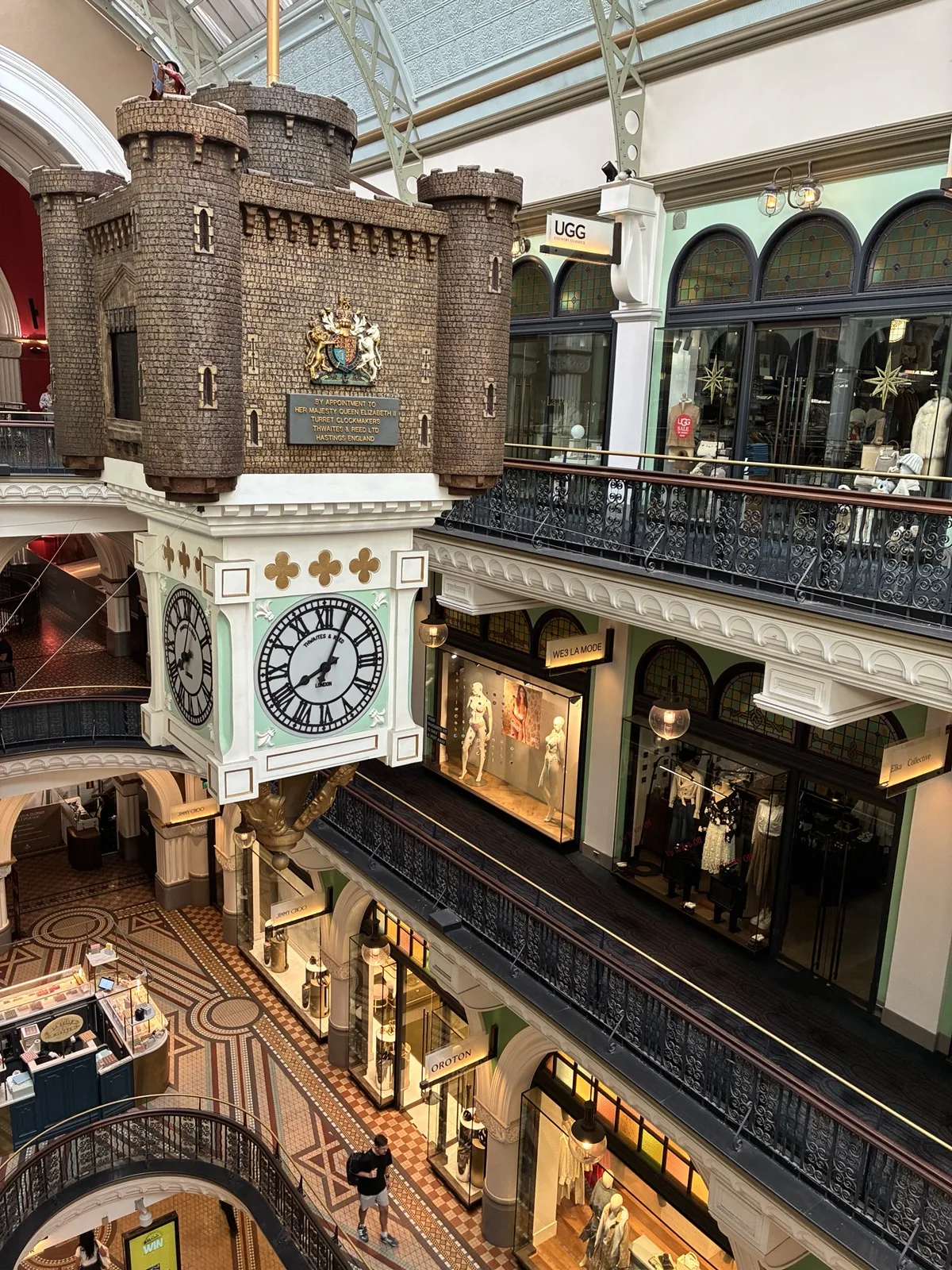
Its darker colours and castle form made it easy to distinguish from the Great Australian Clock. Looking for both also gave us a simple reason to explore the full length of the arcades.
Stained glass, heritage stairs and the central dome
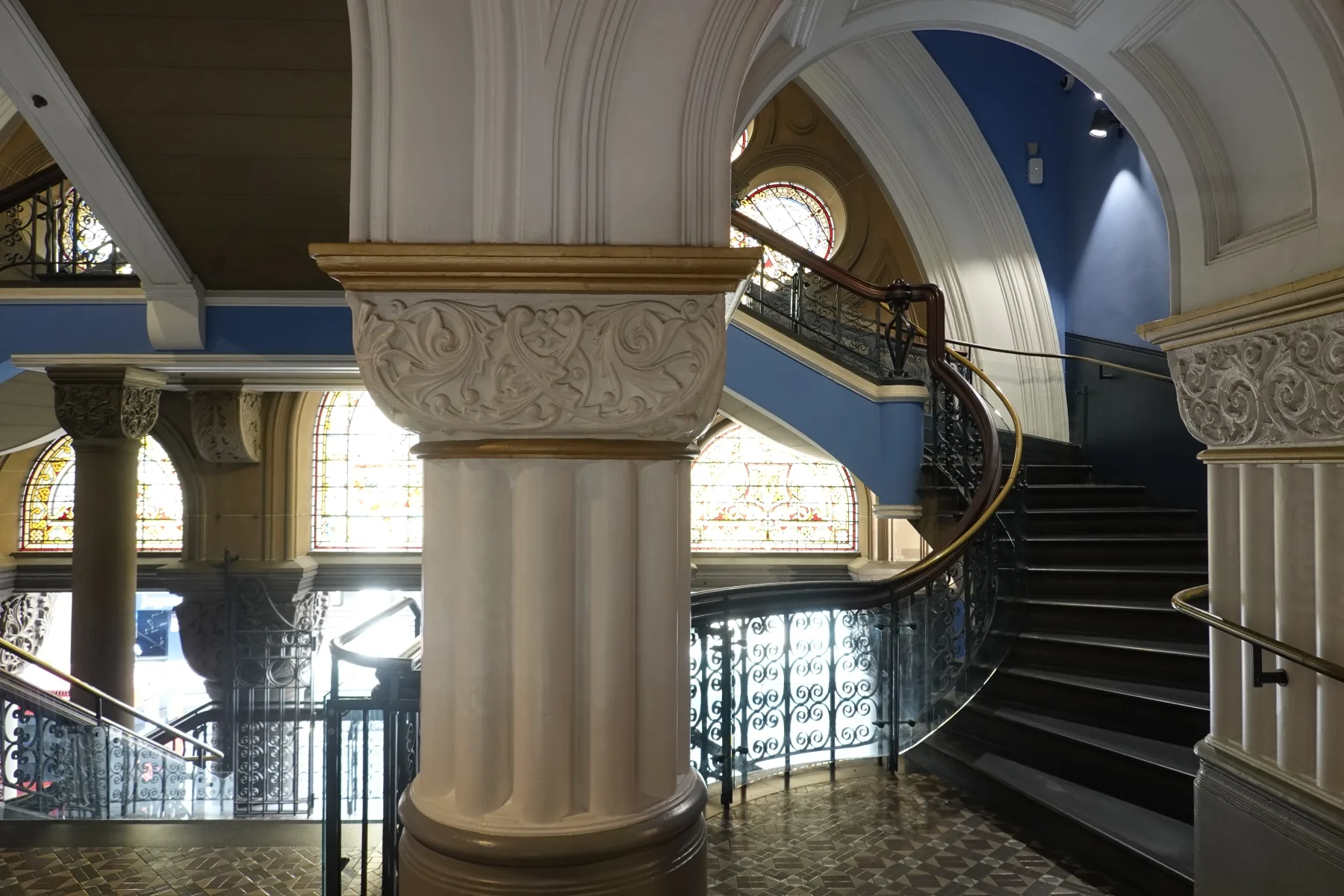
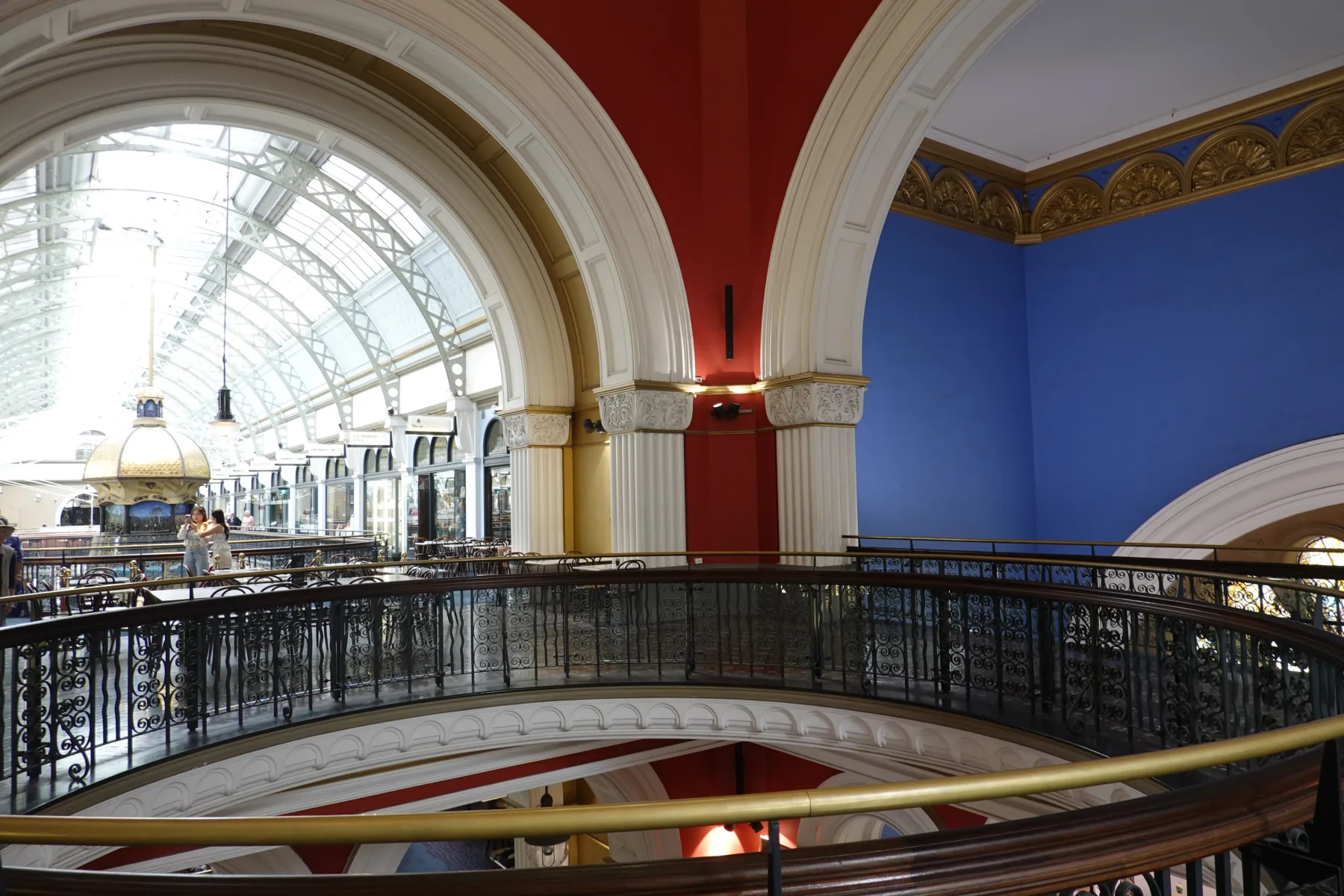
Stained glass appears around entrances and staircases as well as above shopfronts. Blue walls, pale arches and black rails frame the coloured windows near one of the older stairways.
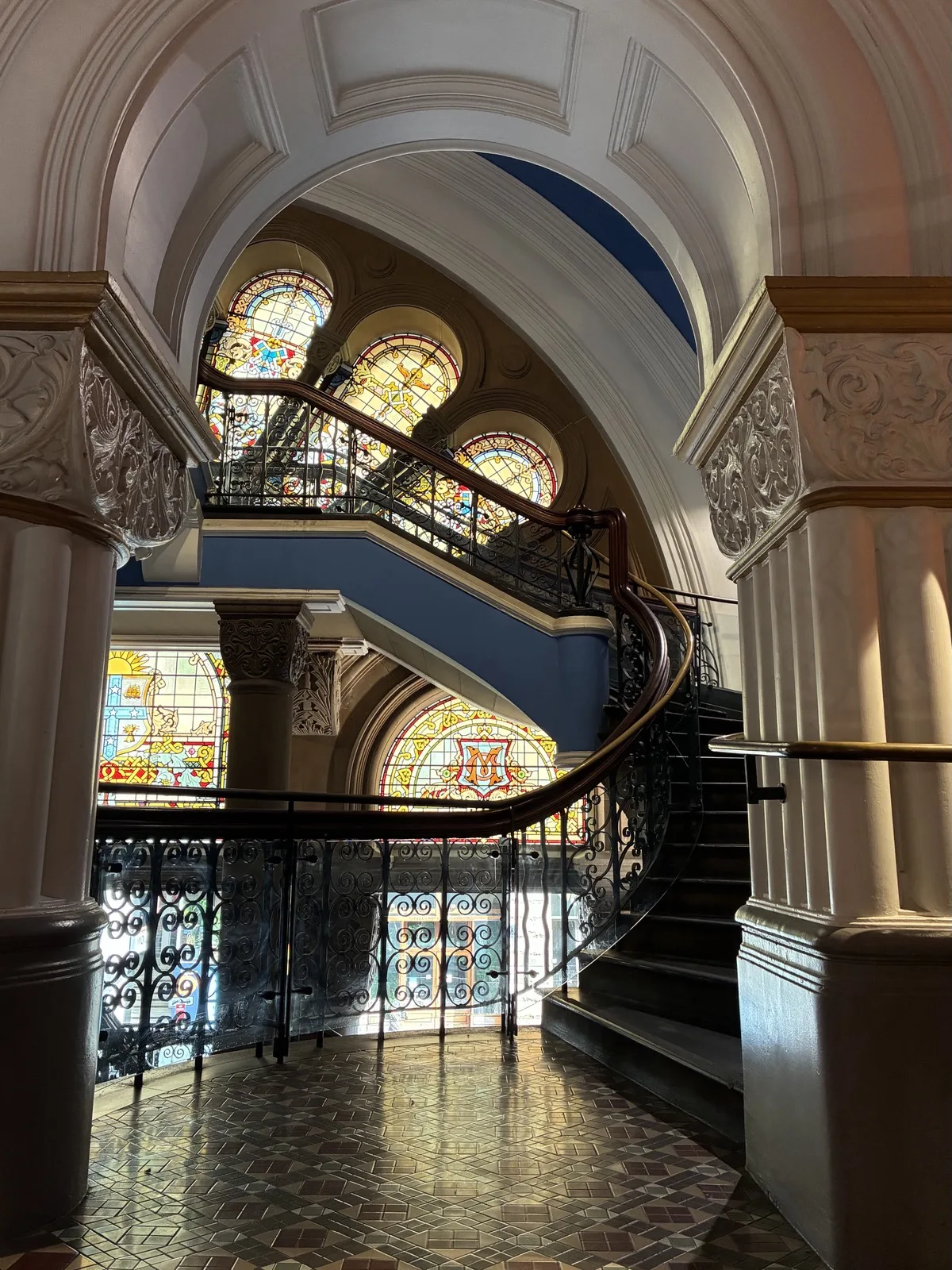
The curved handrails and carved columns reward a closer look. We were glad we walked to the staircase rather than relying only on the escalators.
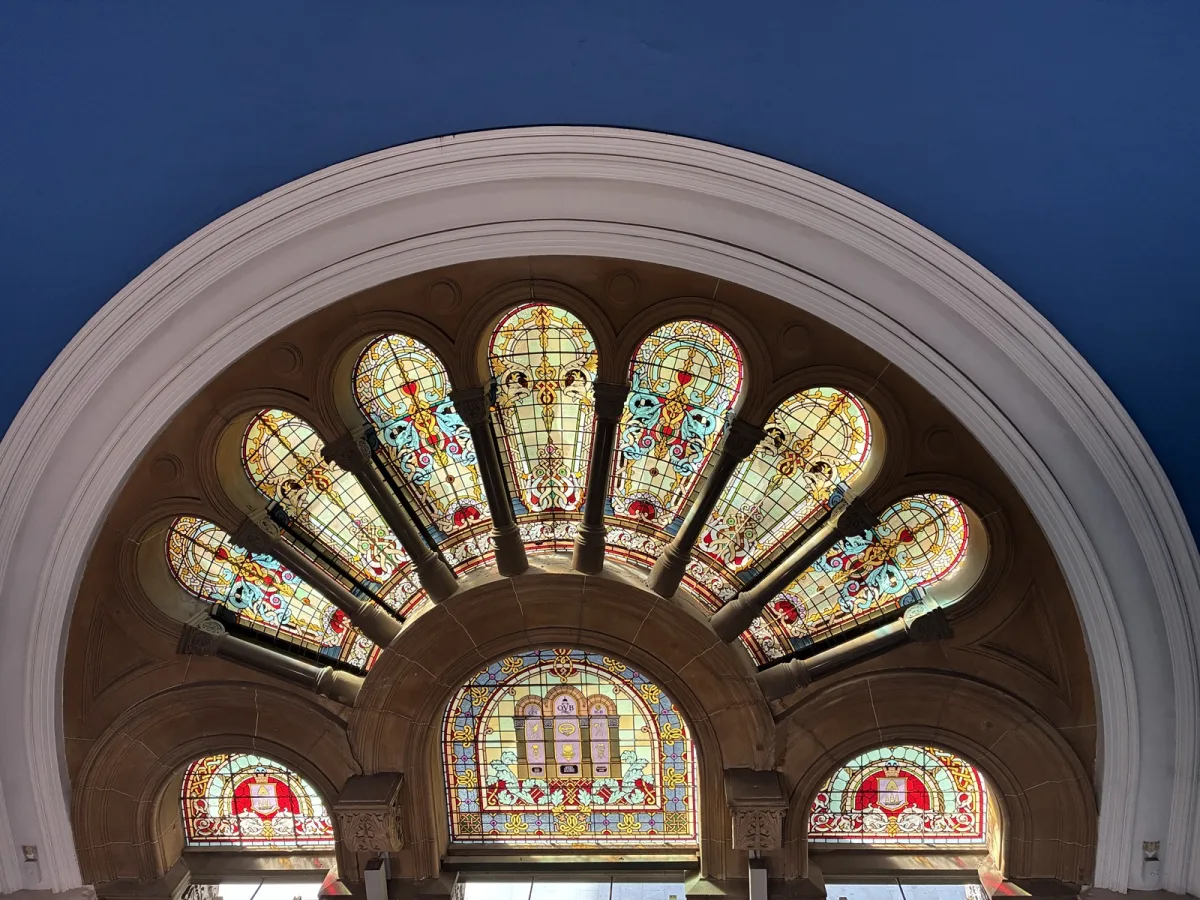
A fan-shaped stained-glass window contains the City of Sydney coat of arms and patterns extending into its narrow outer panes.
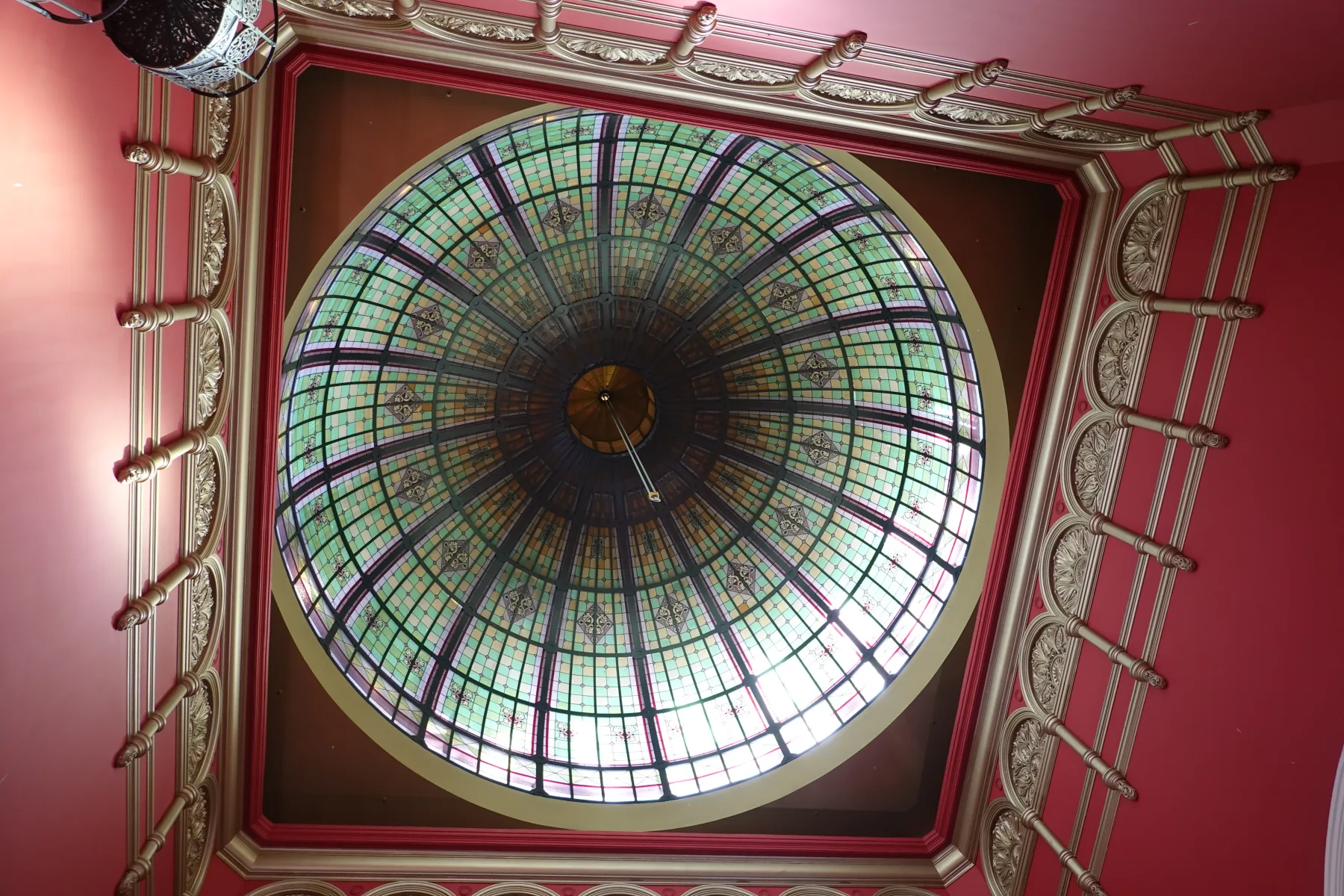
At the centre of the building, the inner glass dome sits beneath the larger copper-clad outer dome. Looking directly up revealed circular patterns that felt far lighter than the sandstone exterior we had just seen.
The upper gallery curves beneath the glass roof and brings the clocks, rails, columns and ceiling into the same view. This became our favourite part of the interior.
Continue from the QVB to the State Library
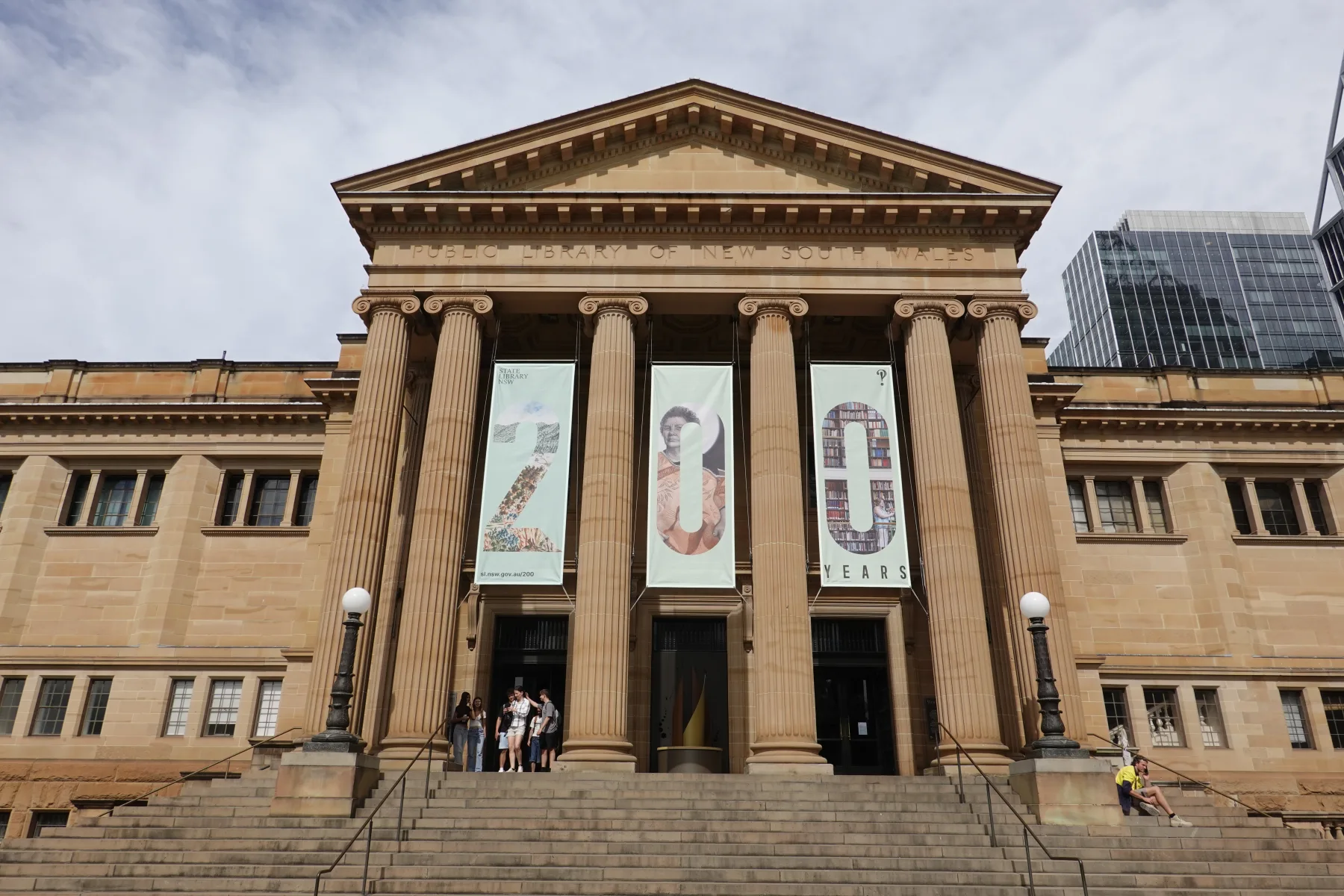
After exploring the QVB, we continued through central Sydney towards Macquarie Street. The State Library of NSW added a free historic interior, reading room and exhibitions to the same day.
The walk also passes other central landmarks, so it works as a continuation rather than a separate trip across the city.
Frequently asked questions
Is the Queen Victoria Building free to enter?
Yes. There is no admission fee to enter the QVB and see its public arcades, clocks, stained glass and dome.
What are the QVB opening hours?
The building currently lists 9 am–6 pm Monday to Wednesday, Friday and Saturday; 9 am–9 pm Thursday; and 11 am–5 pm Sunday. Individual shop and dining hours vary.
Which station is closest?
Town Hall is the closest train station, and Exit 1 is marked QVB. The QVB light rail stop outside the building is served by the L2 and L3 lines.
How long should you allow?
Allow around 30 to 45 minutes for the exterior and main interior features. An hour or more gives you time to shop, stop at a cafe or revisit the galleries.
What should you see inside?
Look for the Great Australian Clock, Royal Clock, central glass dome, stained-glass windows, heritage staircases and the views across the multi-level arcades.
Summary
The Queen Victoria Building was worth visiting for its architecture even without a shopping list. Moving from the sandstone exterior into the layered arcades revealed two very different clocks, stained glass, old staircases and the central dome.
Town Hall Station and the QVB light rail stop make access simple. Thirty to 45 minutes covers the main features, but moving between floors rather than staying on the ground level made the visit far more interesting for us.