St Mary's Cathedral Sydney: Opening Hours, Free Entry and Highlights
St Mary's Cathedral rises opposite Hyde Park in central Sydney. We went inside in April 2026 to see its sandstone nave, stained glass and quiet side chapels.
This article contains affiliate links. If you book through them, we may earn a commission at no extra cost to you. Our first-hand views are our own.
Opening hours, free entry and Sunday tours
The Cathedral is free to enter and open to the public. Donations towards the upkeep and cleaning of the building are welcomed, but there is no general admission ticket.
- Entry
- Free; donations welcomed
- Monday–Friday
- 6:30 am–6:30 pm
- Saturday–Sunday
- 6:30 am–7 pm
- Free guided tour
- Sunday at 2 pm, subject to current Cathedral arrangements
- Time to allow
- About 30–45 minutes for an independent visit
These hours and the Sunday tour are the Cathedral's current published arrangements. Extended hours may apply during daylight saving and Christmas periods, while Masses and special services can affect access. Check the official visitor information before making a special trip.
St Mary's is an active place of worship rather than only a tourist attraction. Visitors are asked to speak quietly, silence their phones, remove hats and avoid bringing food or drinks inside. The Cathedral also asks visitors to cover their shoulders and avoid bare feet or short skirts.
How to get to St Mary's Cathedral
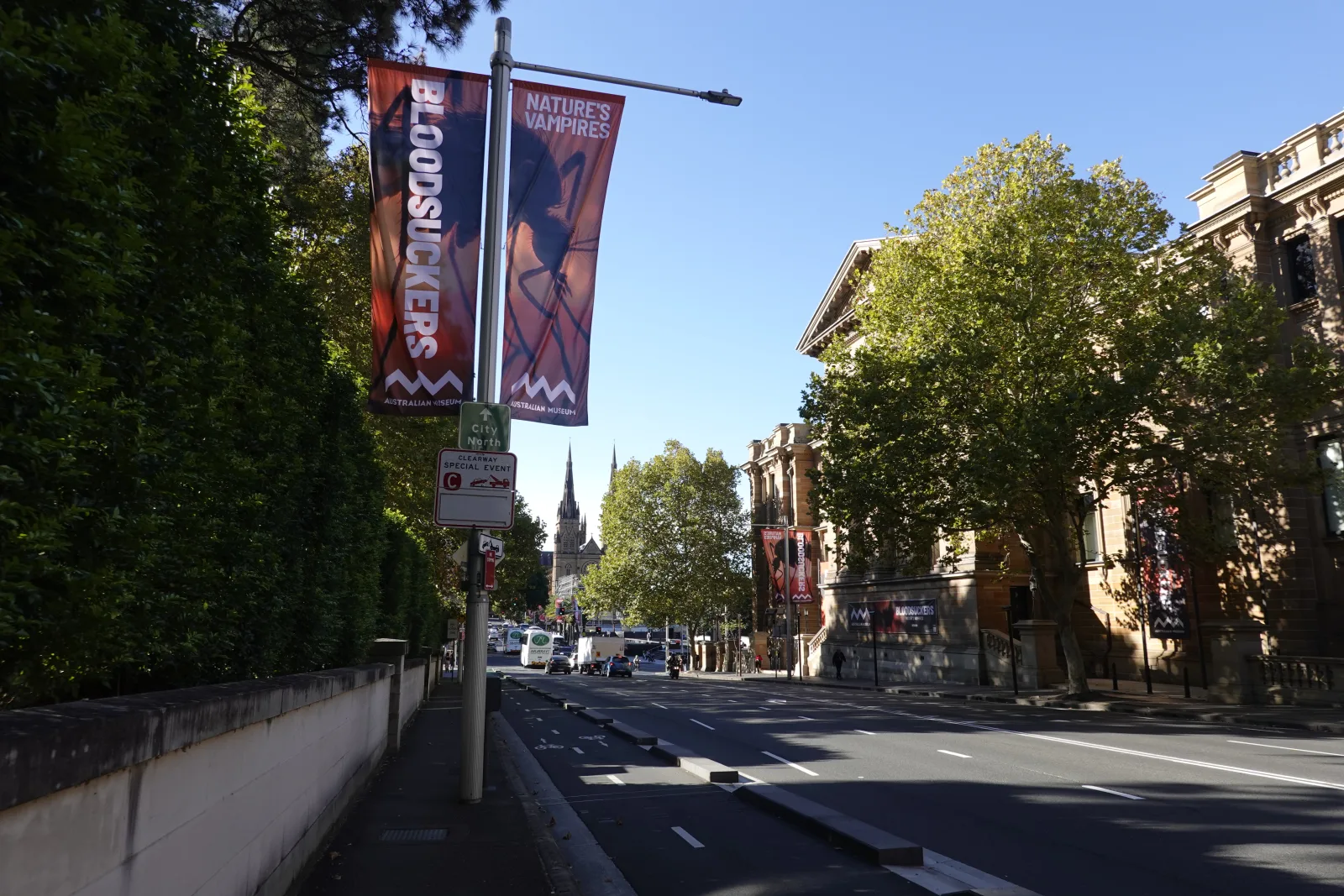
St Mary's Cathedral stands at the corner of College Street and St Marys Road, directly opposite the eastern side of Hyde Park. St James, Museum and Town Hall stations are each about a seven-minute walk away.
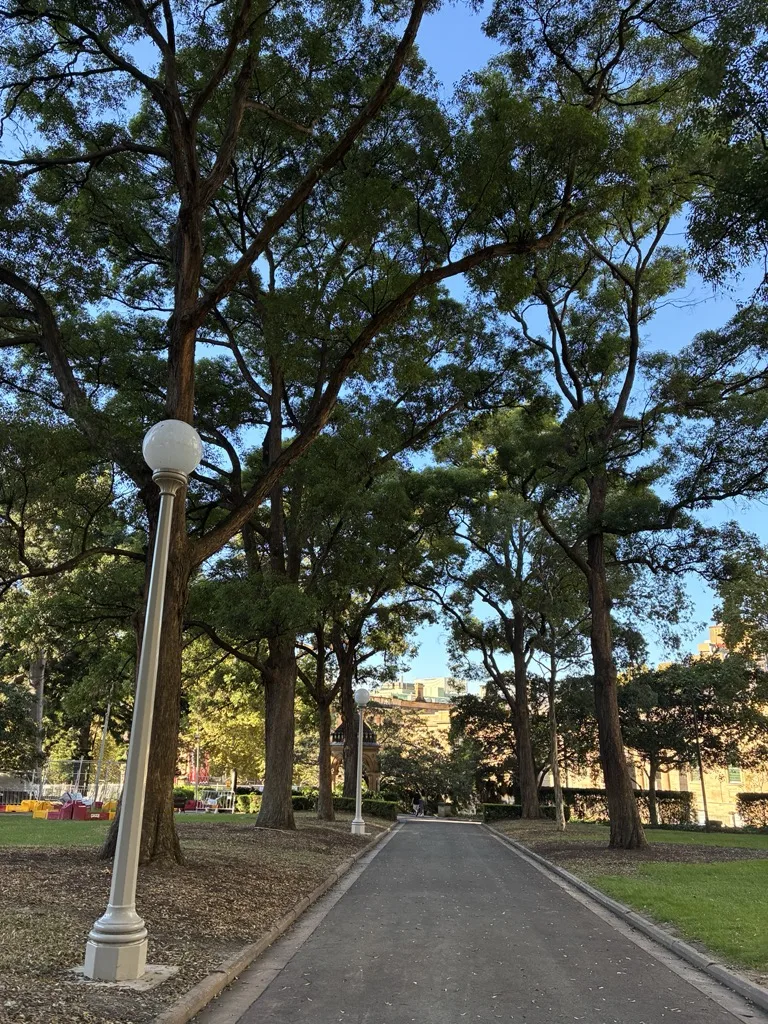
We walked north through Hyde Park from Pullman Sydney Hyde Park on College Street. The twin spires appeared between city buildings as we approached, so the route was easy to follow once we reached the park.
- From St James Station: cross Hyde Park towards College Street
- From Museum Station: walk north along the eastern edge of Hyde Park
- From Town Hall or the Queen Victoria Building: follow Park Street east through or beside Hyde Park
- By bus: alight near Hyde Park or Town Hall and walk east along Park Street
- By car: there is no public parking on the Cathedral site; use nearby commercial or metered parking
Use Google Maps to choose the station and entrance that best fit the rest of your day.
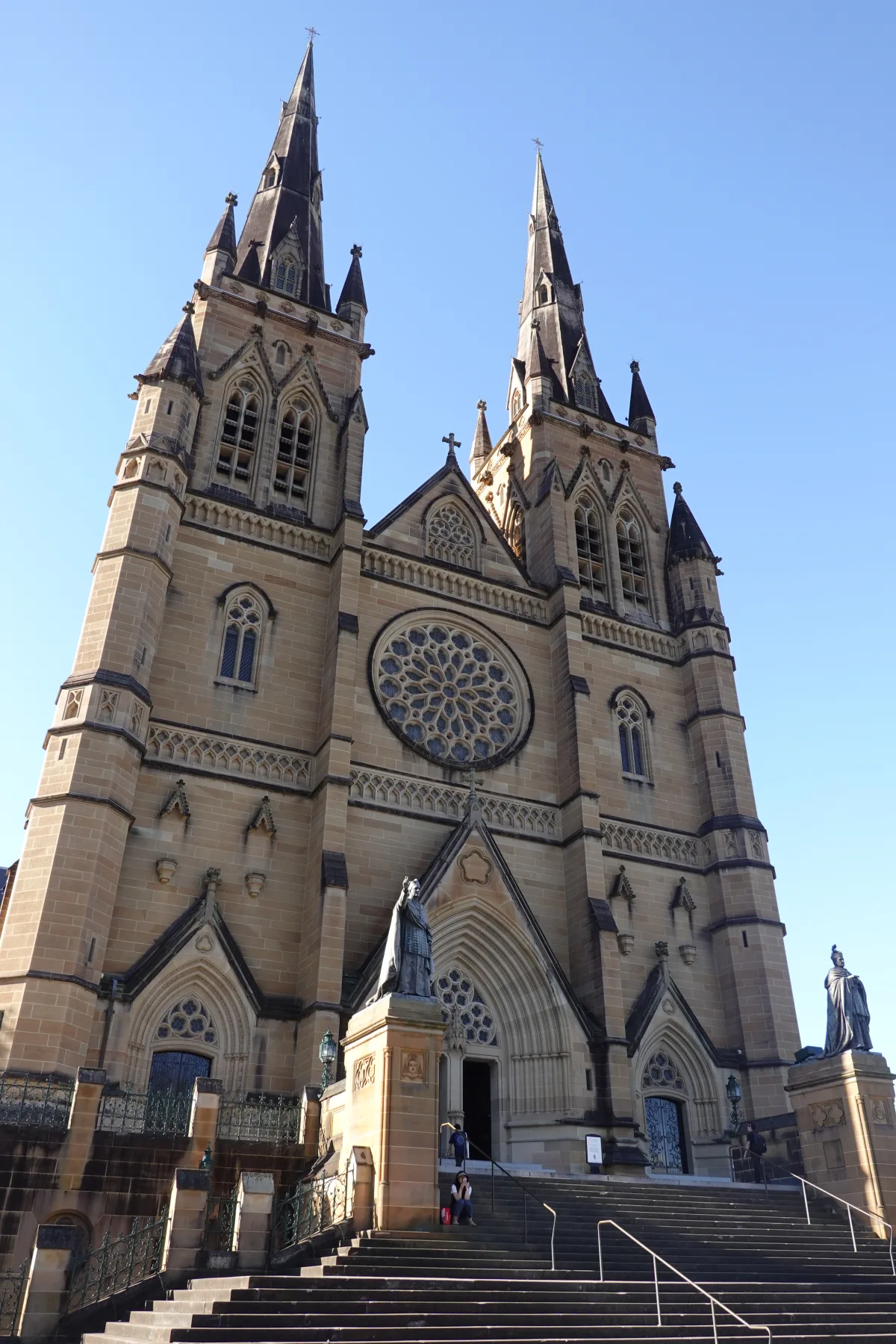
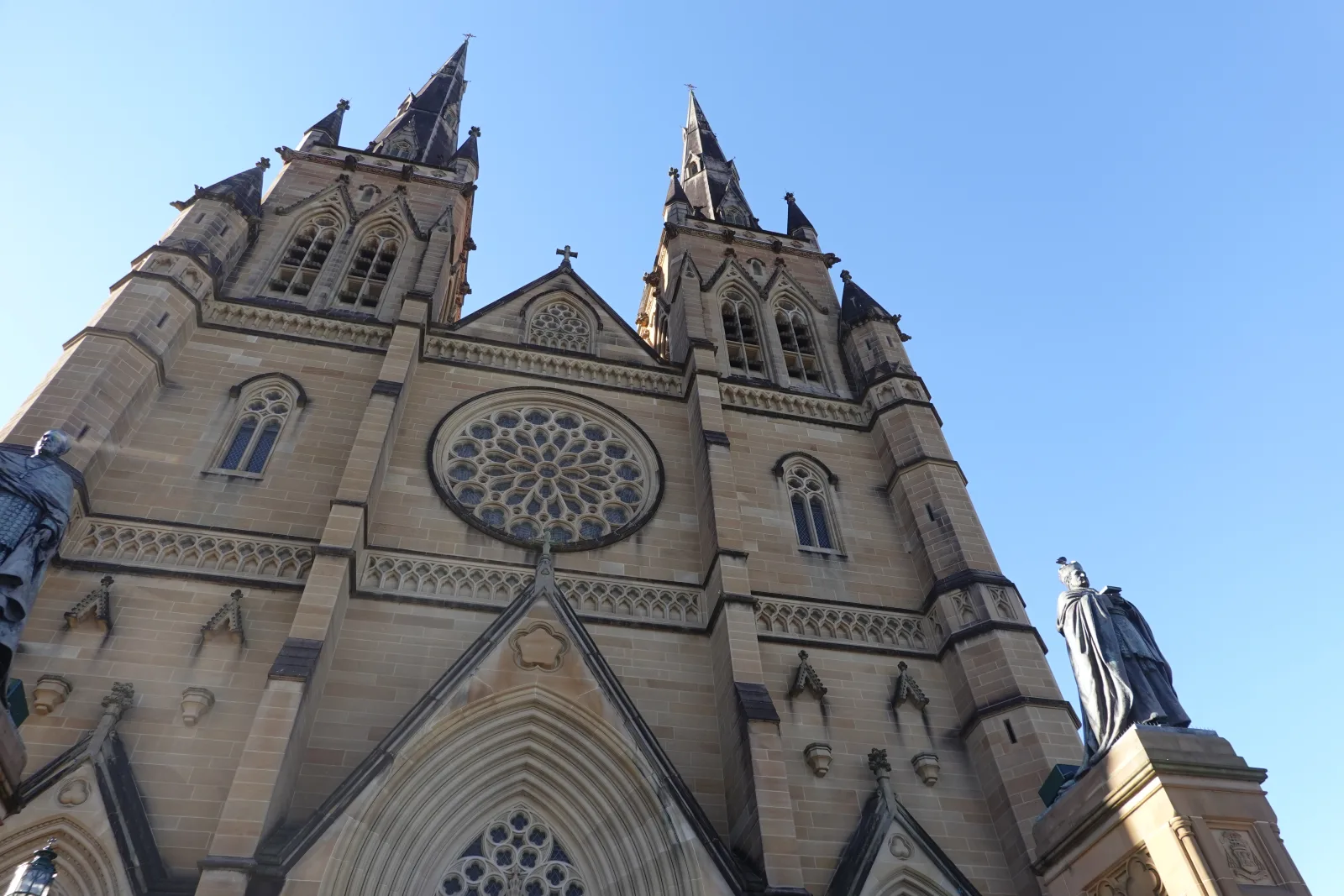
From the front steps, the twin spires and central rose window sit in one view. The building is tall enough that we had to move well back to fit the façade into a photograph.
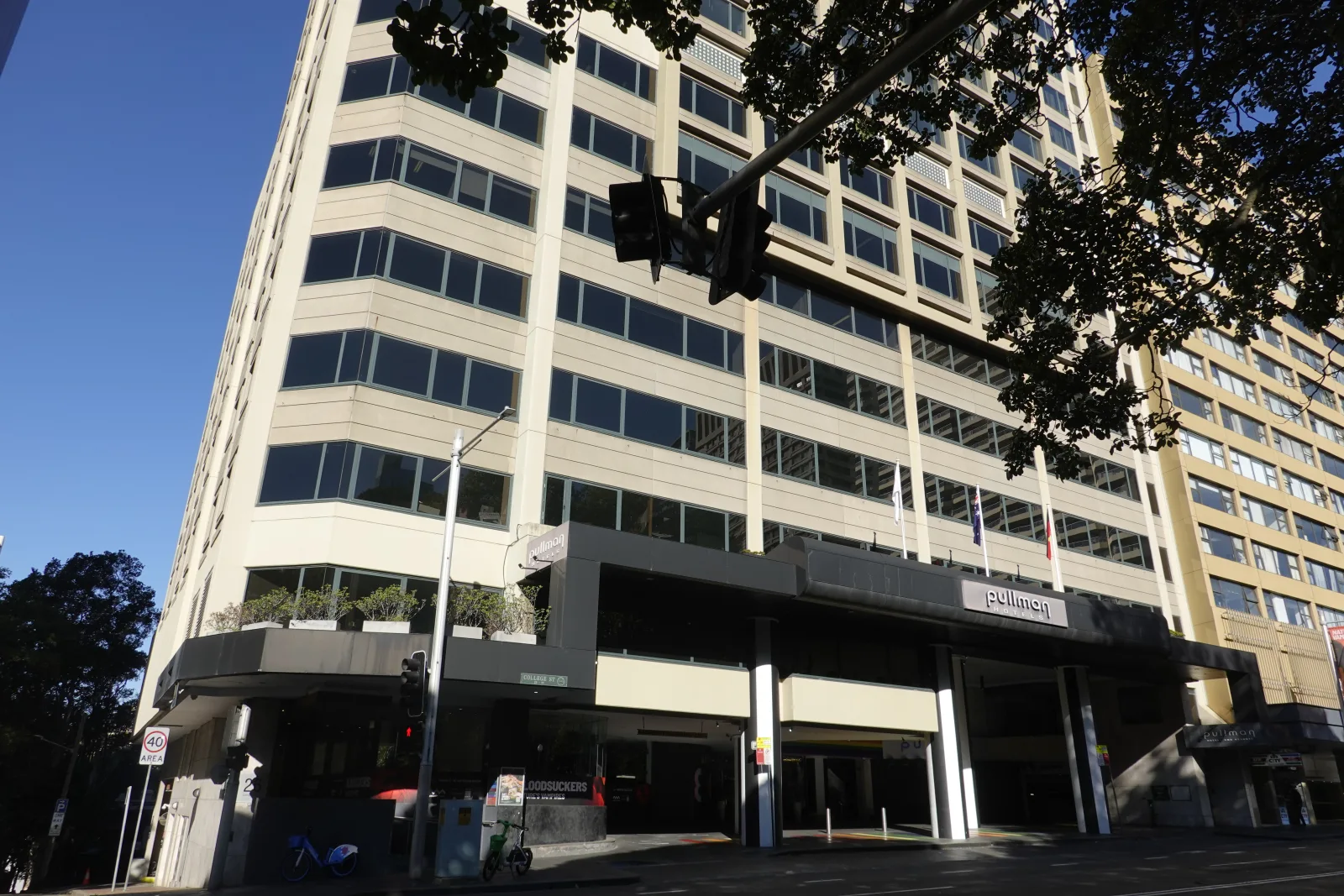
We stayed on the opposite side of Hyde Park and could walk here without using transport. Our room, rooftop pool and experience of the location are covered in the hotel review below.
A sandstone Gothic Revival landmark
The Cathedral's history and architecture notes record that the present building followed a fire that destroyed the earlier Cathedral in 1865. Architect William Wilkinson Wardell designed the new church in the Gothic Revival style, using dressed Sydney sandstone.
The Cathedral is 107 metres long, and its front towers and spires rise more than 74 metres. Those dimensions explain why the exterior remains so prominent even among central Sydney's taller modern buildings.
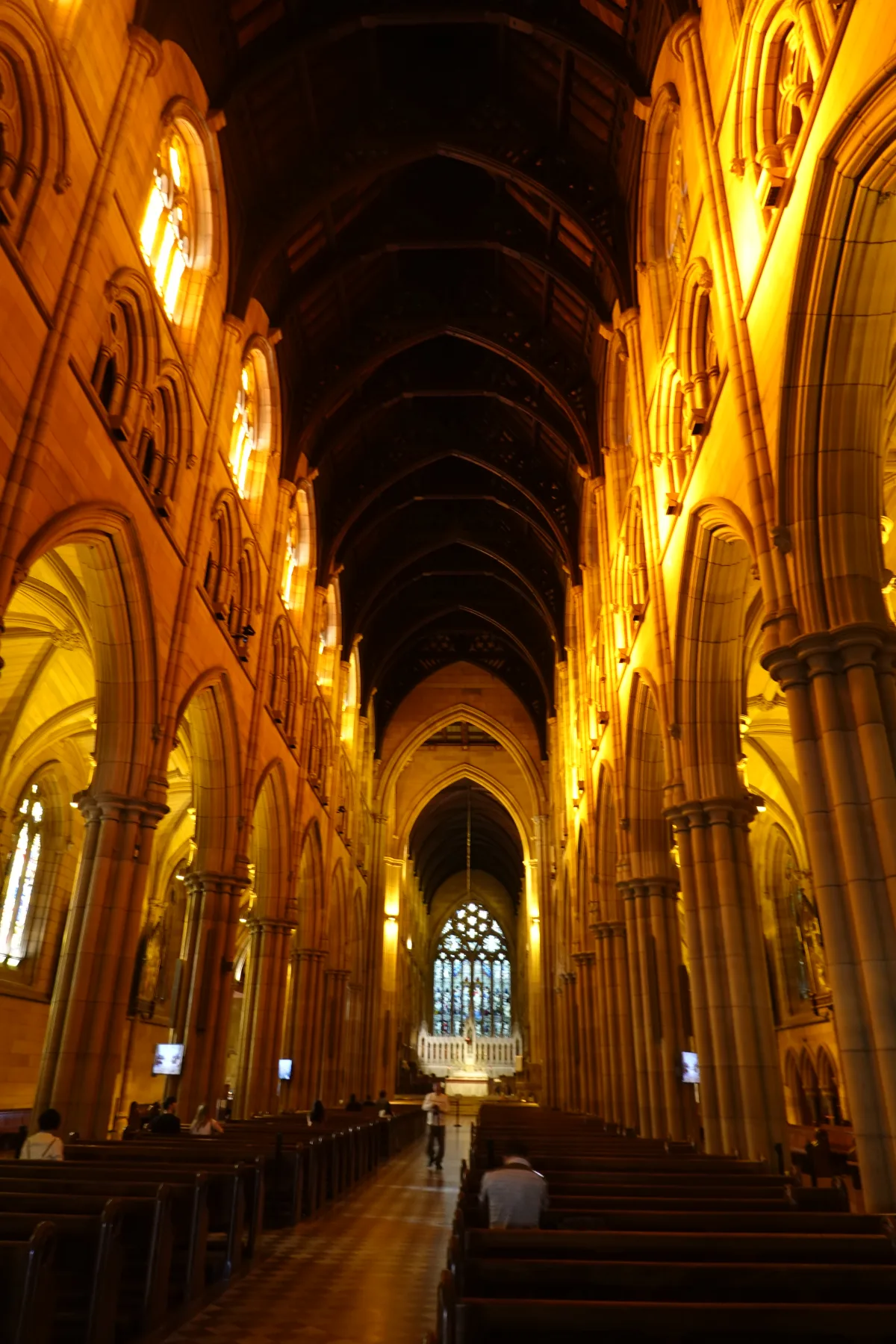
Inside, the scale became clearer along the central nave. Warm light picked out the sandstone columns, while the white pinnacles of the High Altar Screen and coloured window beyond drew our attention forward.
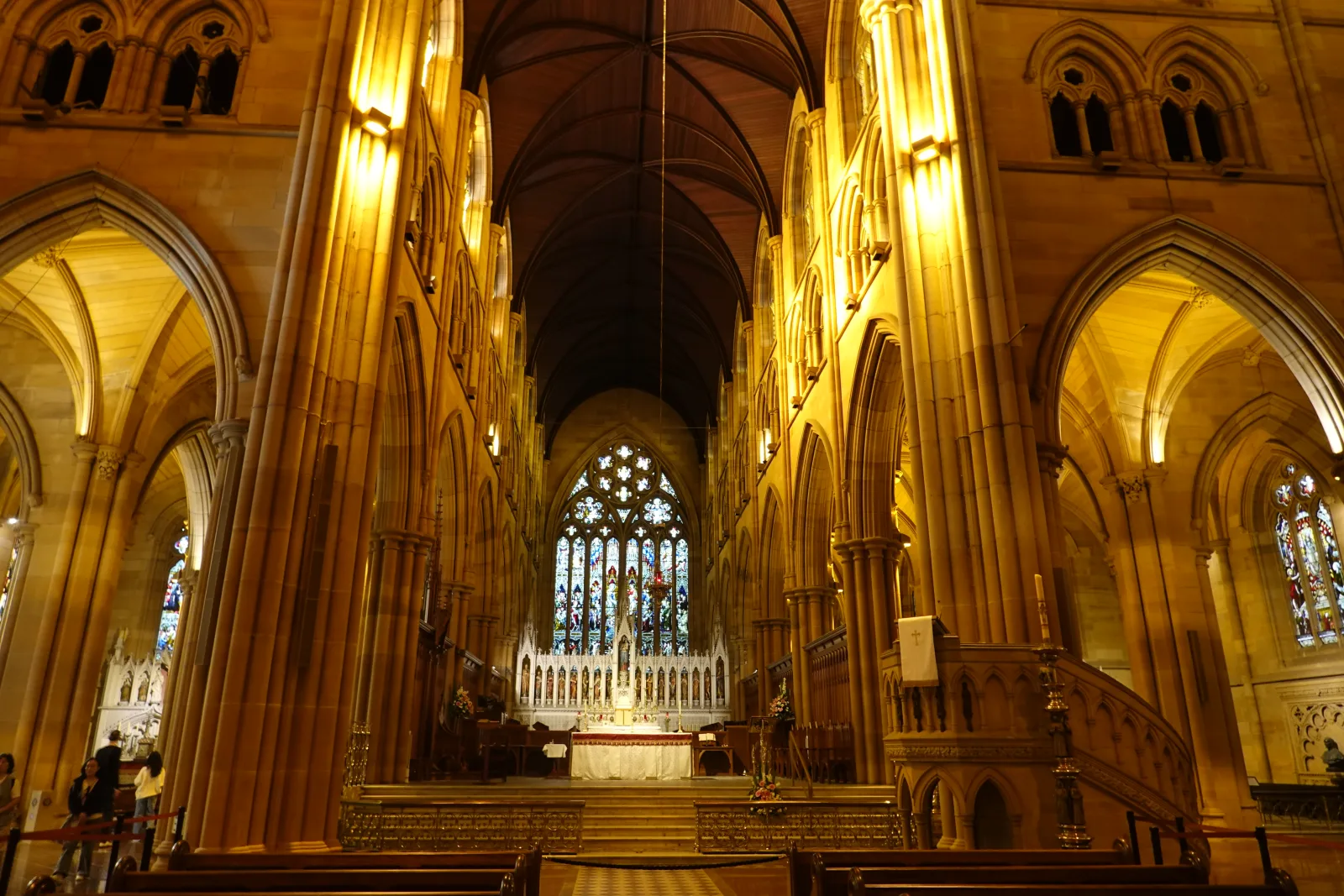
The interior felt dark for a moment after the bright afternoon outside. Once our eyes adjusted, the ribs of the ceiling, the arches and the carved details became much easier to see.
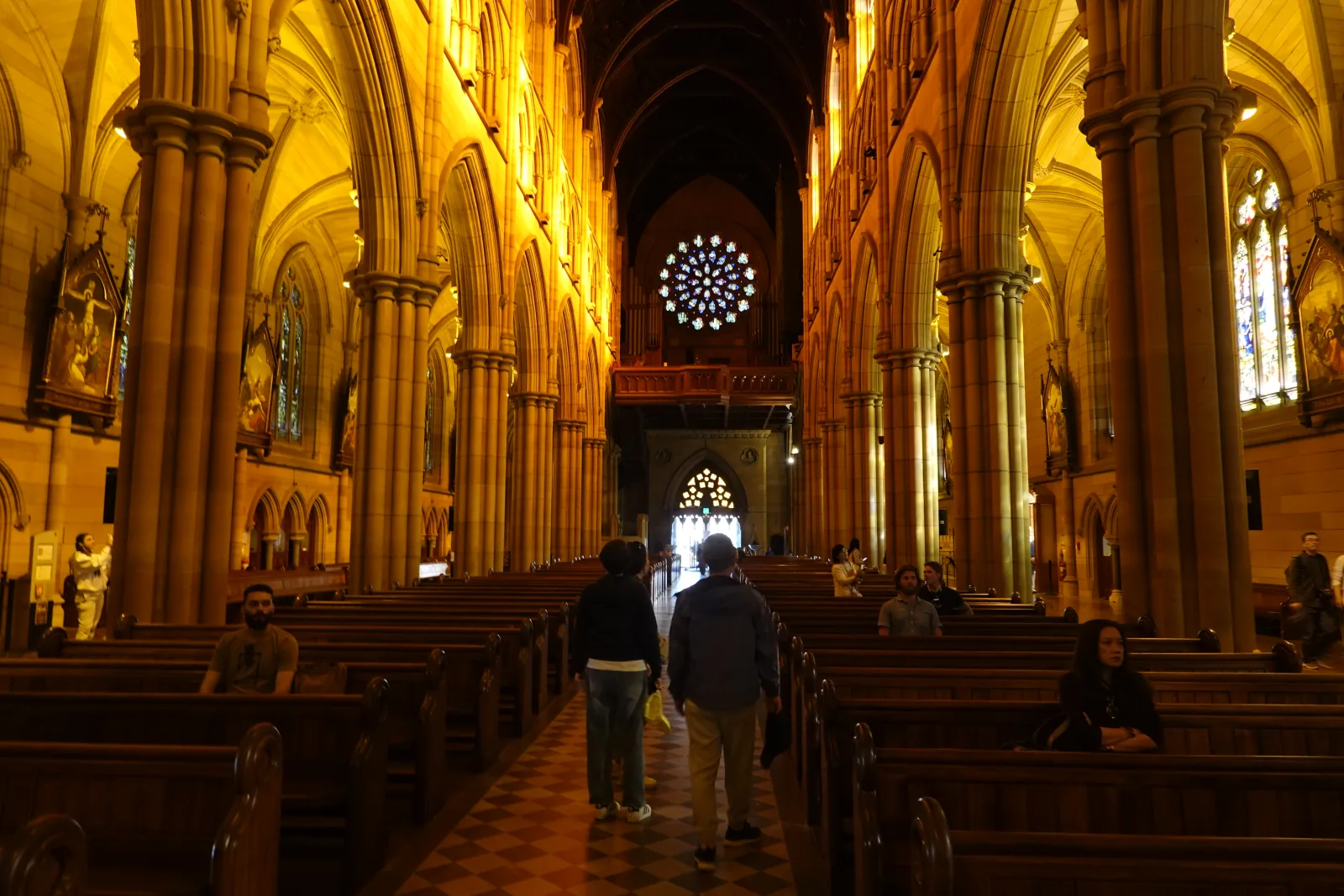
Turning back towards the entrance revealed the long nave leading to the rose window. A vertical view made the full height of the columns and arches clearer.
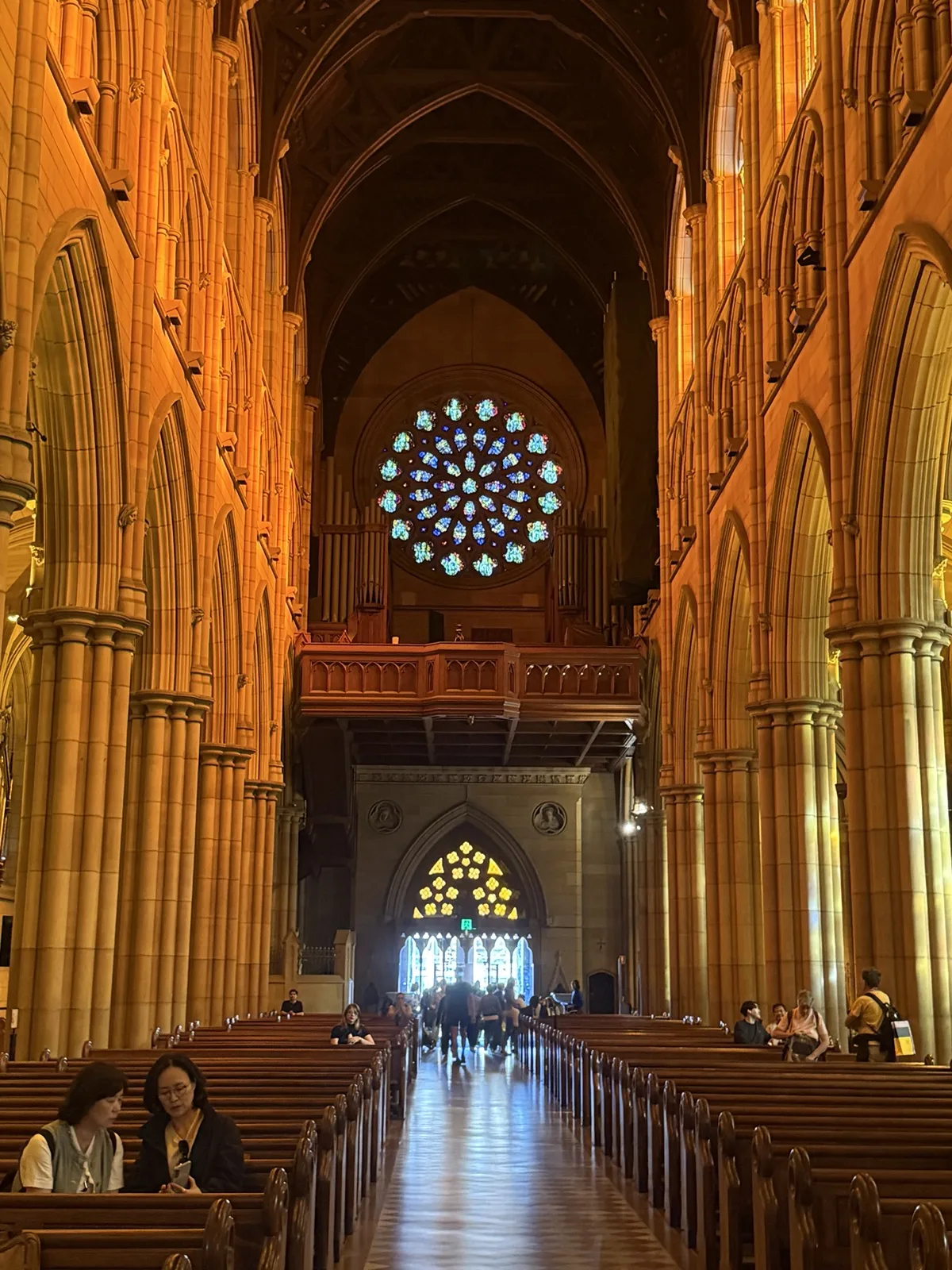
We walked both sides rather than treating the central aisle as a quick route in and out. People were praying inside, so we spoke quietly and kept the centre of the aisle clear.
Stained glass along the nave and chapels
The Cathedral's stained-glass windows were made at the Hardman studios in Birmingham, England, from 1881 onwards. Windows in the nave show New Testament scenes, while the sanctuary and transepts include the mysteries of the Rosary.
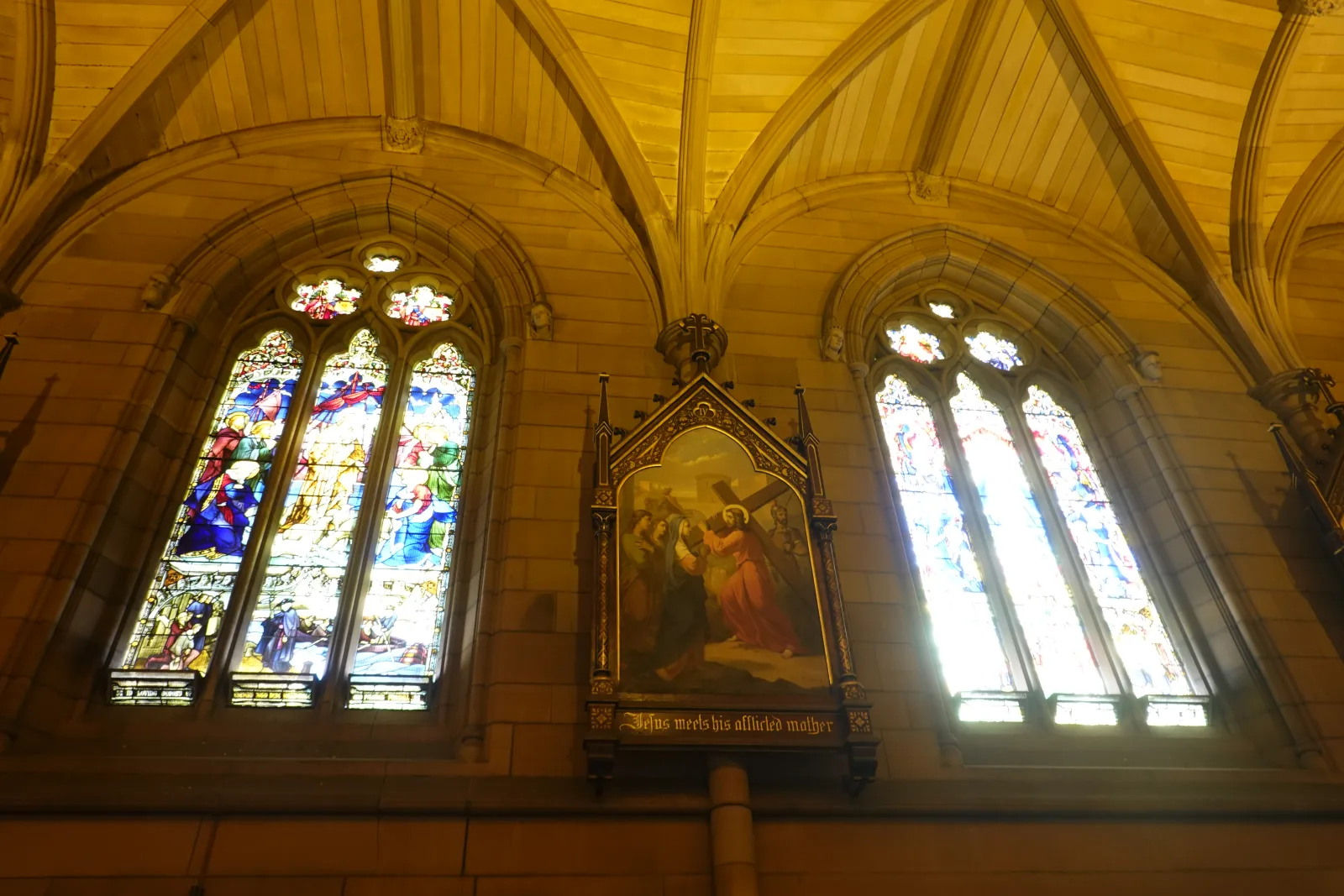
Along the side aisles, the coloured glass sits above paintings and pale stone details. Daylight through the windows made the sandstone appear deeper and warmer than it did outside.
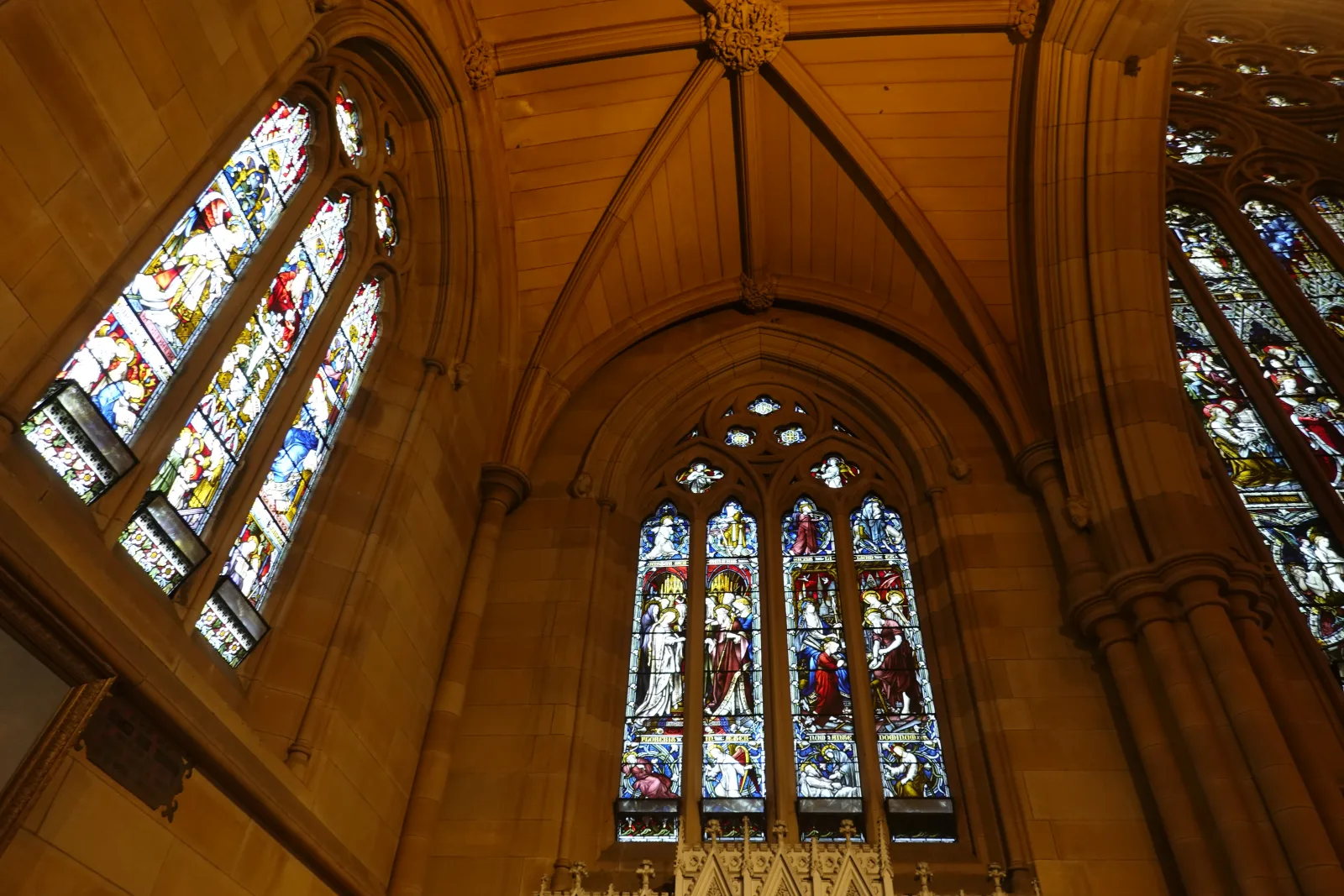
Looking at the windows together with the arches gave us a better sense of the building than isolating each panel through a camera. Blue glass also appeared between the sandstone columns as we moved along the aisle.
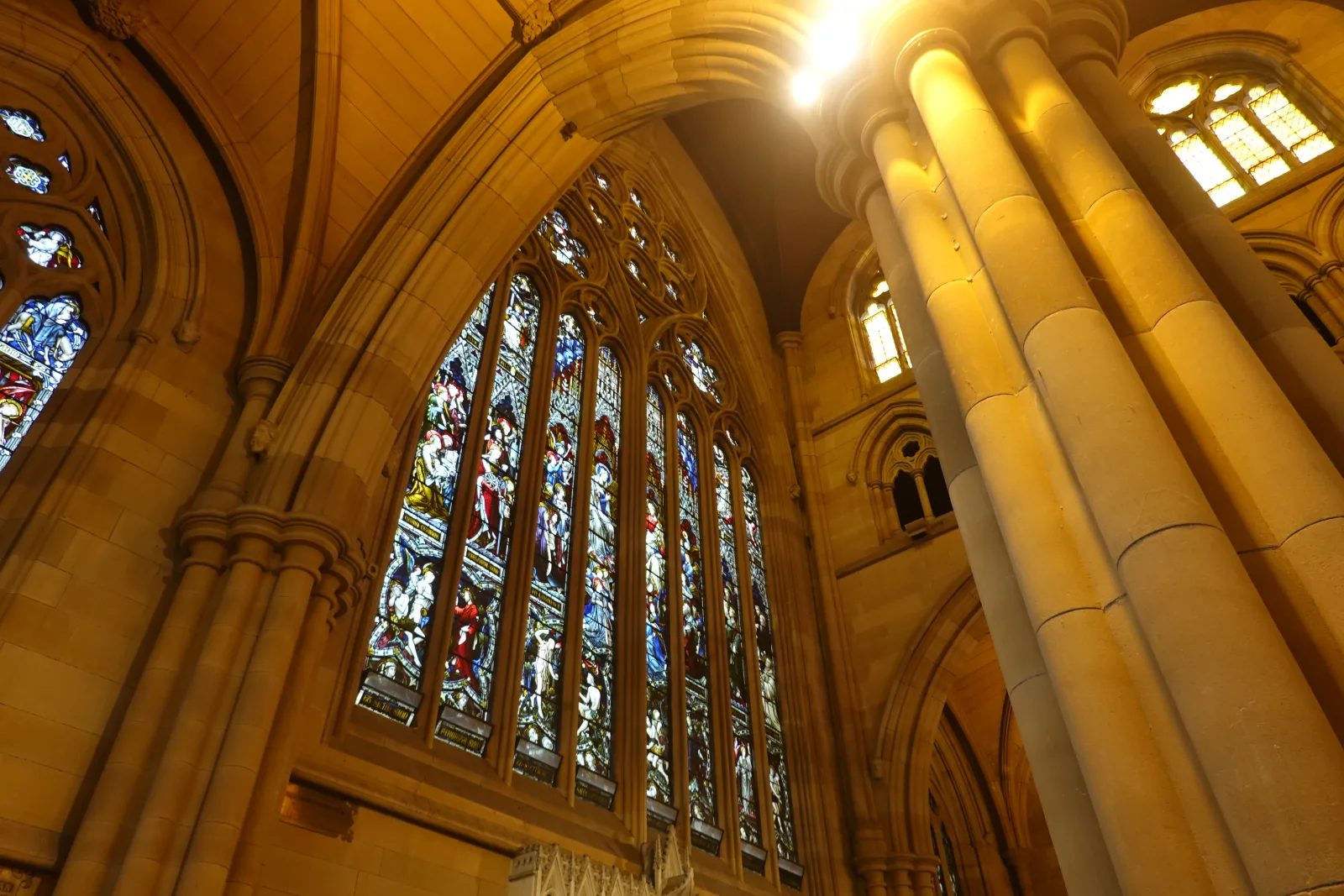
Details continue above normal eye level, so it is worth stopping to look up. Each window used a different balance of blue, red and painted figures.
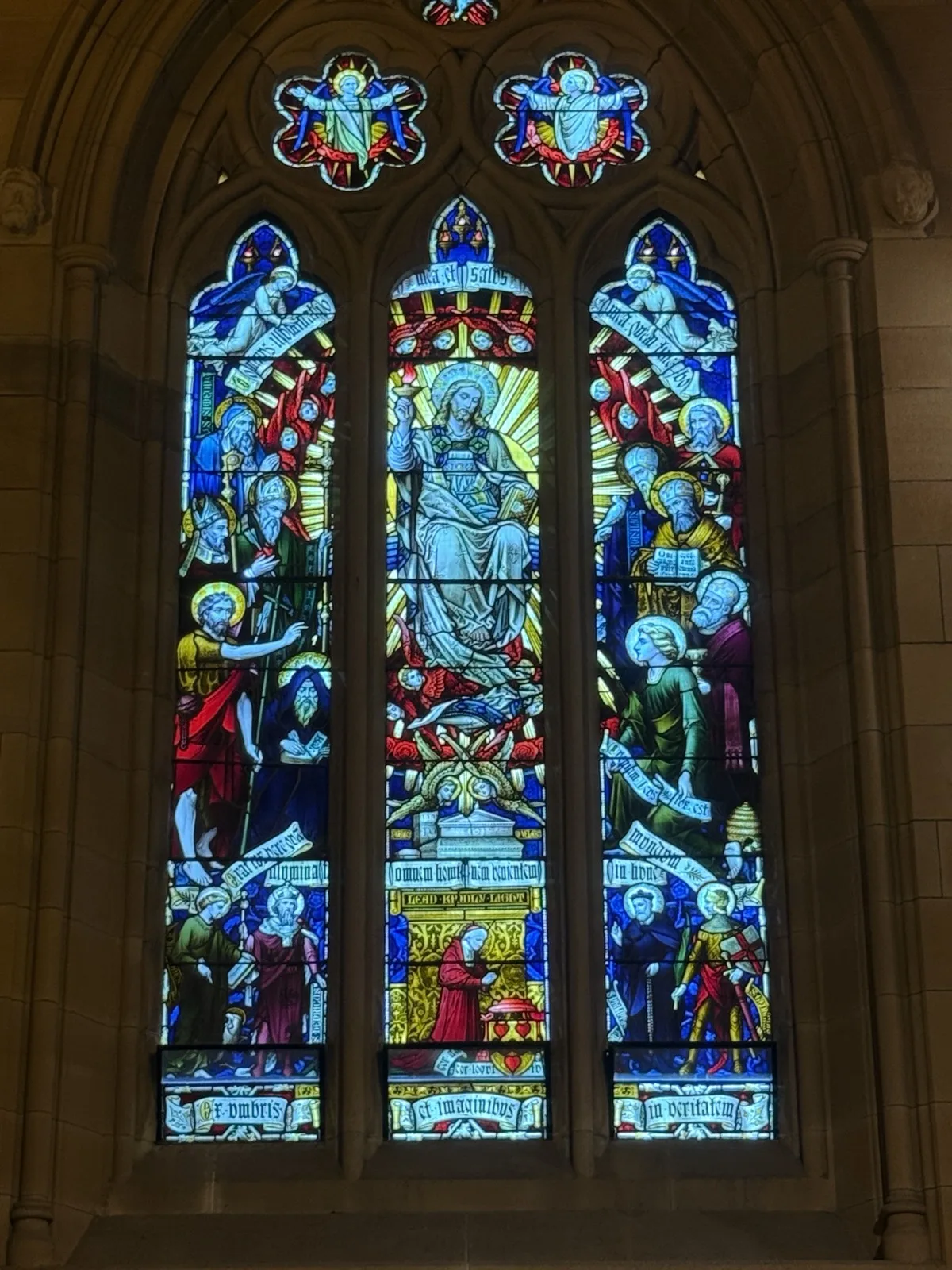
From close range, small figures and patterns become visible inside each section of glass. We took photographs quickly and from positions that did not place people at prayer in the frame.
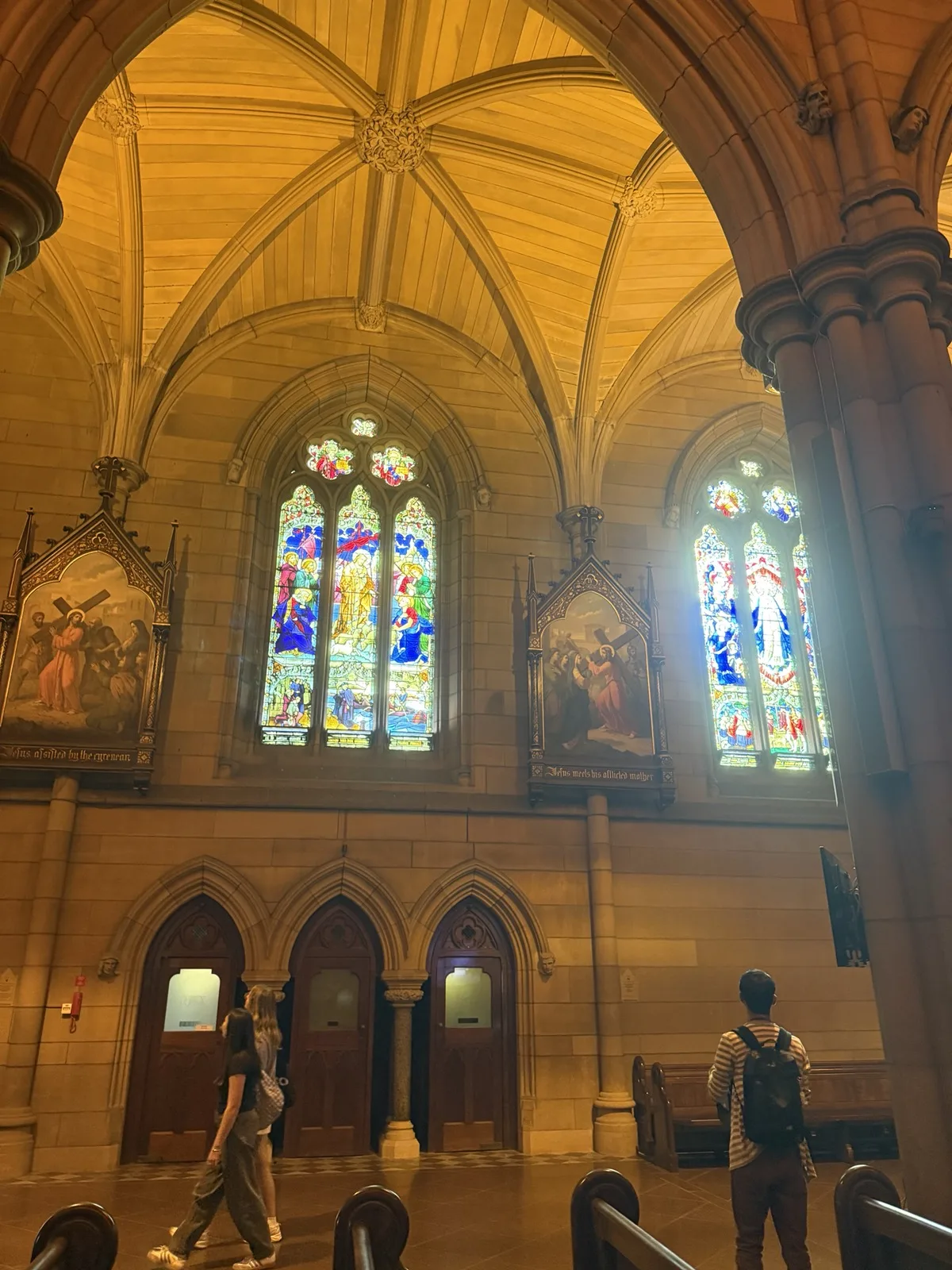
The side aisles are narrower than the nave, bringing the columns and curved ceiling closer. Continuing around both sides revealed far more than we would have seen by turning back at the High Altar.
Side chapels, altars and statues
Smaller chapels and altars line both sides of the Cathedral. Their light and colour differ from the main aisle, and some remain quiet spaces for prayer with candles burning nearby.
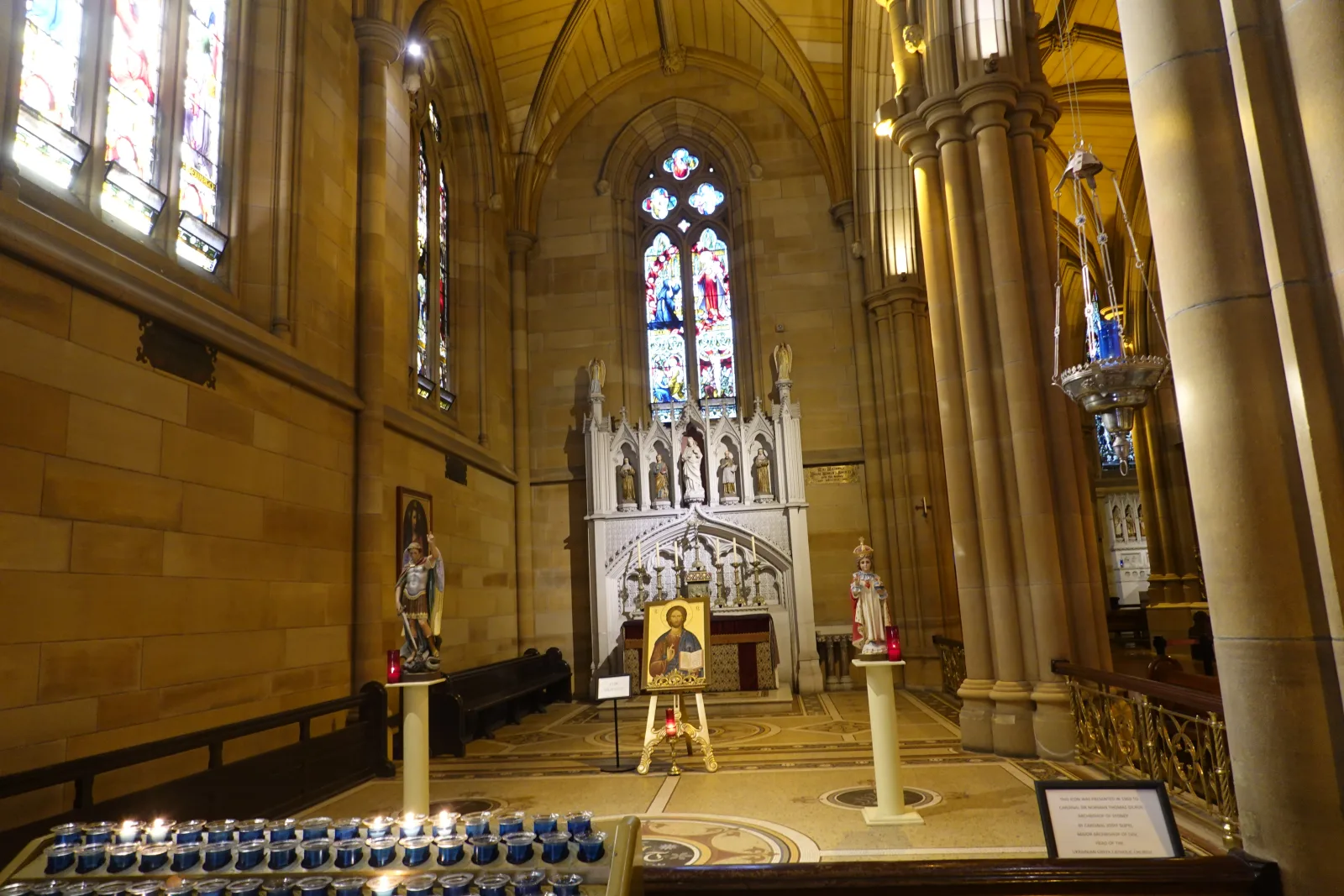
When someone was praying, we kept our distance and viewed the chapel from the aisle. The visit worked best when we allowed these spaces to remain places of devotion rather than treating every detail as a photo opportunity.
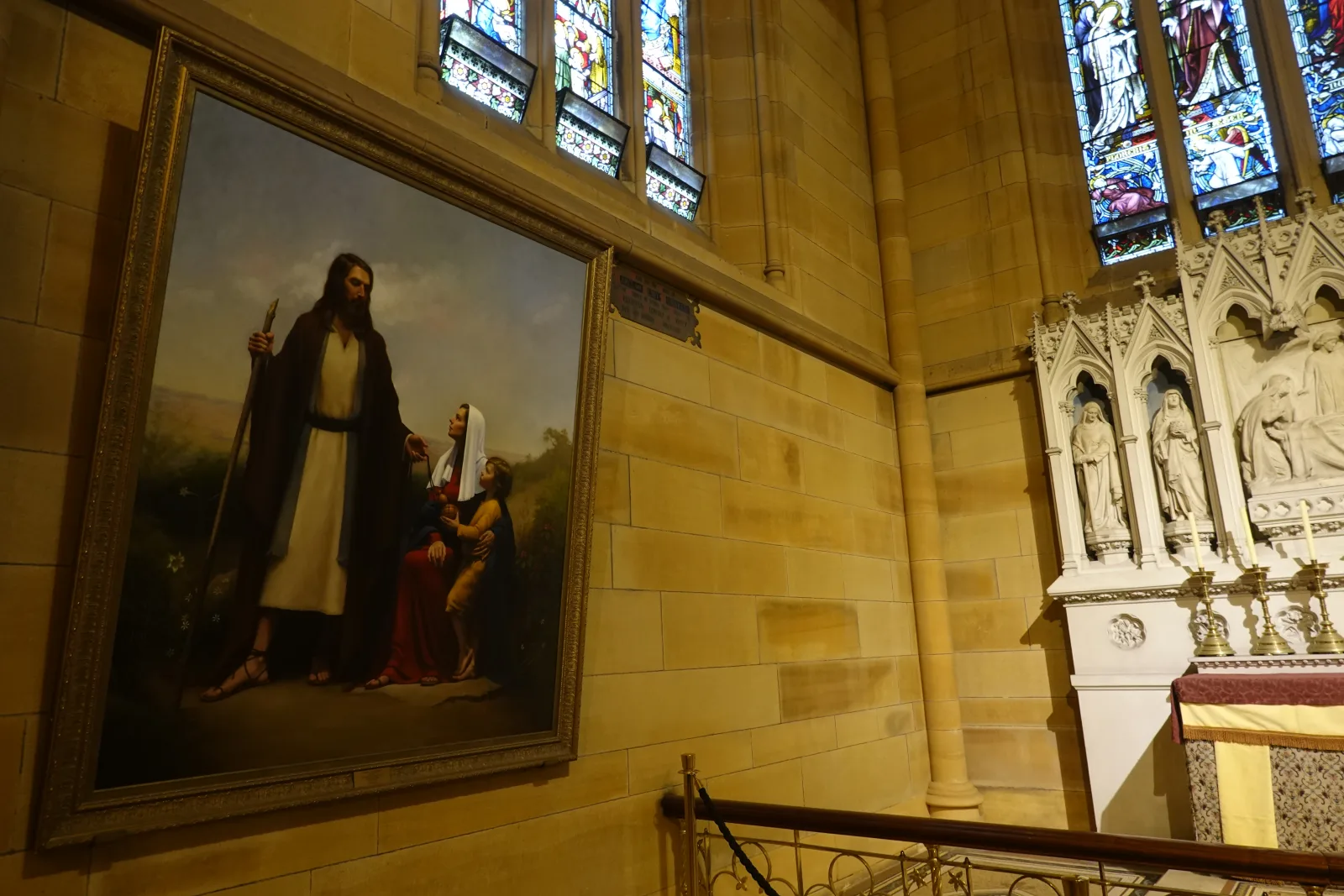
The white altars and narrow pinnacles could be seen at much closer range than the High Altar. In another chapel, coloured glass behind the pale stone changed the atmosphere again.
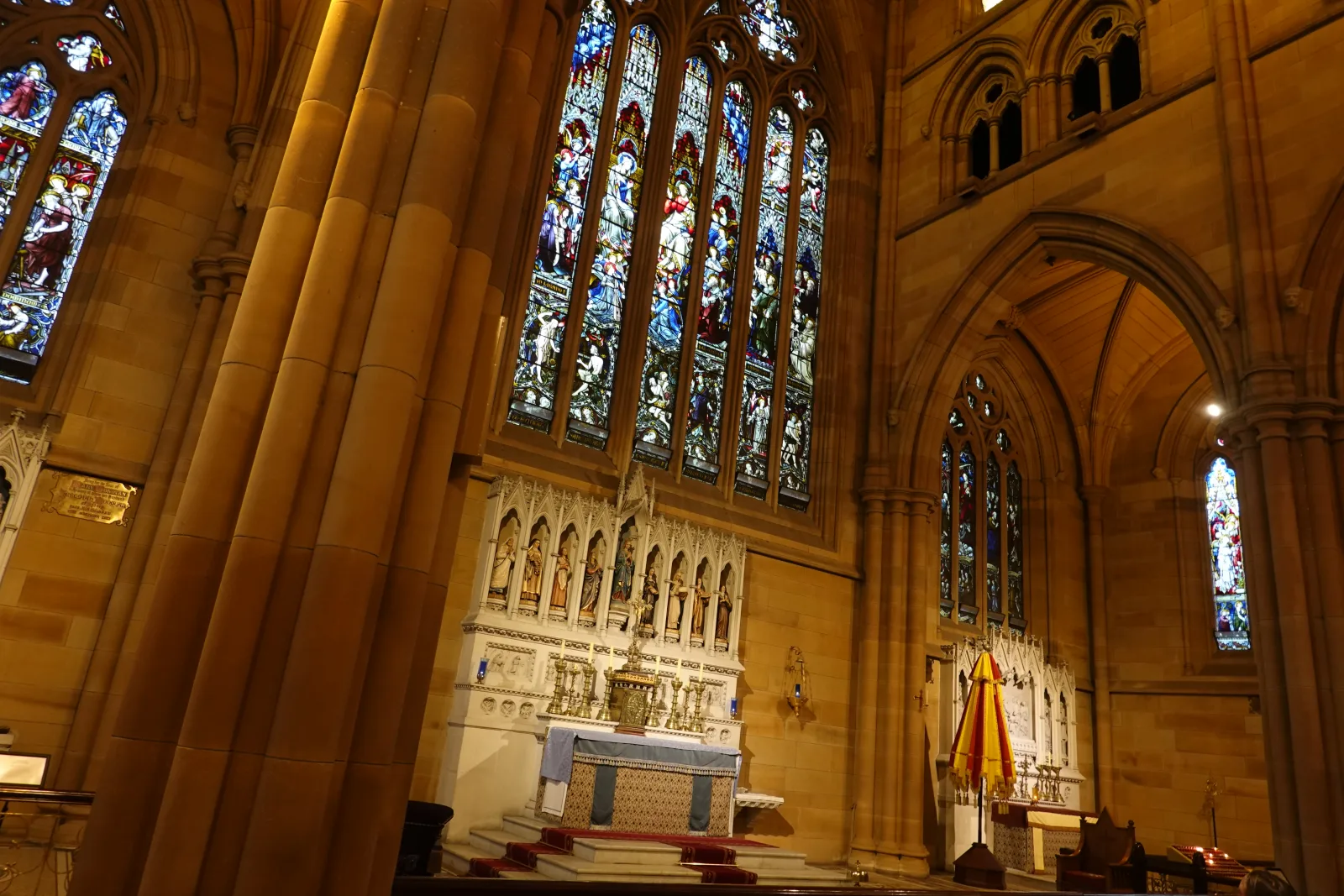
Another altar placed a row of saint figures beneath pointed arches. From closer range, their clothing, expressions and painted details became visible.
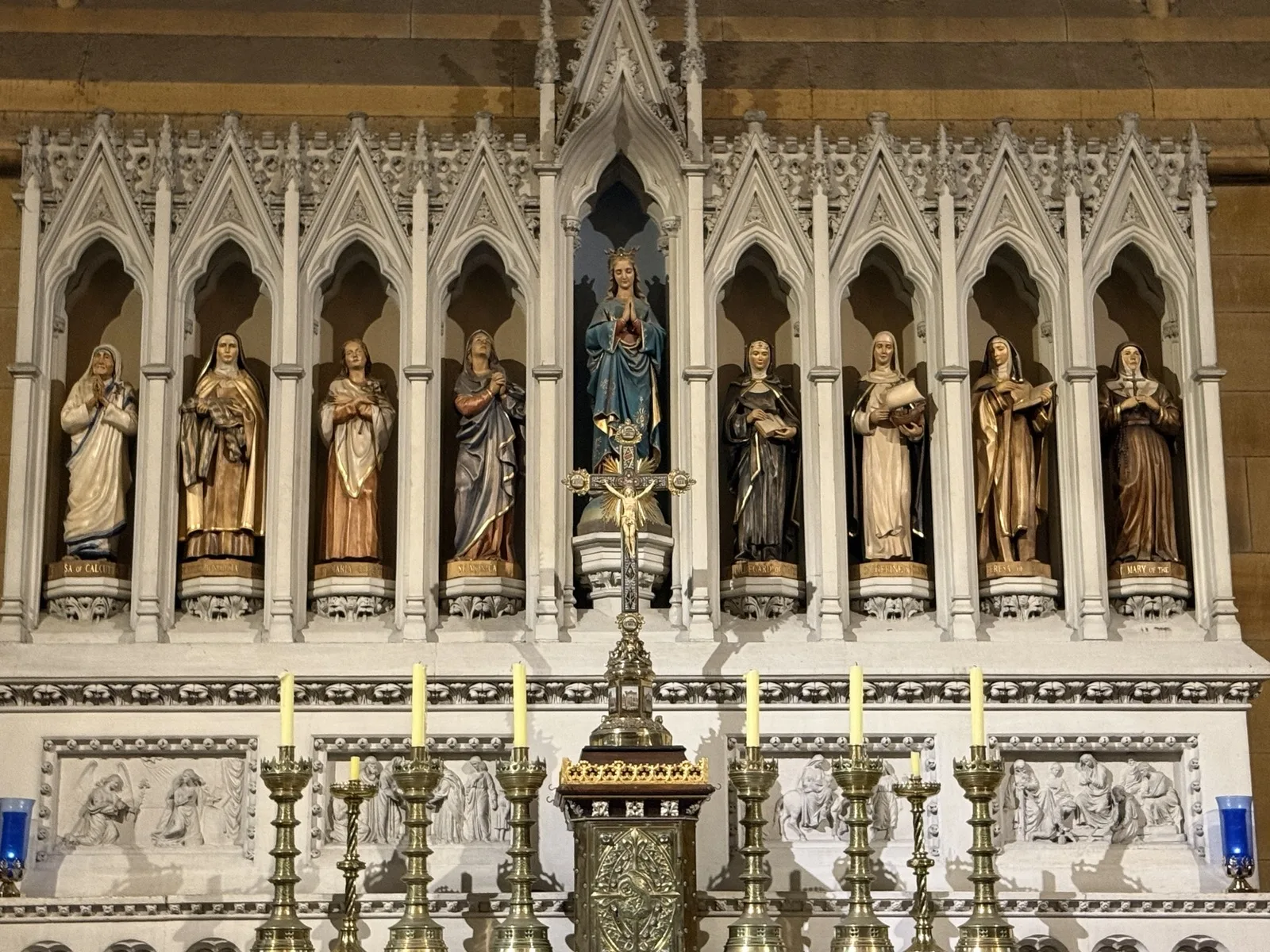
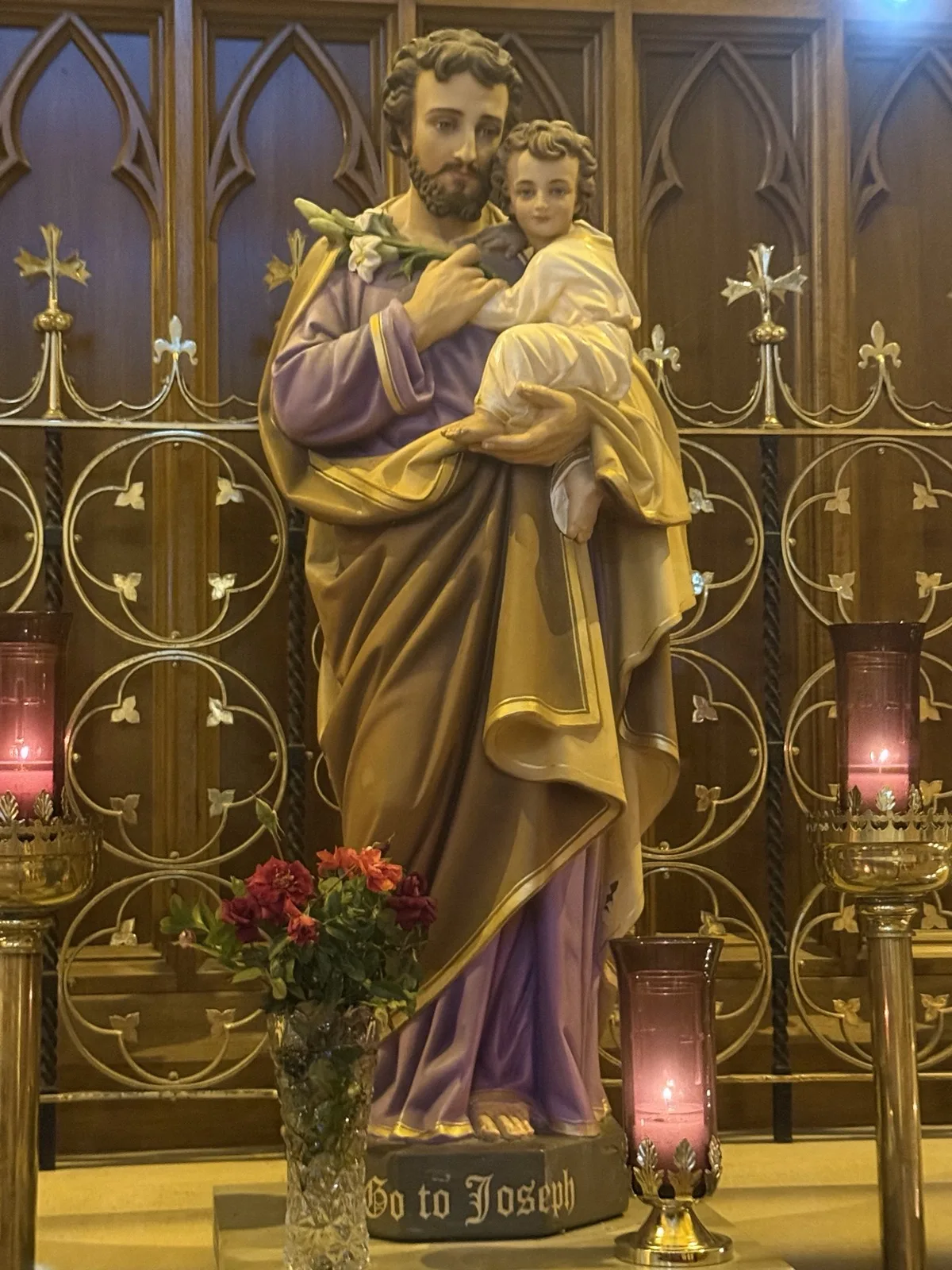
Statues also appear throughout the side aisles, including the Virgin and Child, St Joseph and the Archangel Michael. They are easy to miss if you only look towards the sanctuary.
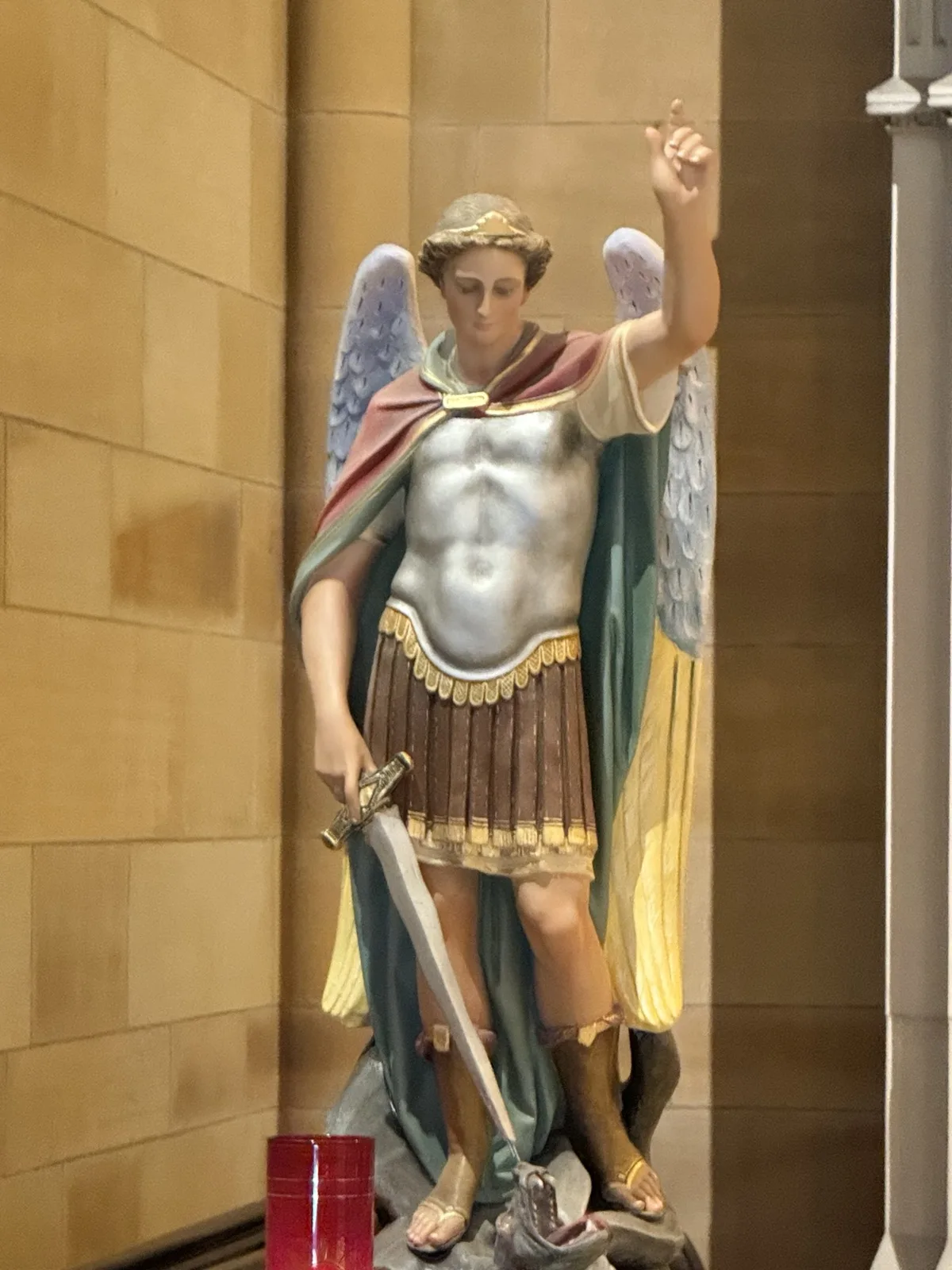
The Archangel Michael stood out against the quiet sandstone background. Nearby figures used blue, gold and red details that appeared more vivid in the subdued interior light.
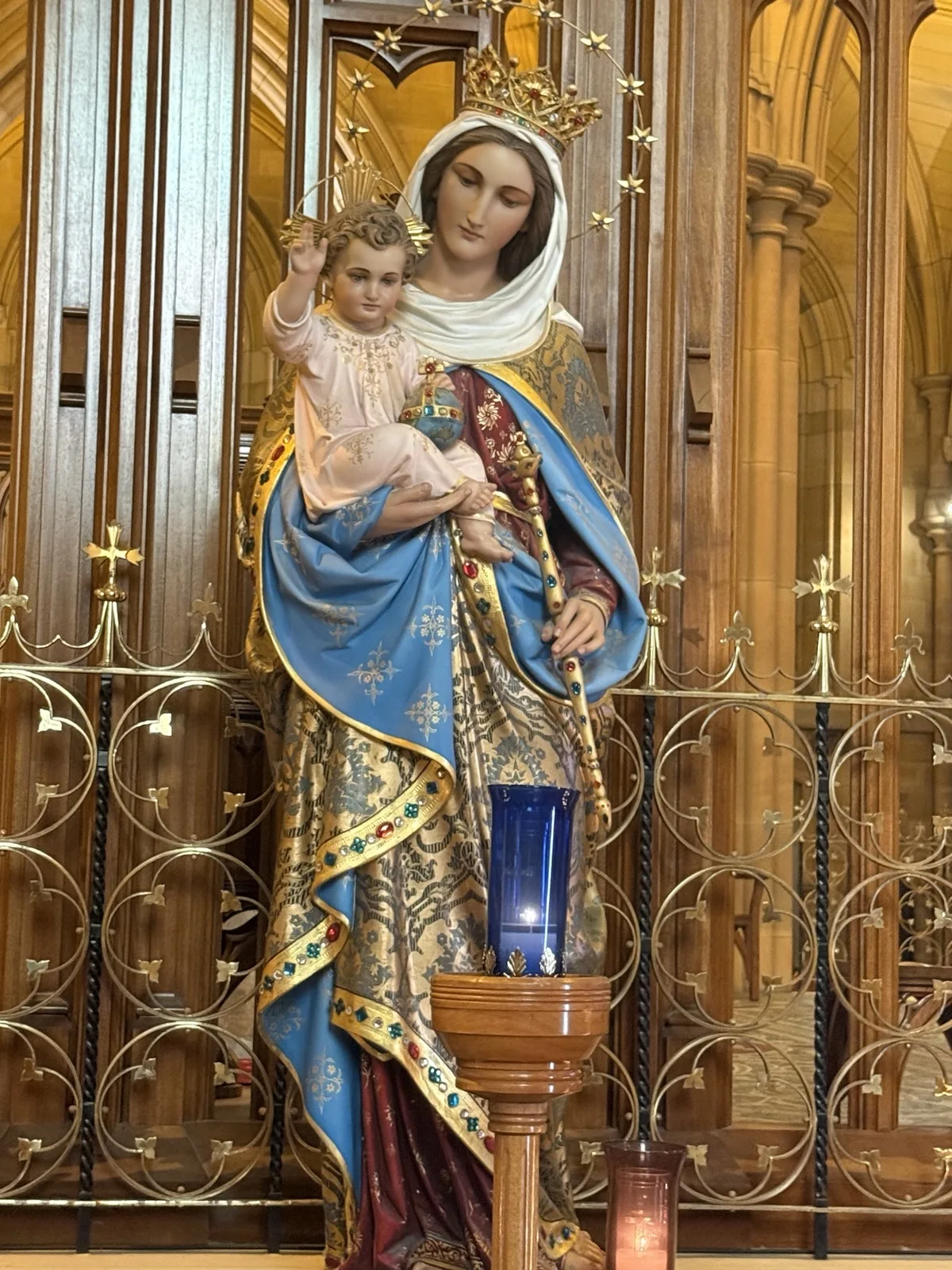
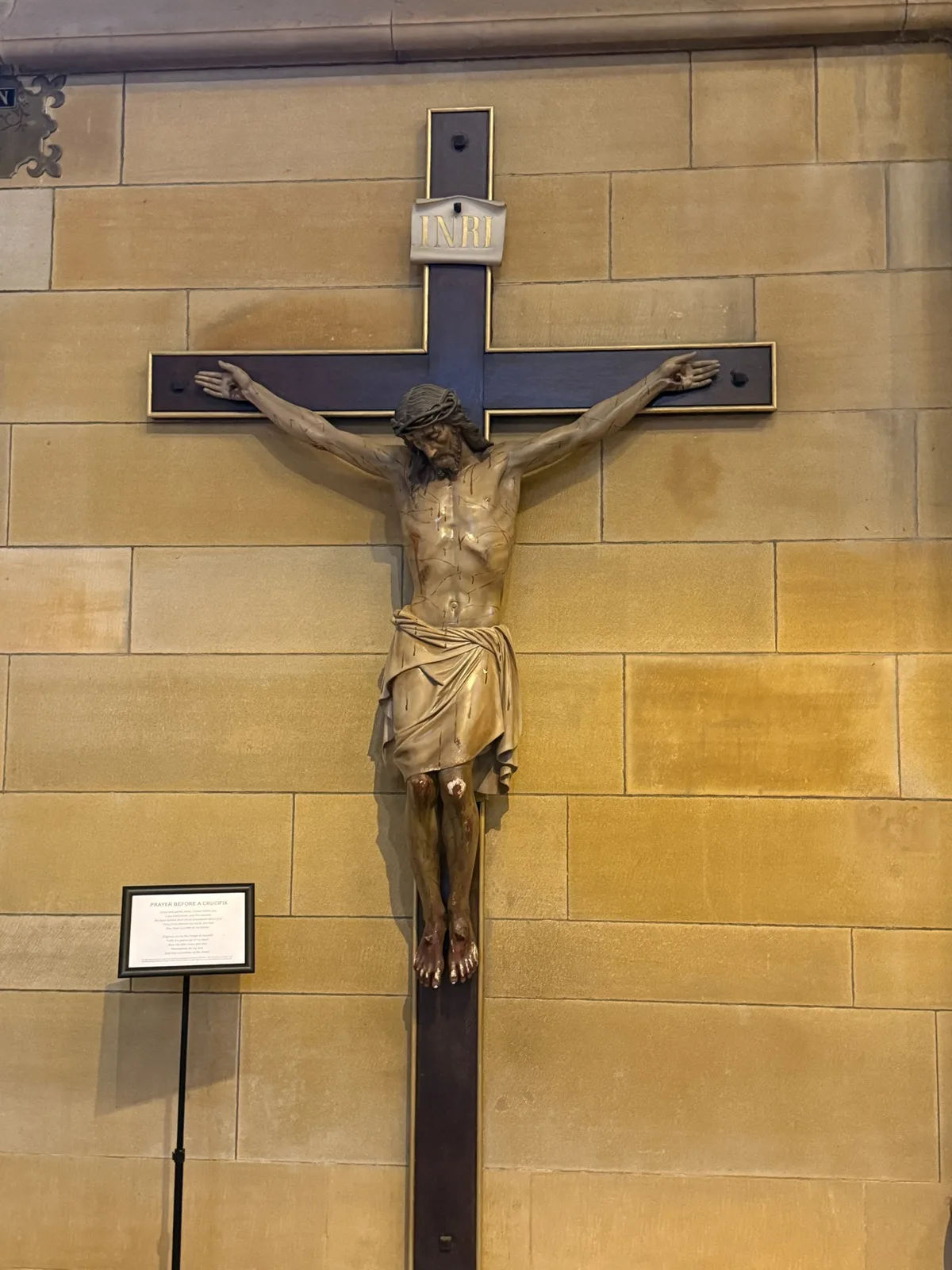
Candles had been placed in front of the crowned Virgin and Child. We paused without blocking the space for people who had come to pray, then continued along the wall where a crucifix hung above us.
Looking beyond the centre aisle revealed one more figure: St Joseph holding the infant Jesus, with the words “Go to Joseph” on the base.
Photography rules and how long to allow
Discreet photography is allowed outside Masses and other liturgical celebrations. Flash is not permitted, and a camera should not disturb people who are praying or attending the Cathedral.
We spent around 30 to 45 minutes seeing the exterior, walking the nave and looking through the side chapels. Allow more time for the free Sunday tour or if you want to attend Mass rather than make an independent sightseeing visit.
The visitor information page gives the current photography guidance. It is also worth checking the Mass schedule so you do not arrive expecting to photograph the interior during a service.
Frequently asked questions
Is St Mary's Cathedral Sydney free to enter?
Yes. Entry is free and open to the public. Donations towards upkeep and cleaning are welcomed.
What are the opening hours?
The Cathedral currently lists 6:30 am–6:30 pm Monday to Friday and 6:30 am–7 pm on weekends. Hours can change around daylight saving, Christmas and special services.
Can visitors take photos inside?
Discreet photography is allowed outside Mass and other liturgical celebrations. Do not use flash, and take care not to disturb people at prayer.
Which station is closest?
St James, Museum and Town Hall stations are each about a seven-minute walk away. Choose the one that best fits the rest of your route through central Sydney.
How long should you allow?
Allow around 30 to 45 minutes for the exterior, nave, stained glass and side chapels. A guided tour or a slower visit will take longer.
Summary
St Mary's Cathedral gave us one of central Sydney's most memorable interiors without an admission fee. The scale of the sandstone nave was striking, but the stained glass and smaller side chapels rewarded a slower walk.
Its position beside Hyde Park makes it easy to add to a city day. Check the service schedule, dress for a place of worship and keep photography discreet so the Cathedral can remain a quiet space for the people using it.