NSW Parliament House Sydney: Free Tours and Visitor Guide
NSW Parliament House is a working parliament that welcomes visitors in central Sydney. We stepped inside in April 2026 to see the historic green chamber, portraits and Fountain Court during a special family event.
Opening hours, free entry and time to allow
General entry to NSW Parliament House is free. The building is currently open to the public from 9 am to 5 pm Monday to Friday, excluding public holidays. On sitting days, it remains open until both Houses rise.
- Entry
- Free; some events require registration or a ticket
- Opening hours
- 9 am–5 pm, Monday–Friday
- Public tours
- Free, about one hour
- Address
- 6 Macquarie Street, Sydney NSW 2000
- Nearest stations
- Martin Place and St James
- Time to allow
- About one hour for a tour
The areas open to visitors depend on parliamentary business, events and room availability. Check the official visitor information shortly before you go.
How to get to NSW Parliament House
Parliament House stands at 6 Macquarie Street, beside the State Library of NSW. The visitor entrance is through the security gatehouse on Macquarie Street.
- Martin Place: the closest train and metro station
- St James: another short walk through central Sydney
- Circular Quay: about a 10–15 minute walk from trains, light rail and ferries
- Taxi or rideshare: use NSW Parliament House, 6 Macquarie Street as the destination
Use Google Maps to check the entrance and walking route from your station.
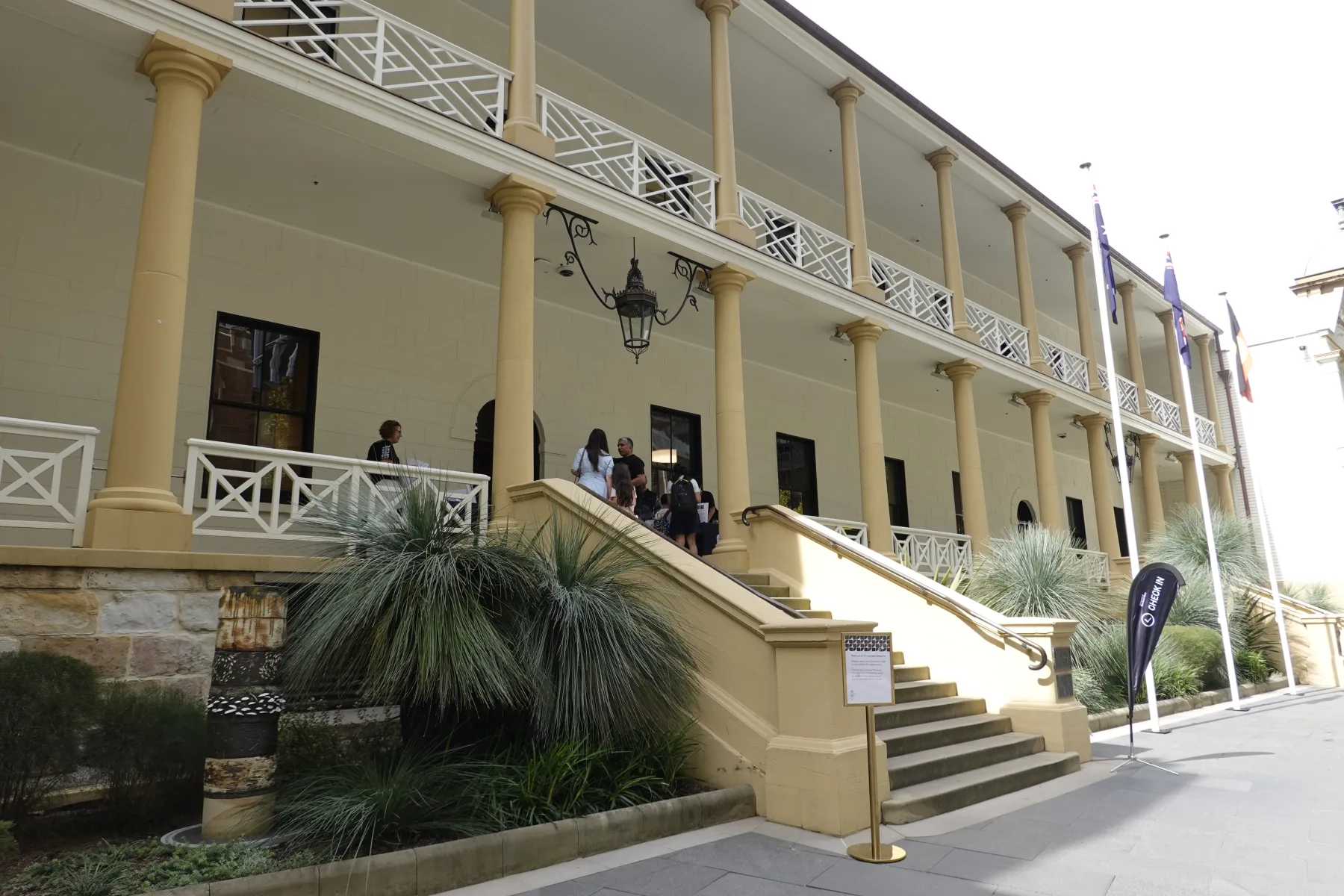
We arrived after visiting the State Library of NSW next door. It only took a few minutes to walk north along Macquarie Street, making the two buildings a natural pair for the same morning or afternoon.
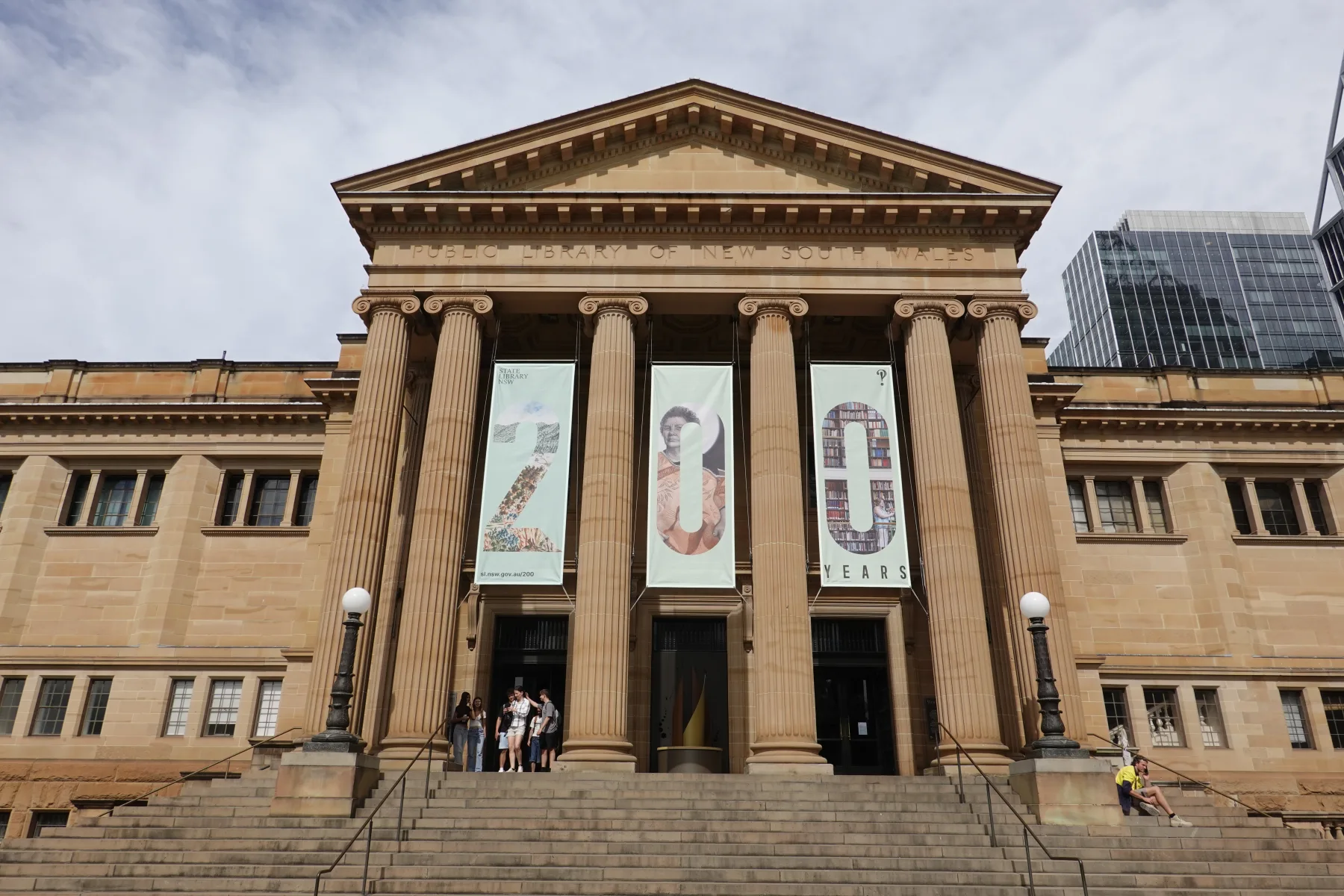
Free public tours and sitting days
Free guided tours currently run at 1:30 pm on Mondays and non-sitting Fridays. During NSW school holidays, tours run at 11:30 am and 1:30 pm from Monday to Friday. Tours do not run on public holidays or open days.
A tour lasts about one hour and takes visitors through the parliamentary precinct and historic chambers. Walk-ins are accepted, but advance booking is recommended because access to individual rooms can change on the day. Check the current tour calendar and booking page before organising the rest of your itinerary around a tour.
On sitting days, visitors can watch proceedings from the public galleries. The sitting calendar can change, and gallery entry has stricter screening and cloaking rules than a general visit.
Our April 2026 visit was a special event
We visited on 17 April 2026 during the free Festival of Democracy. It was a one-day family event for children aged 5–12, rather than the experience offered on a normal weekday.
The program included art and craft, interactive storytelling, a mock committee, voting activities and access to the Legislative Assembly and Legislative Council chambers. A ticket was required for each attendee aged five or older, and children had to remain with an adult.
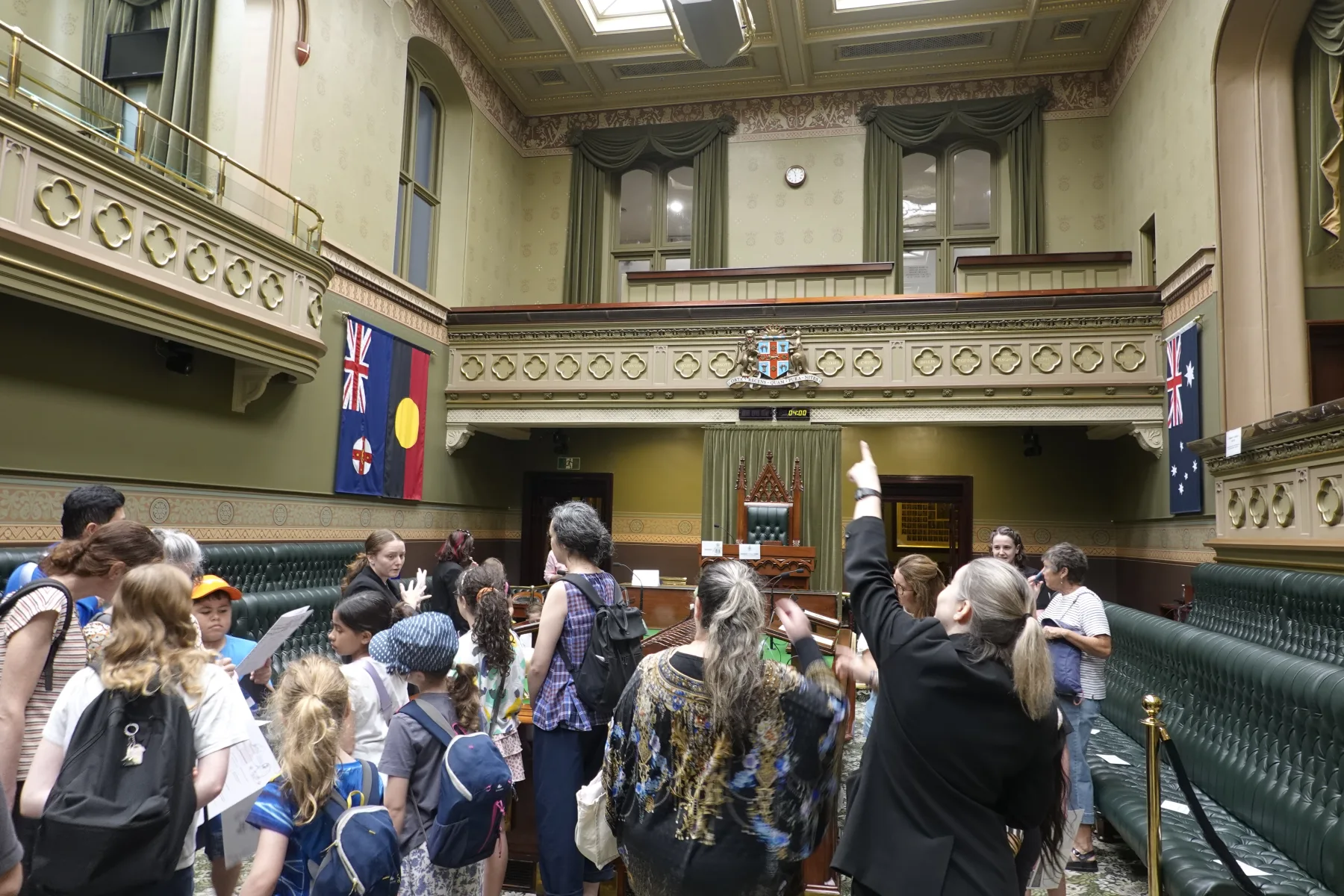
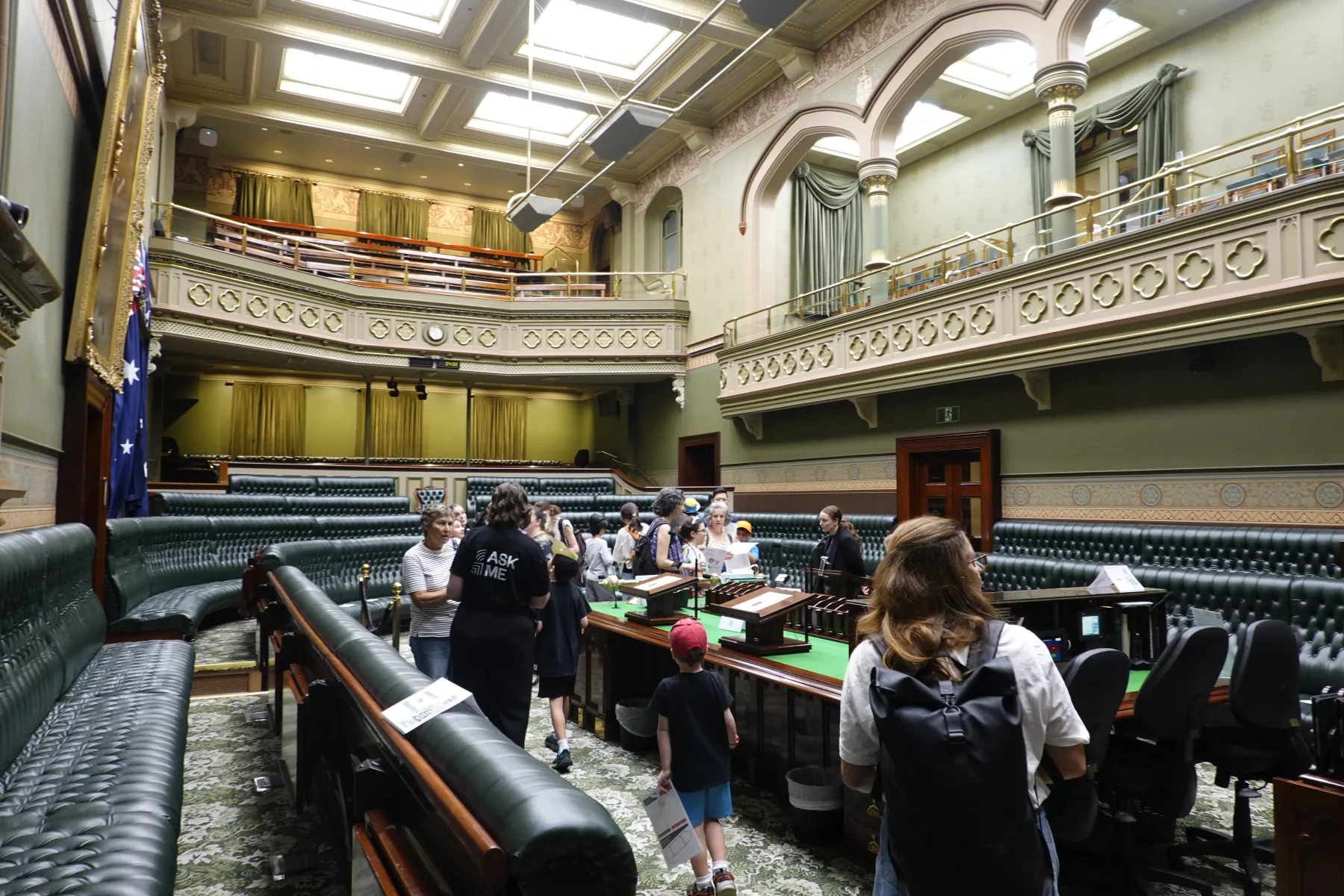
Many families were walking through the chamber and looking closely at the seats and desks. The atmosphere and areas available to us therefore should not be treated as the standard tour route. The event announcement records the date and program we attended.
Inside the green Legislative Assembly chamber
The Legislative Assembly chamber is arranged with rows of green benches facing each other across a central table. It has been used by the Assembly since responsible government and a two-house Parliament were established in 1856.
Standing inside gave us a much clearer sense of scale than a televised view. Microphones, documents and the narrow space between the opposing benches made it feel like an active workplace rather than a ceremonial room.
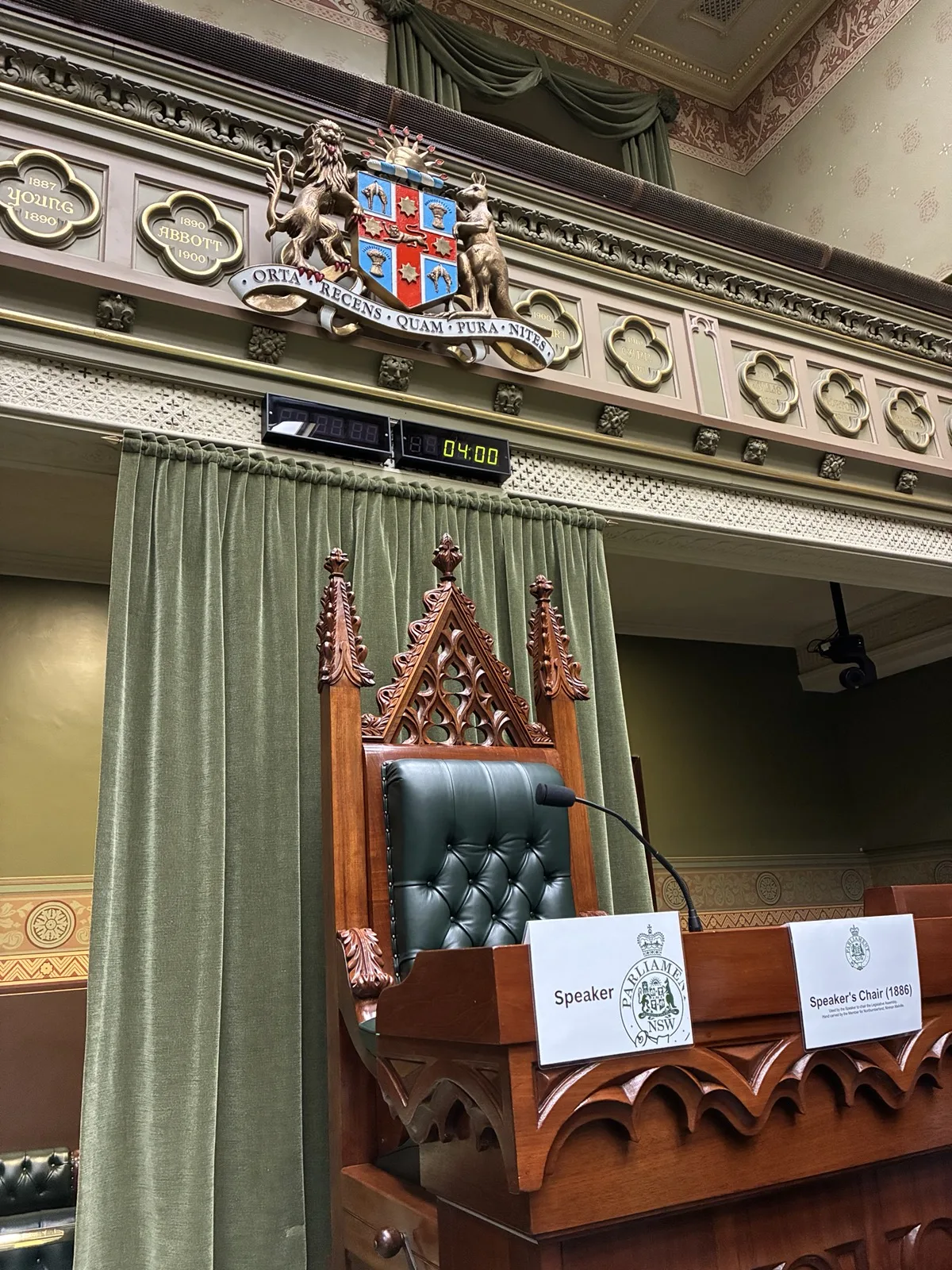
The Speaker's Chair anchors one end of the room beneath the NSW coat of arms. A nearby display identified the chair with 1886, while the names of former Speakers appeared above it.
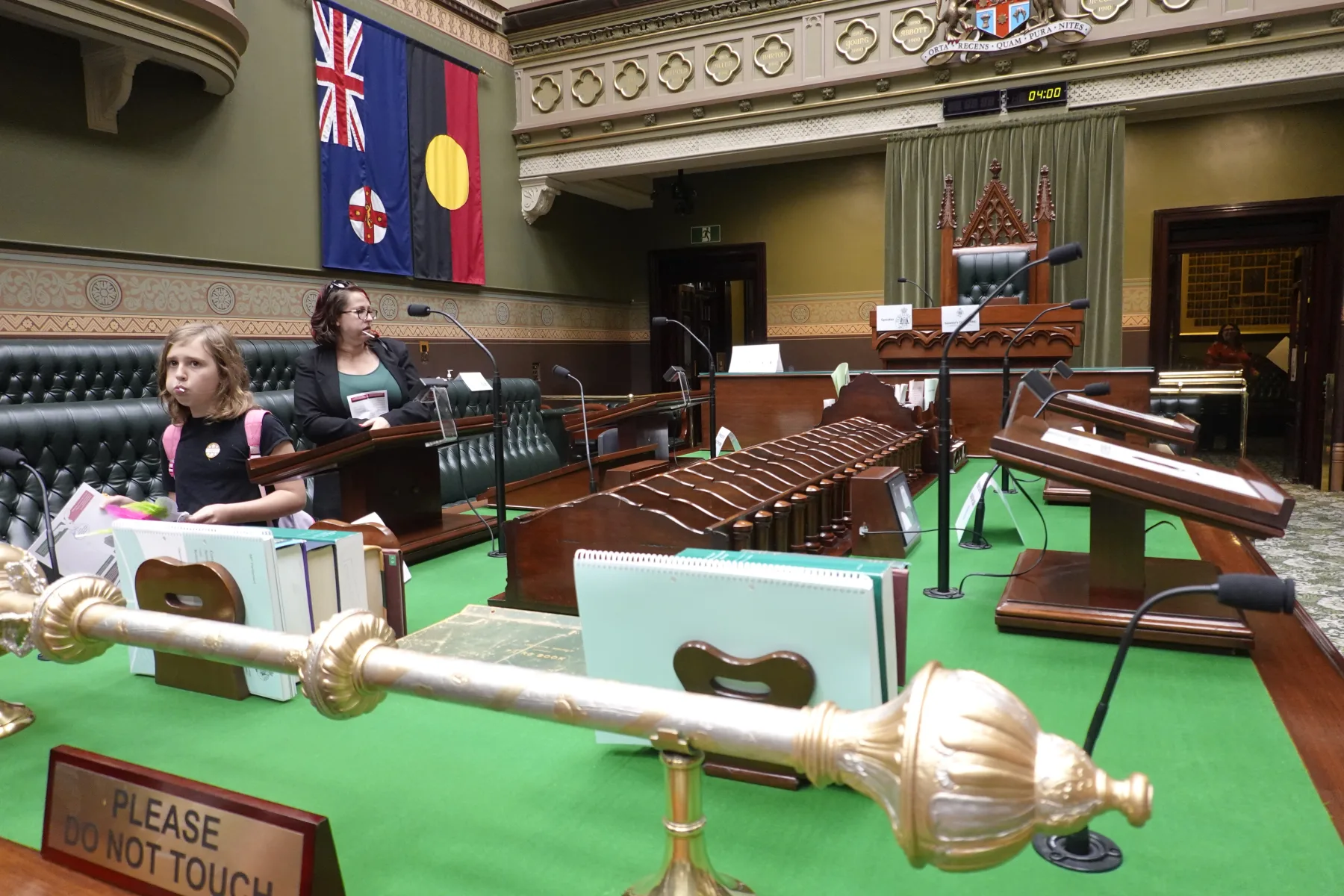
The green upholstery follows the House of Commons tradition; the Legislative Council uses red in the tradition of the House of Lords. During a normal tour or sitting day, follow staff instructions about where to stand and whether photography is allowed.
From the Rum Hospital to a working parliament
The colonnaded Macquarie Street wing began as part of Governor Macquarie's General Hospital, completed in 1816. The project became known as the Rum Hospital because its construction was financed through a monopoly on imported rum.
The Legislative Council began meeting in the former Surgeon's Wing in 1829. The Legislative Assembly chamber was added for the enlarged Council in 1843 and, after responsible government was established, became the Assembly's chamber in 1856. It is now described by Parliament as Australia's oldest legislative chamber.
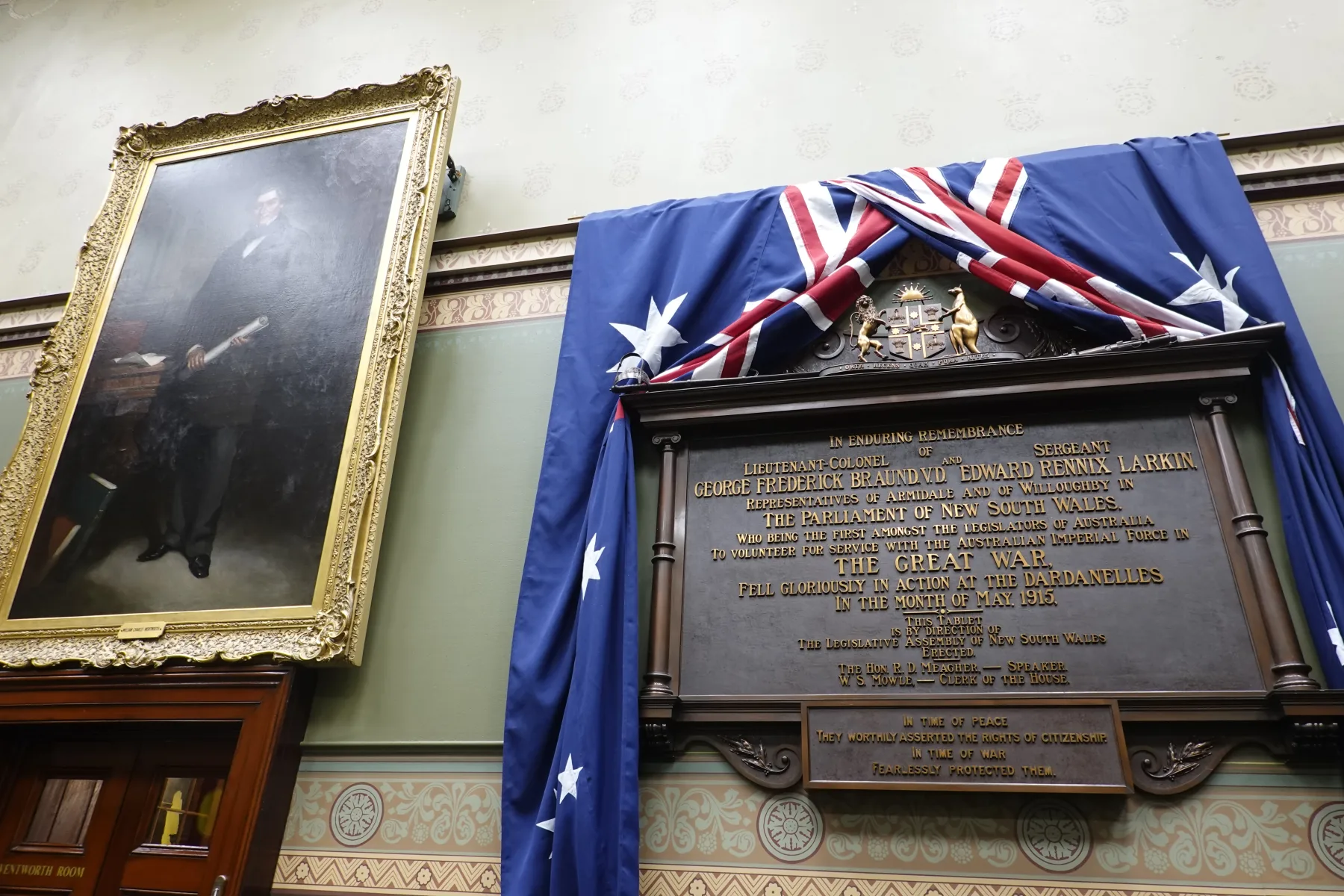
The official chamber history explains how this modest-looking part of Macquarie Street grew into the parliamentary precinct used today.
Portraits, displays and Fountain Court
Outside the chamber, displays trace the institution and the people who worked within it. The historic material gave context to the room we had just seen rather than presenting the building only as architecture.
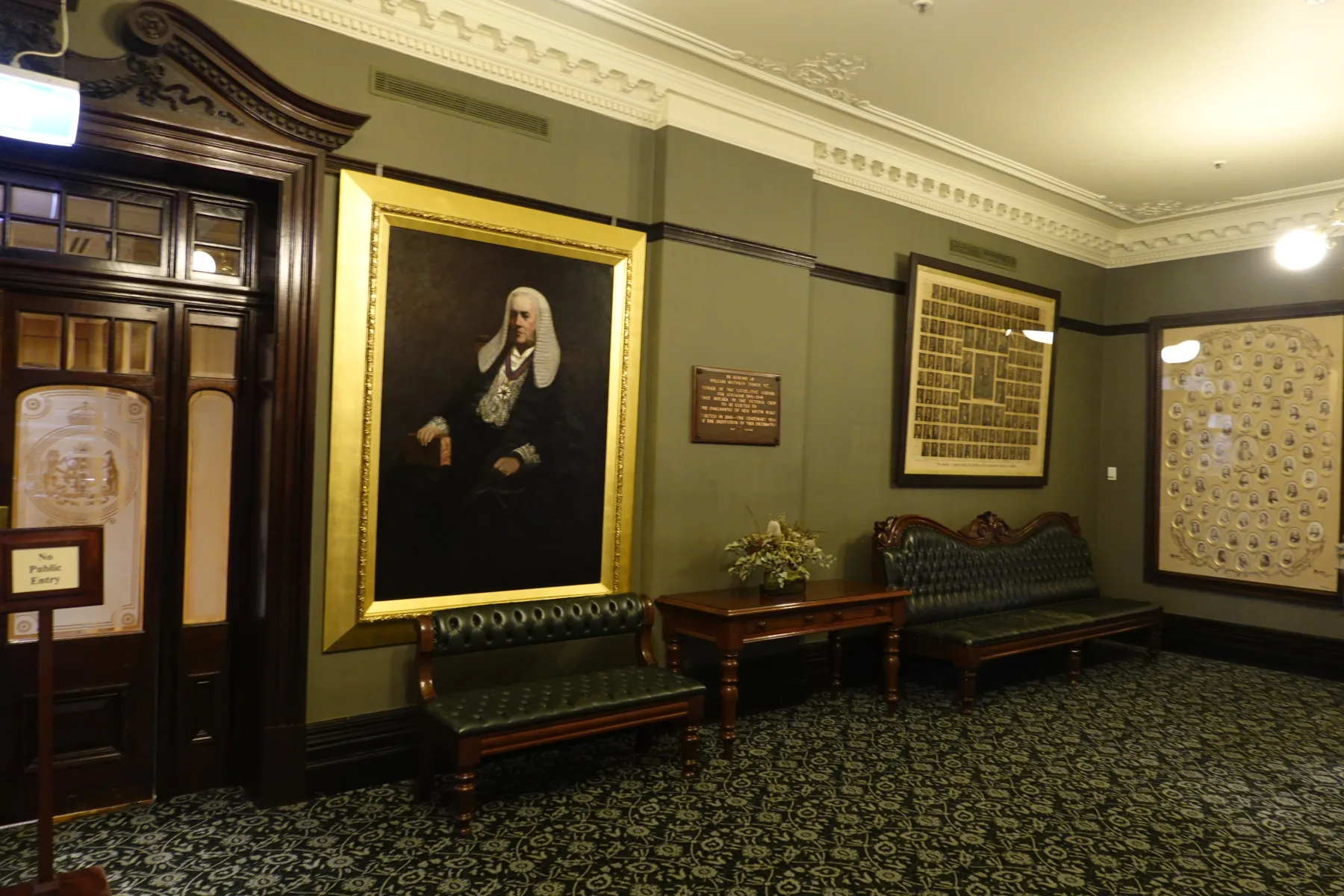
A long corridor of portraits led into quieter parts of the building. Dark timber frames against pale walls made the interior feel deeper and more formal than the restrained street frontage suggested.
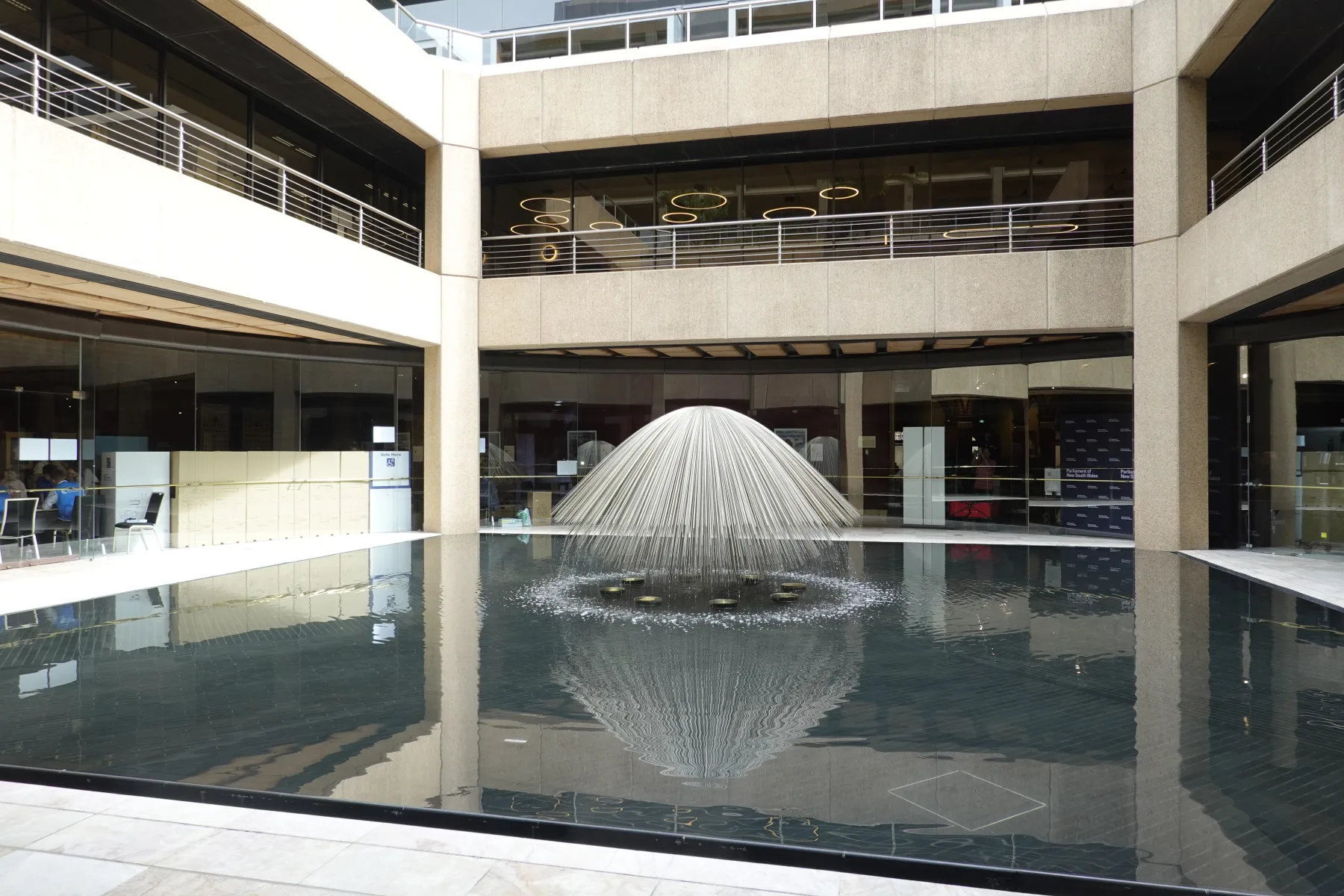
Fountain Court changed the atmosphere again, bringing daylight into a broad modern space behind the older rooms. Parliament also uses it for art exhibitions, so the work on display can differ from one visit to the next.
Security, public galleries and accessibility
Every visitor passes through security screening at the Macquarie Street entrance, and bags and other items are screened. Sharp objects such as scissors are prohibited. Allow extra time rather than arriving at the exact start of a tour.
The public galleries have additional rules: all personal belongings, including mobile phones, must be cloaked before entry, followed by further screening. Parliament advises visitors attending Question Time to arrive 20 minutes early and speak to staff at the Assembly front desk.
Ramp and lift access is available from the Macquarie Street entrance, with accessible toilets and assistive listening systems in the precinct. Tell security staff if a mobility aid or medical device affects the screening process. The visitor information page has the latest entry and accessibility details.
What to combine with Parliament House
The State Library is next door, while the Domain and Royal Botanic Garden extend east towards the harbour. In the other direction, St Mary's Cathedral and Hyde Park are within an easy central-Sydney walk.
A tour fixes your timing more than these nearby sights do. Book the Parliament slot first, then place the Library, garden or cathedral before or after it.
Payment planning for the rest of the day
Entry is free, but meals and transport around central Sydney still need an AUD payment method. See the Wise card guide for Australia for contactless use and a sensible backup setup.
Frequently asked questions
Is NSW Parliament House free to visit?
Yes. General entry and public guided tours are free. Special exhibitions and events may require registration or a paid ticket.
What are the opening hours?
NSW Parliament House is currently open from 9 am to 5 pm Monday to Friday, excluding public holidays. On sitting days it remains open until both Houses rise.
When are free tours held?
Public tours currently run at 1:30 pm on Mondays and non-sitting Fridays. During NSW school holidays, tours run at 11:30 am and 1:30 pm on weekdays. Check and book the current schedule before visiting.
Can visitors watch Parliament in session?
Yes. The public galleries open on sitting days. All belongings, including mobile phones, must be cloaked and visitors undergo additional security screening before entering.
Is the Festival of Democracy held every day?
No. The event we attended was a special free family program held on 17 April 2026, not part of the normal daily visit.
Summary
NSW Parliament House gave us a close look at a working civic building with almost two centuries of parliamentary history. The green Legislative Assembly chamber, historic portraits and bright Fountain Court each showed a different side of the precinct.
General entry is free, but a guided tour is the clearest way to see the historic chambers on an ordinary visit. Check the sitting calendar and tour availability, leave time for security screening and pair the visit with the State Library next door.