Museum of Sydney: Opening Hours, Free Entry and Exhibits
The Museum of Sydney places the city's colonial history and First Nations experience on the site of the first Government House. We visited its ship models and archaeological displays in April 2026.
A museum on Gadigal Country
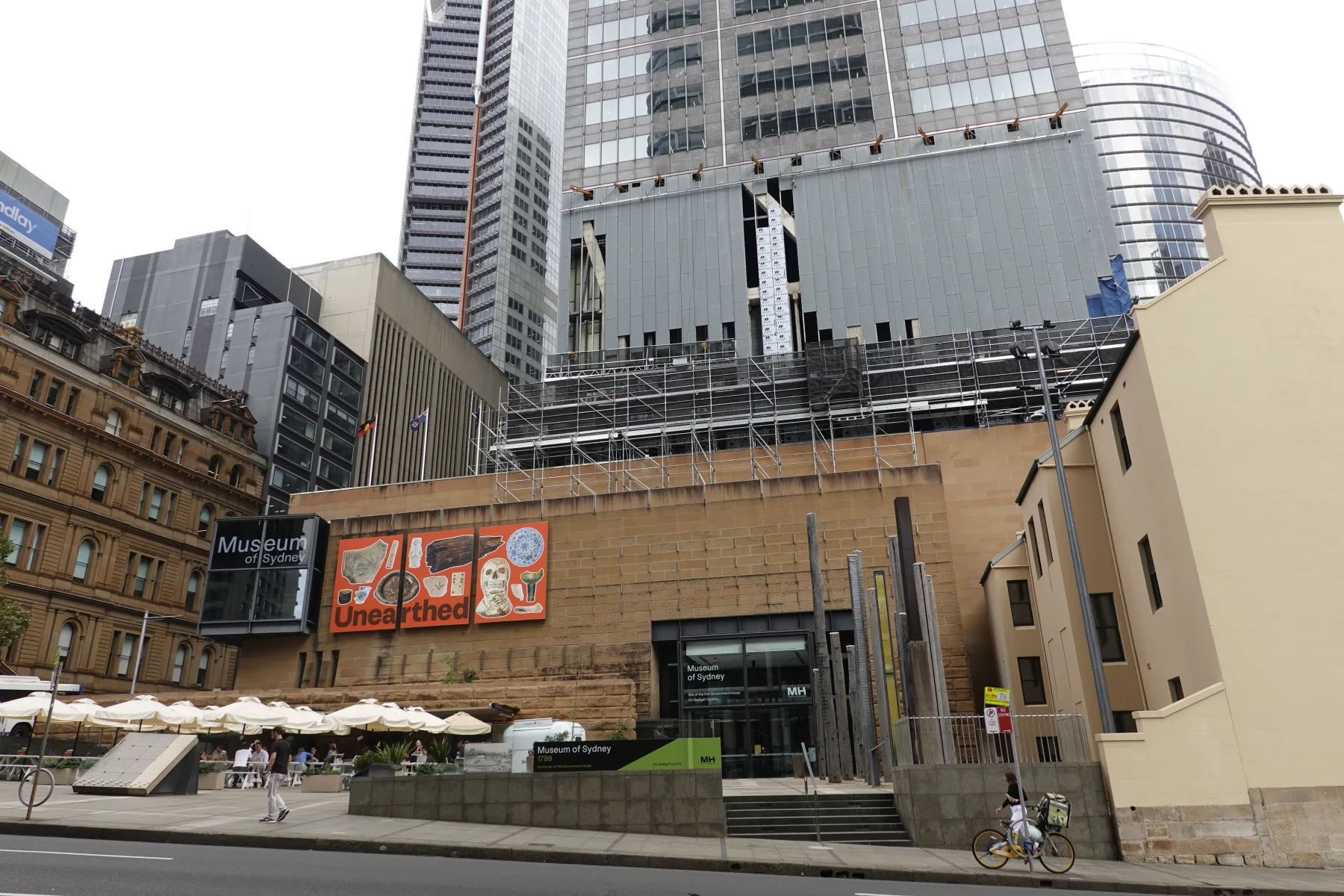
We visited the Museum of Sydney on 17 April 2026. It stands at the corner of Phillip and Bridge streets, one city block south of Circular Quay.
The museum is built over and around the remains of the colony's first Government House. The site is also on Gadigal Country, in the area known as Warrane before the British colony was established around Sydney Cove.
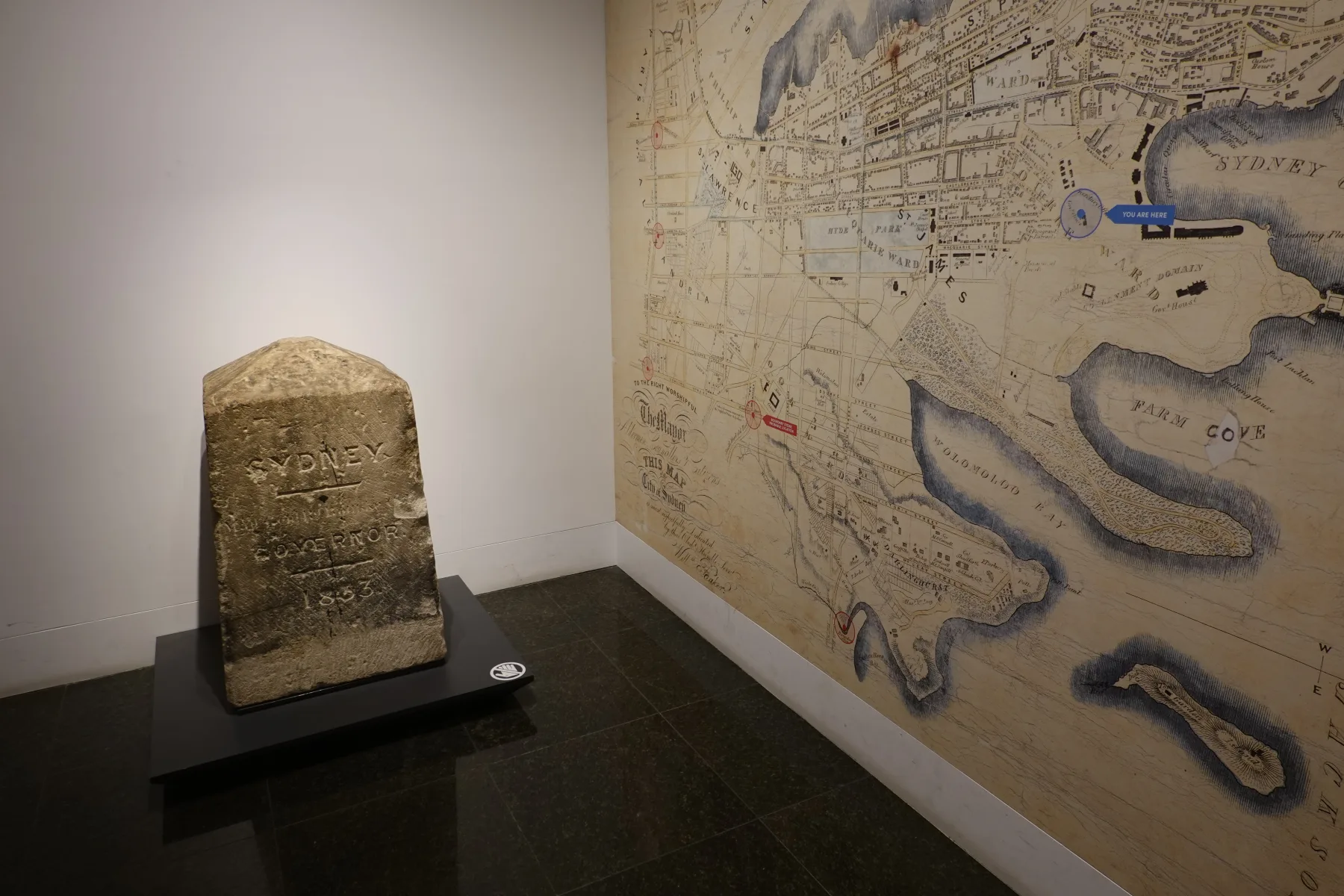
The museum does not present the site only as the starting point of colonial administration. Its displays also consider contact, dispossession and the continuing effects of decisions made here on First Nations communities.
Museum of Sydney entry, opening hours and visitor details
General entry was free when we visited, and it remains free in the museum's current visitor information. Online pre-booking is recommended, particularly if you are working to a fixed itinerary.
- Entry
- Free general admission
- Hours
- Daily, 10 am–5 pm
- Closed
- Good Friday and Christmas Day
- Address
- Corner Phillip and Bridge streets, Sydney NSW 2000
- Time to allow
- About one hour for the main displays
Hours and temporary exhibitions can change. Check the official visitor information before going. The museum currently also offers short, free introductions at set times, subject to availability.
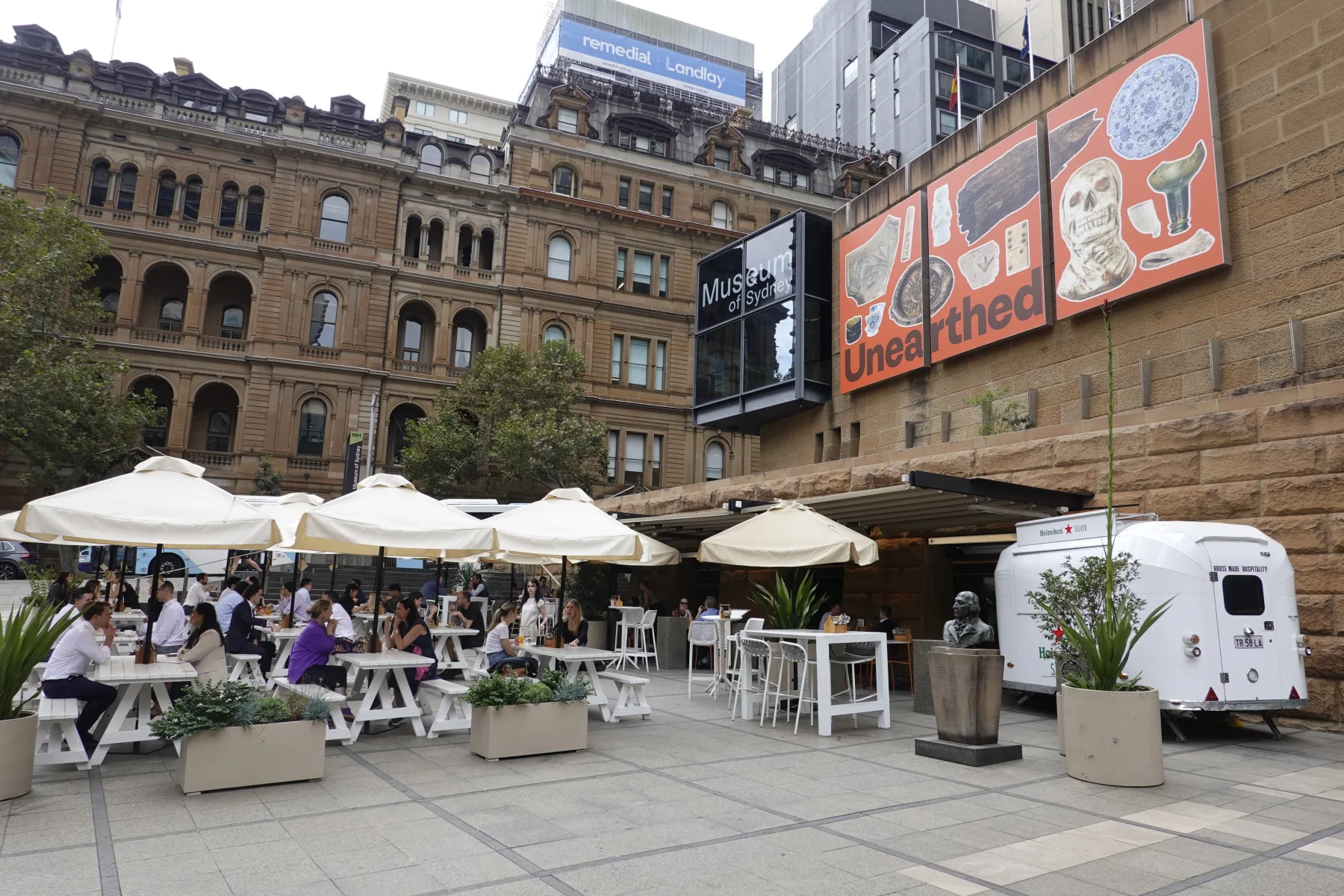
The entrance opens onto a modern glass-fronted building. Tables and chairs in the forecourt gave office workers and visitors a place to stop outside.
First Fleet ship models
Near the entrance, models show the ships of the First Fleet that arrived from Britain in 1788. Seeing their different shapes and sizes helped us picture the fleet rather than treating it as a single abstract event.
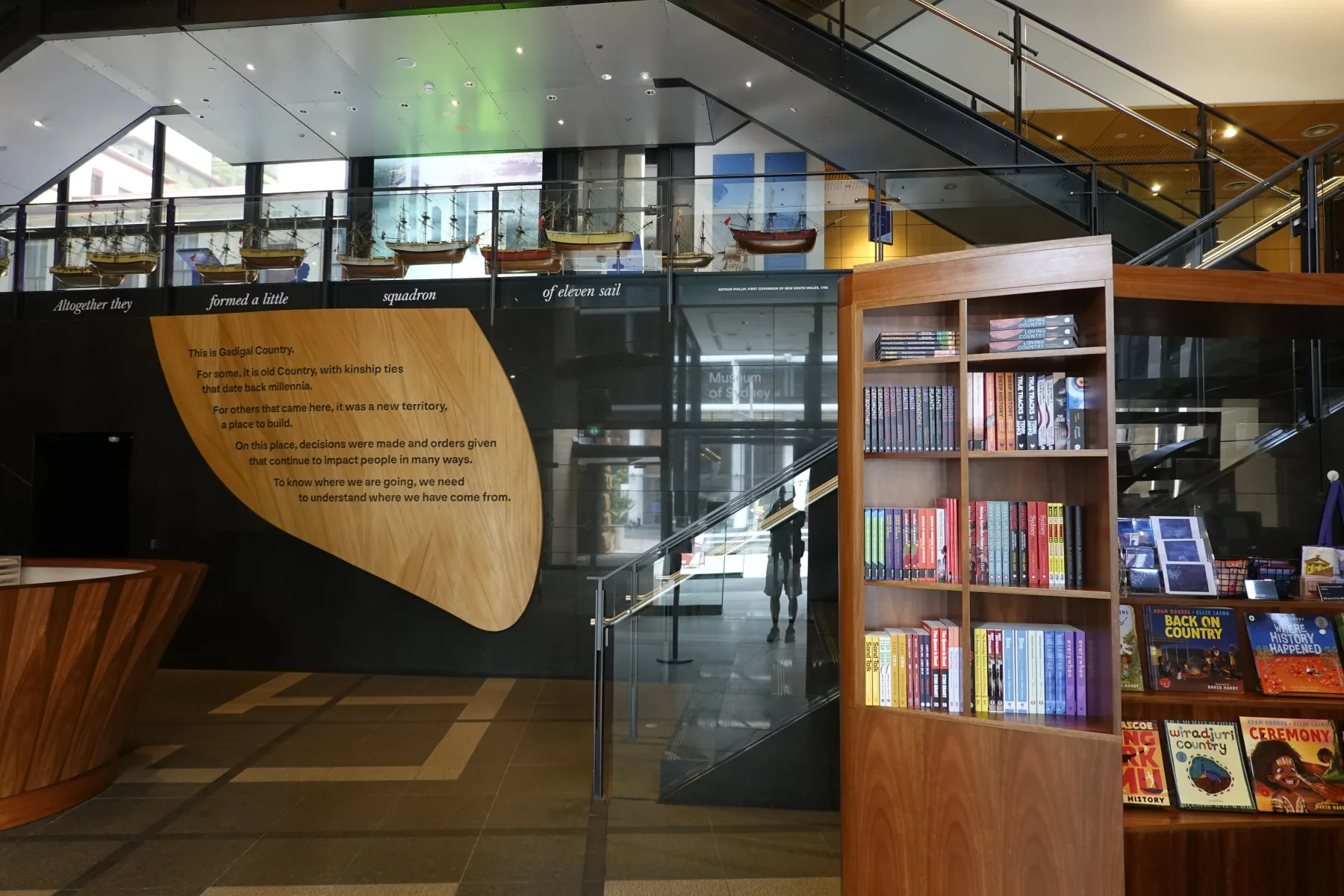
Text and film nearby place the ships' arrival within a longer history. They explain that a British colony was imposed on an existing society and landscape, rather than beginning the story of this place in 1788.
Archaeology beneath the city
A large gallery follows how the first Government House was built, used, demolished and later excavated. The displays run around an open stairwell, so we could look across the material from the upper level as well as close up.
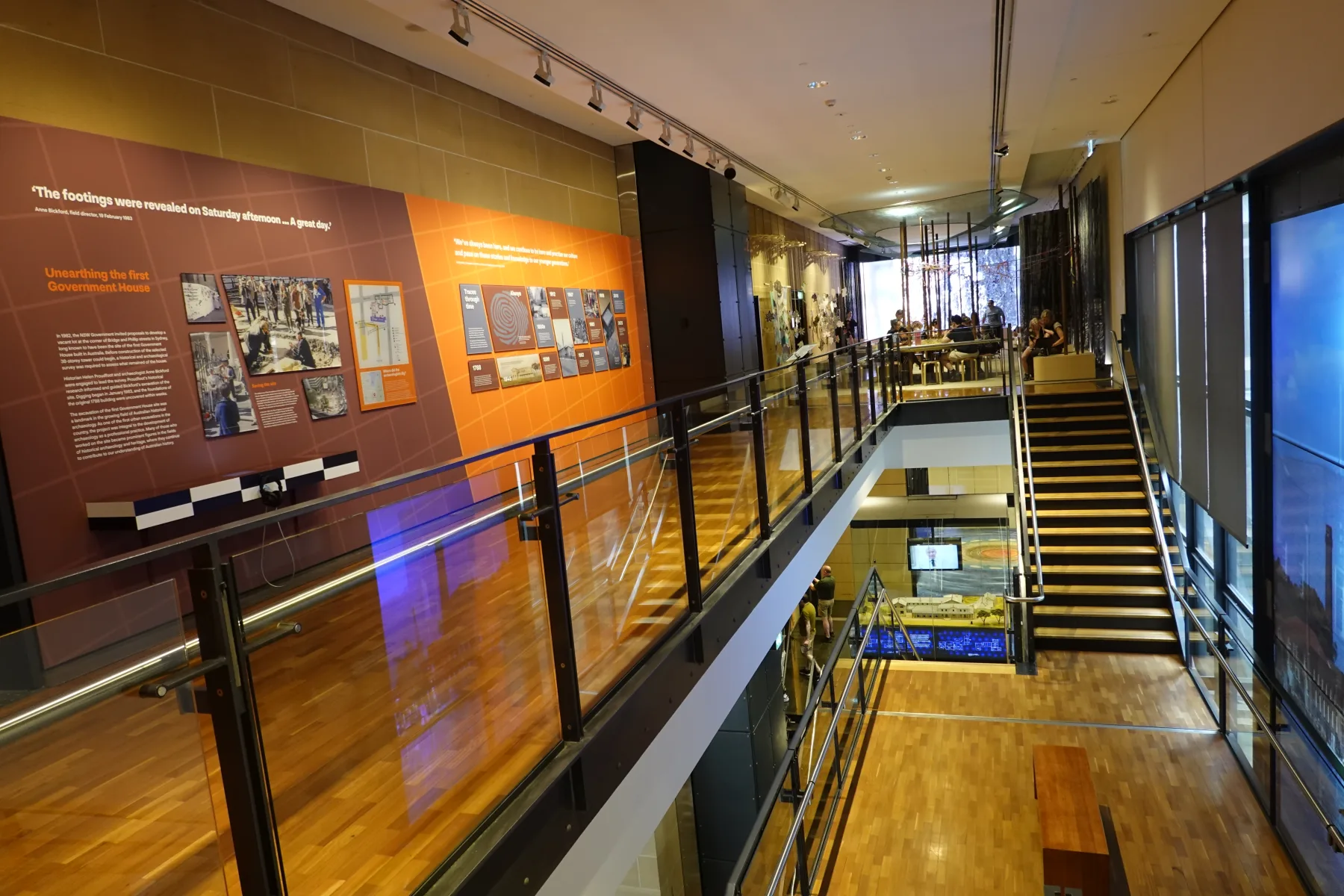
Another room is arranged like an archaeological work area. Drawers, tools and labelled fragments show how researchers draw evidence from objects that can look unremarkable at first.
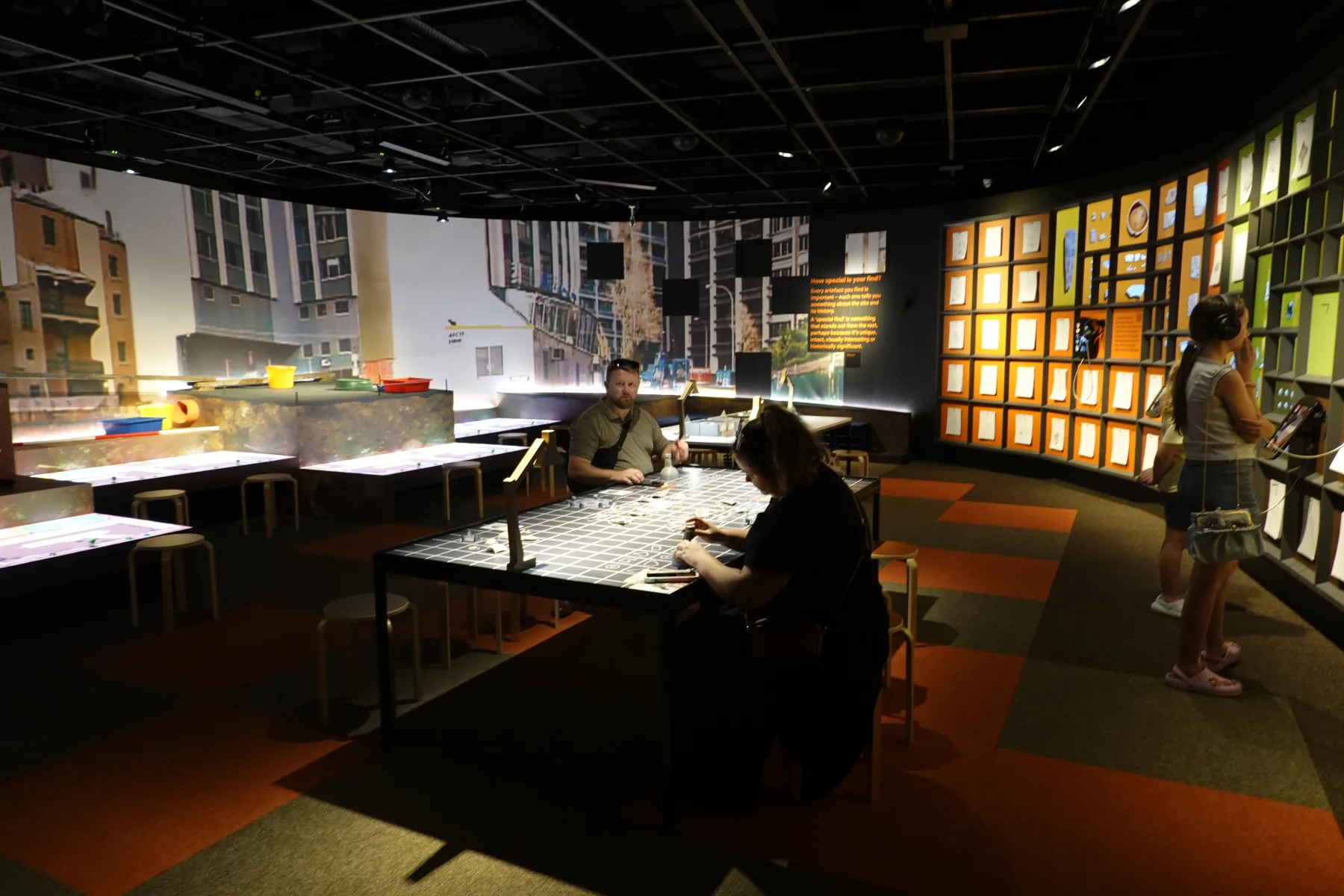
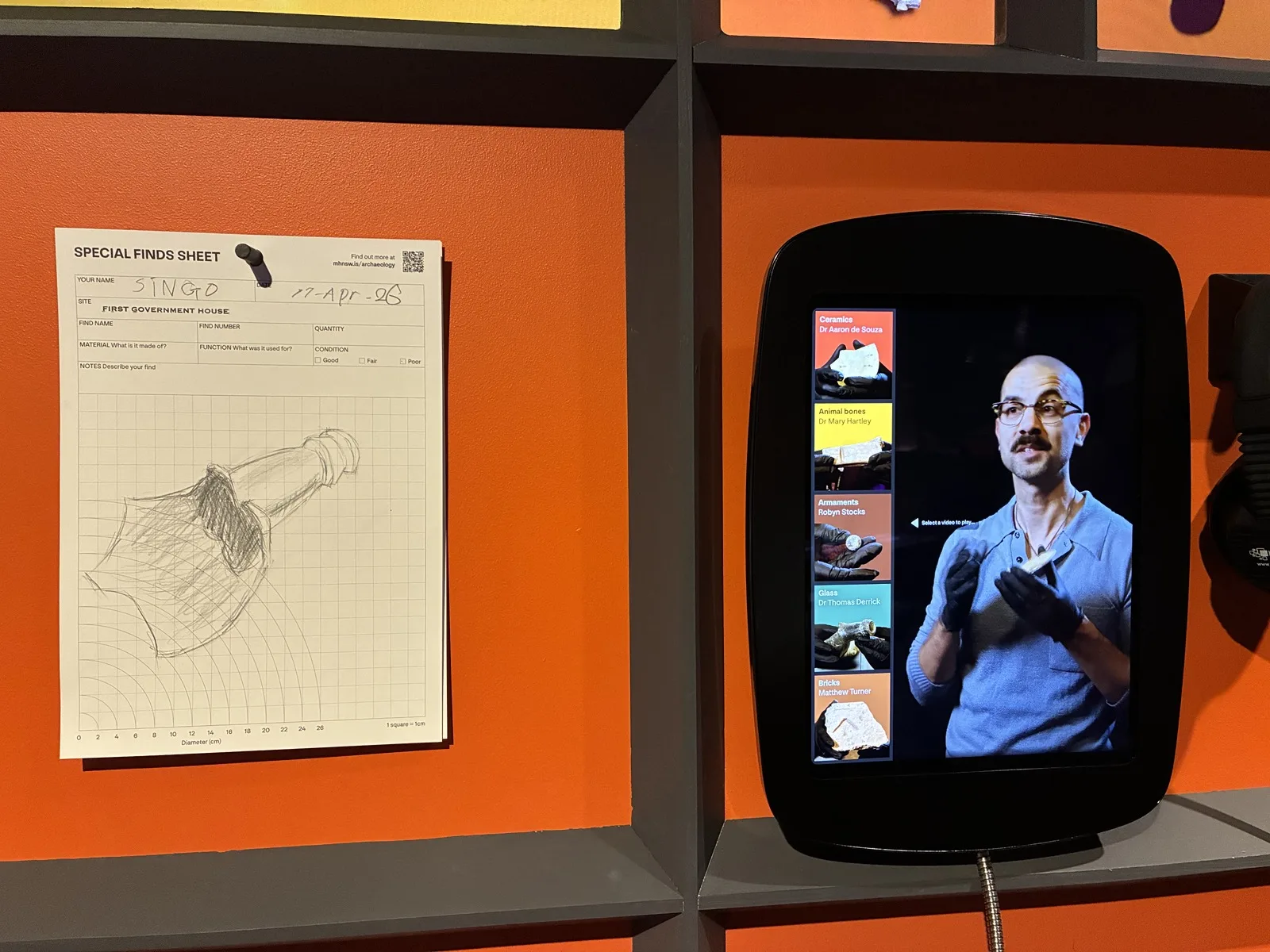
Interactive screens connect individual finds with records of the excavation. We could compare the shape of an object with explanations of where it was found and how it may have been used.
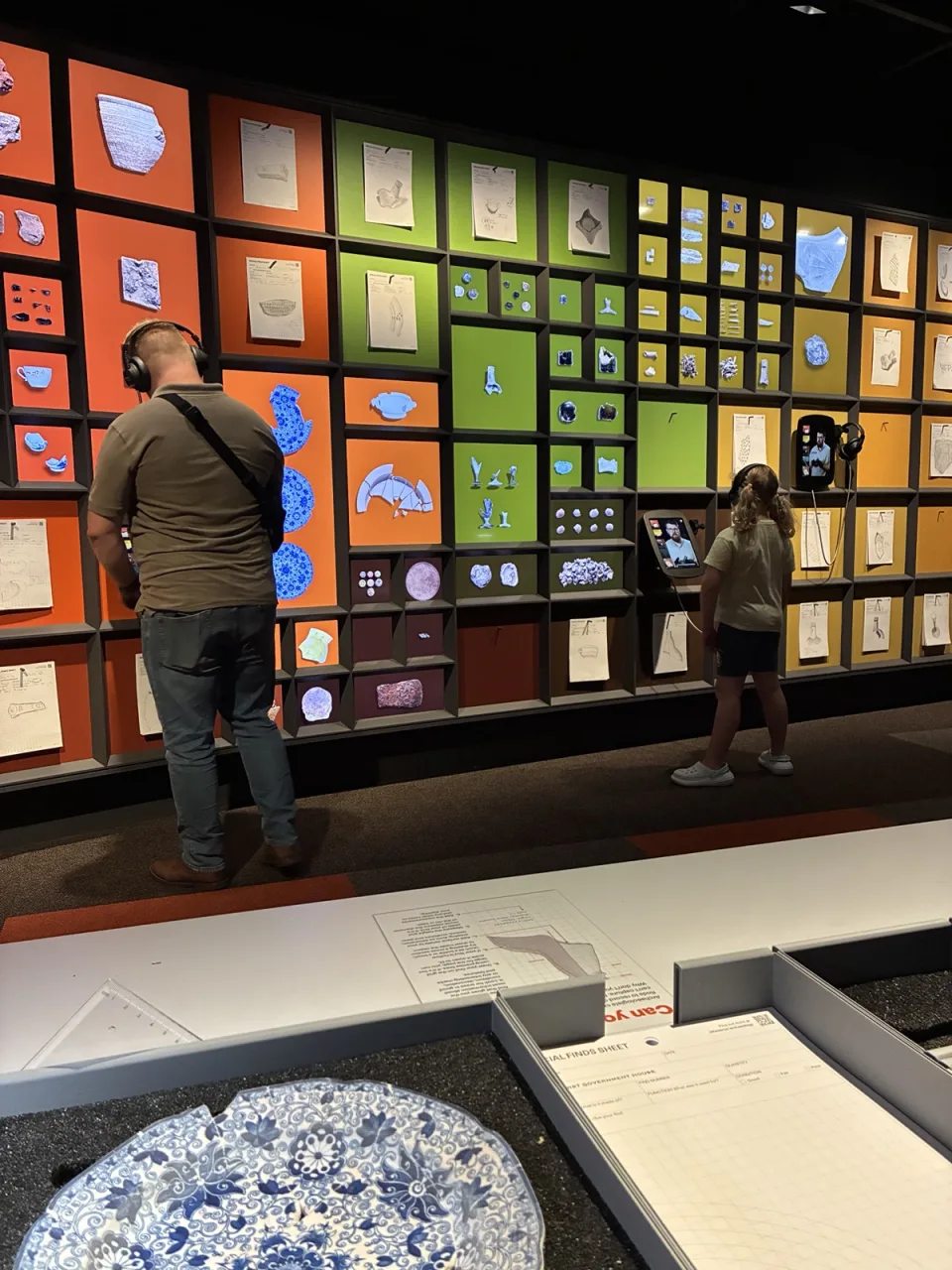
Cases of pottery and glass fragments make the same point at a smaller scale: the city's early colonial buildings can be reconstructed from pieces of tableware and everyday objects.
Country, colonisation and the same site
The displays about occupying Country describe how colonisation changed the use and control of the land, with lasting effects on Gadigal people and other First Nations communities.
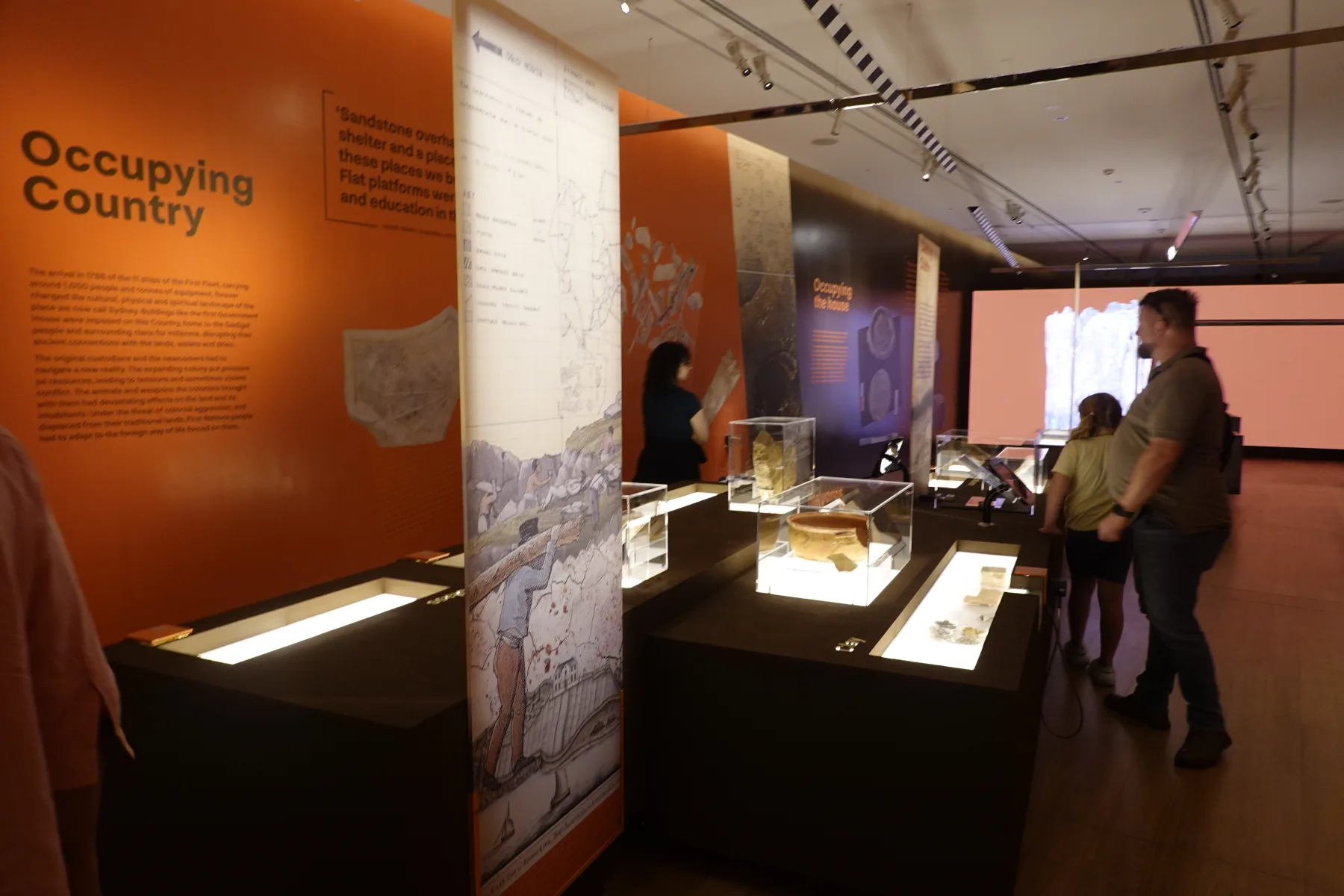
That perspective kept the museum from becoming a simple story of a growing colonial city. It showed that different histories and memories occupy the same streets and shoreline.
What small finds reveal
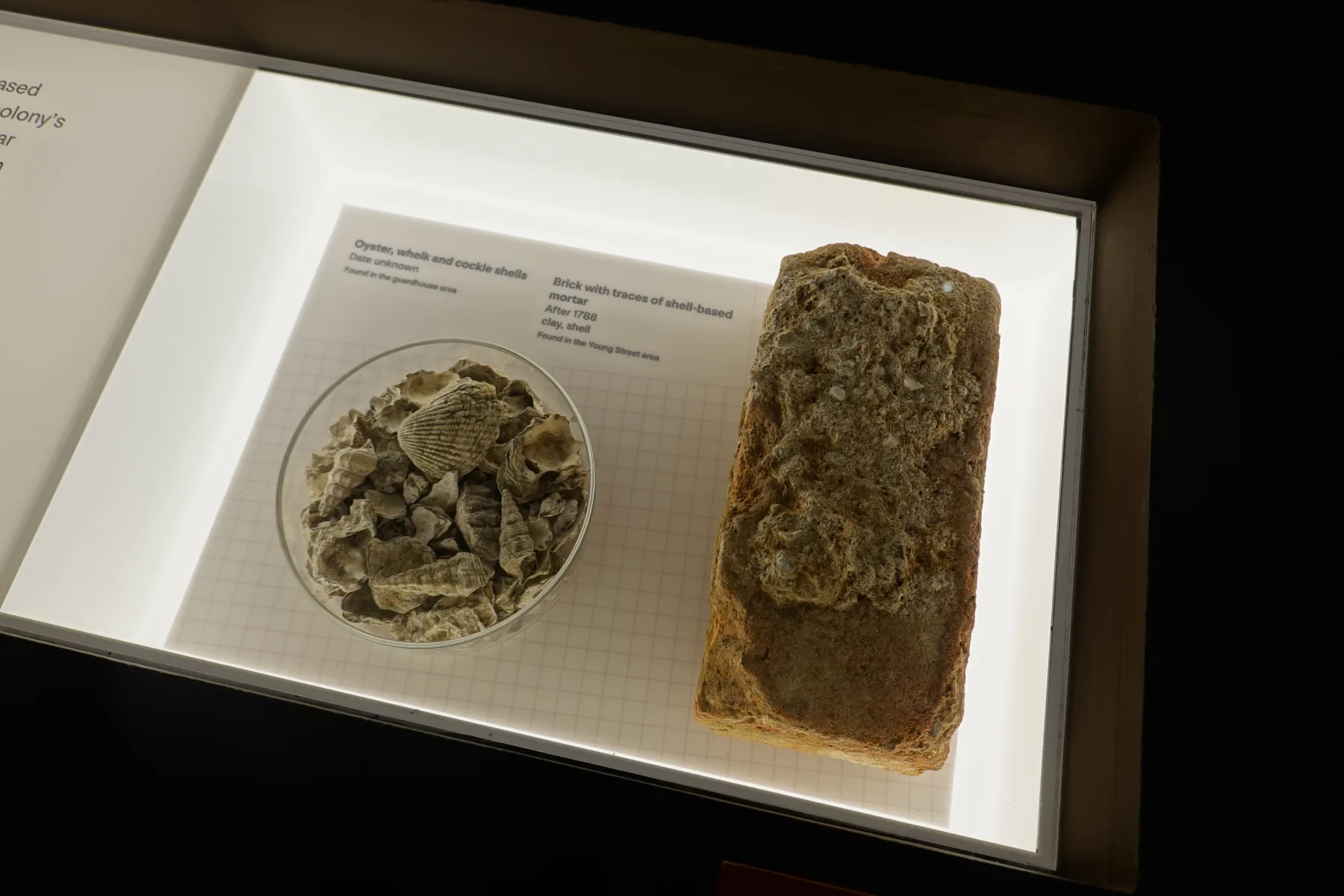
One display compares discarded oyster shells with mortar made using lime burned from shells. It traces a familiar local material from food waste into the fabric of a colonial building.
Carved stone and ceramic pieces also carry clues about the building's decoration and the daily lives of the people who lived and worked there.
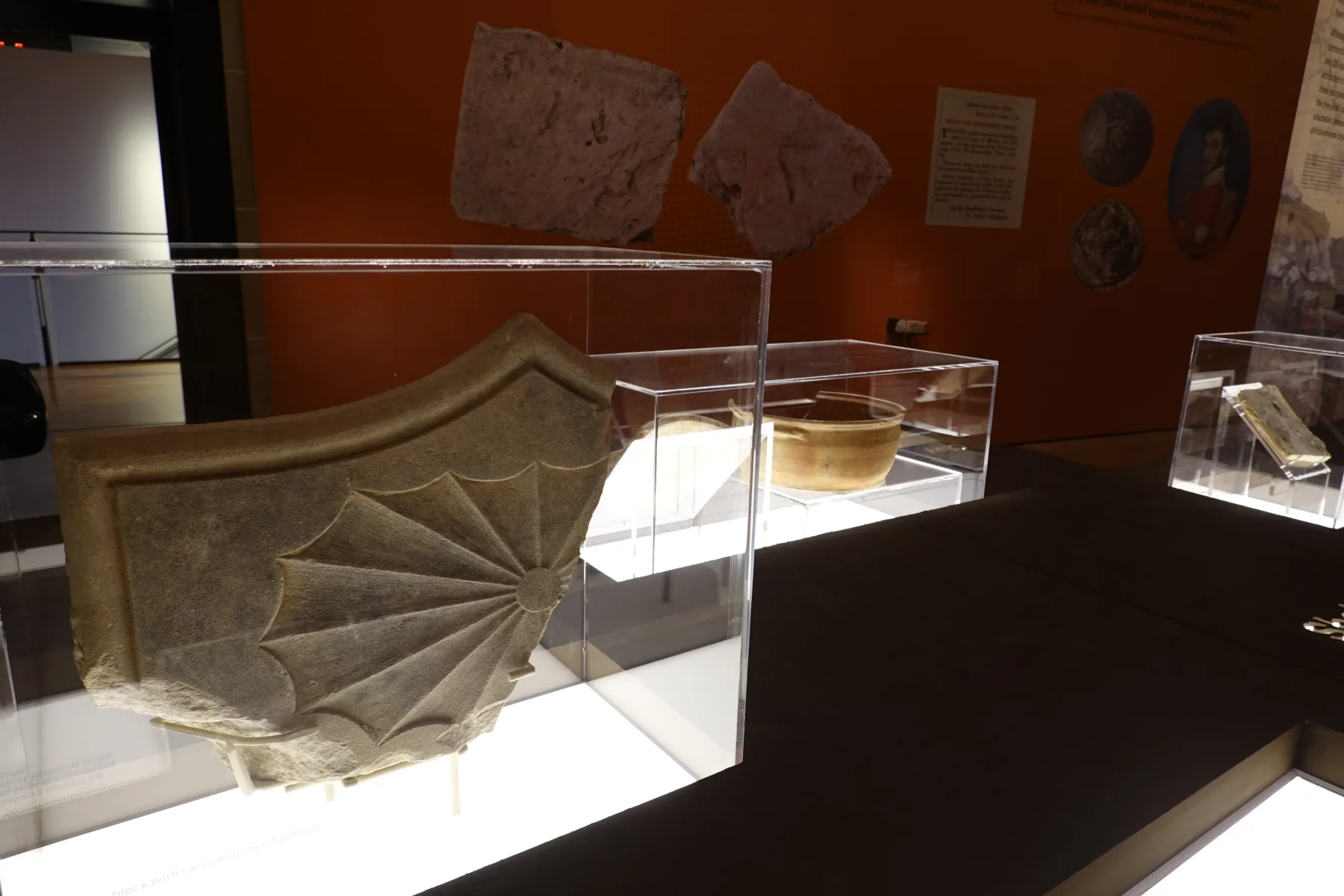
These are quiet exhibits, but taking time to read their labels made the earlier city beneath today's office buildings much more concrete.
How long we spent inside
The upper floor has a bright area with large windows, tables and chairs. We used it to pause after working through the archaeological material.
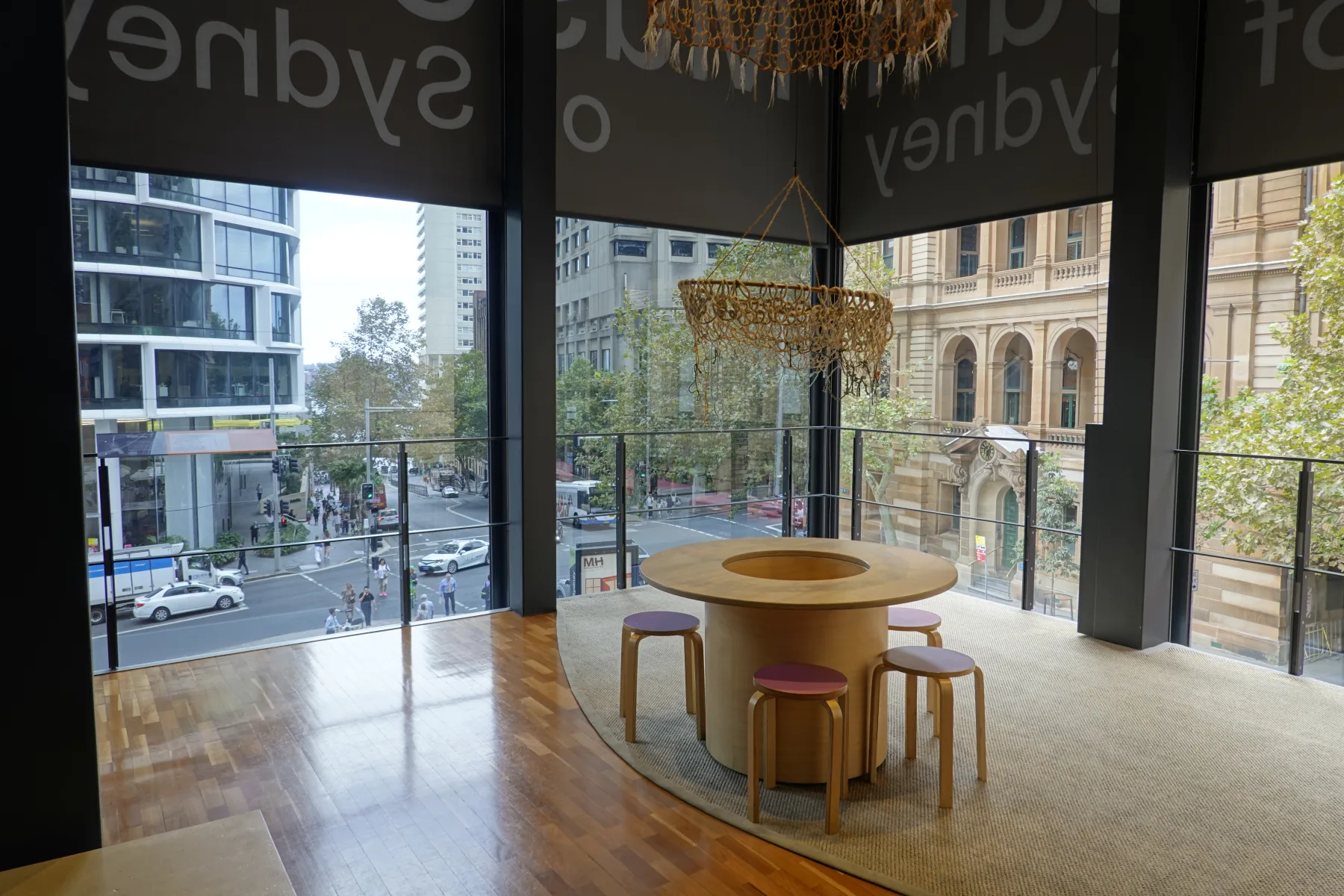
We spent about one hour in the museum. Allow more time if you want to watch the films, read the displays closely or see a temporary exhibition.
Getting to the Museum of Sydney
Circular Quay is the most convenient nearby train, light rail and ferry interchange. From there, walk south past Macquarie Place towards Bridge Street.
- From Circular Quay: about a five-minute walk
- From Martin Place: walk north towards Bridge Street
- Nearby stops: The Rocks, Circular Quay and the Royal Botanic Garden combine well on foot
- By taxi or rideshare: use “Museum of Sydney, Bridge Street” as the destination
You can check the entrance and walking route on Google Maps.
Lunch at Janus Bar before the museum
On the walk towards the museum, we stopped at Janus Bar beside the green wall at 1 Bligh Street. We ate charcoal-grilled chicken with pita and had coffee before continuing to Bridge Street.
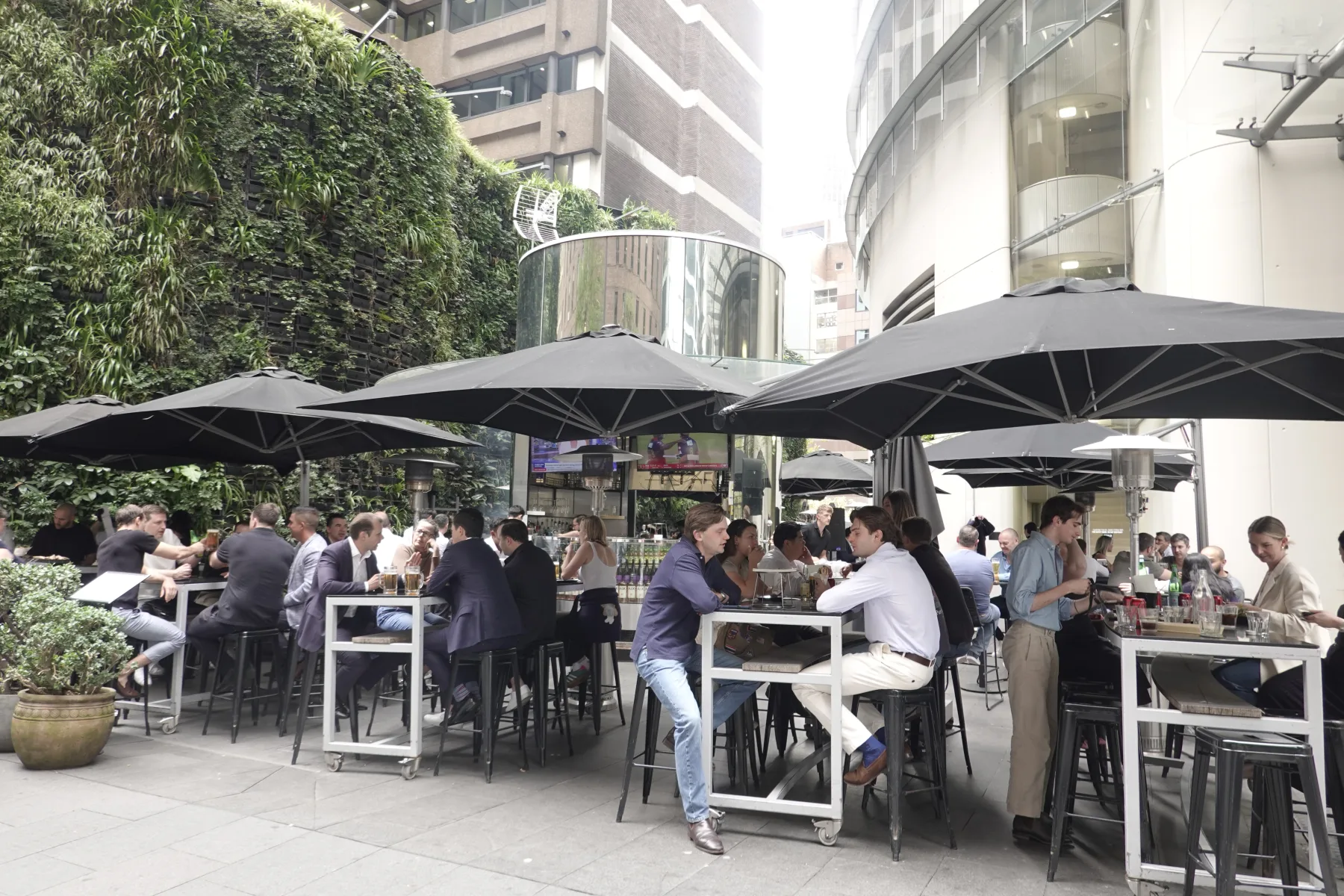
The restaurant and museum are both in the northern CBD, so the stop fitted naturally into our walk towards Circular Quay.
Frequently asked questions
Is entry to the Museum of Sydney free?
Yes. General museum entry is currently free, although online pre-booking is recommended and special events may have separate conditions.
What are the Museum of Sydney opening hours?
The museum is currently open daily from 10 am to 5 pm and closes on Good Friday and Christmas Day. Check the official visitor page before travelling.
How long do you need?
We spent about one hour seeing the main displays. Allow longer if you want to watch the films and read the exhibition text closely.
Summary
The Museum of Sydney gave us a view of the city from the ground beneath it: the remains of First Government House, small archaeological finds and the continuing First Nations history of the site.
Its free entry and position near Circular Quay make it practical to add to a day around The Rocks or the Royal Botanic Garden. An hour was enough for our visit, but the films and changing exhibitions can justify a longer stop.