Royal Botanic Garden Sydney: Opening Hours, Free Entry and Walks
The Royal Botanic Garden gave us shade, open lawns and harbour views in the middle of Sydney. We walked through it in April 2026 and stopped long enough to lie on the grass.
This article contains affiliate links. If you book through them, we may earn a commission at no extra cost to you. Our first-hand views are our own.
Free entry and seasonal opening hours
We visited the Royal Botanic Garden Sydney on 17 April 2026, after walking from the State Library of New South Wales along Macquarie Street. We entered from the city side and gradually made our way towards Farm Cove and the Sydney Opera House.
General entry is free. The Garden opens at 7 am every day, while the closing time changes with the season. In April, the published closing time is 6 pm.
- Entry
- Free, except for special ticketed events
- Hours
- Daily from 7 am; seasonal closing between 5 pm and 8 pm
- April hours
- 7 am–6 pm
- Time to allow
- About one to two hours, plus any lawn break
Check the Garden's official visitor information before an evening visit or special event. It lists the closing time for each month and any current safety notices.
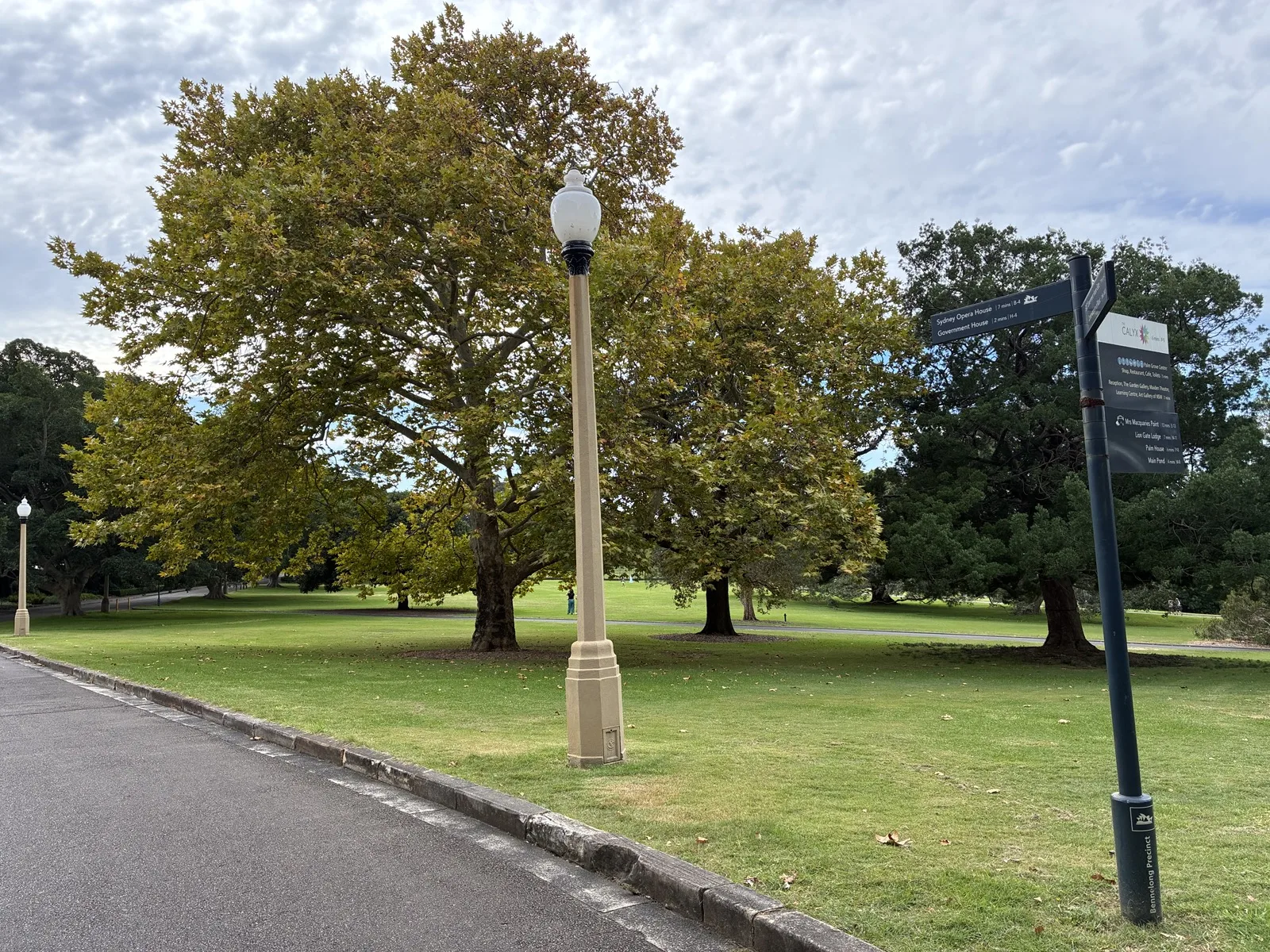
There is no single route through the Garden. The signs point towards the Opera House, Government House and other areas, but detours towards shade or the harbour were part of what made our walk enjoyable.
A garden founded in 1816 on Gadigal Country
The Royal Botanic Garden records 13 June 1816 as its foundation date, making it Australia's oldest botanic garden. Its collection and landscape also reflect the city's colonial agricultural history.
That date is not the beginning of this place. The Garden stands on Gadigal Country beside Warrane, now known as Sydney Harbour. The Garden's own history material recognises thousands of years of First Nations care for the land, sea and sky before colonisation.
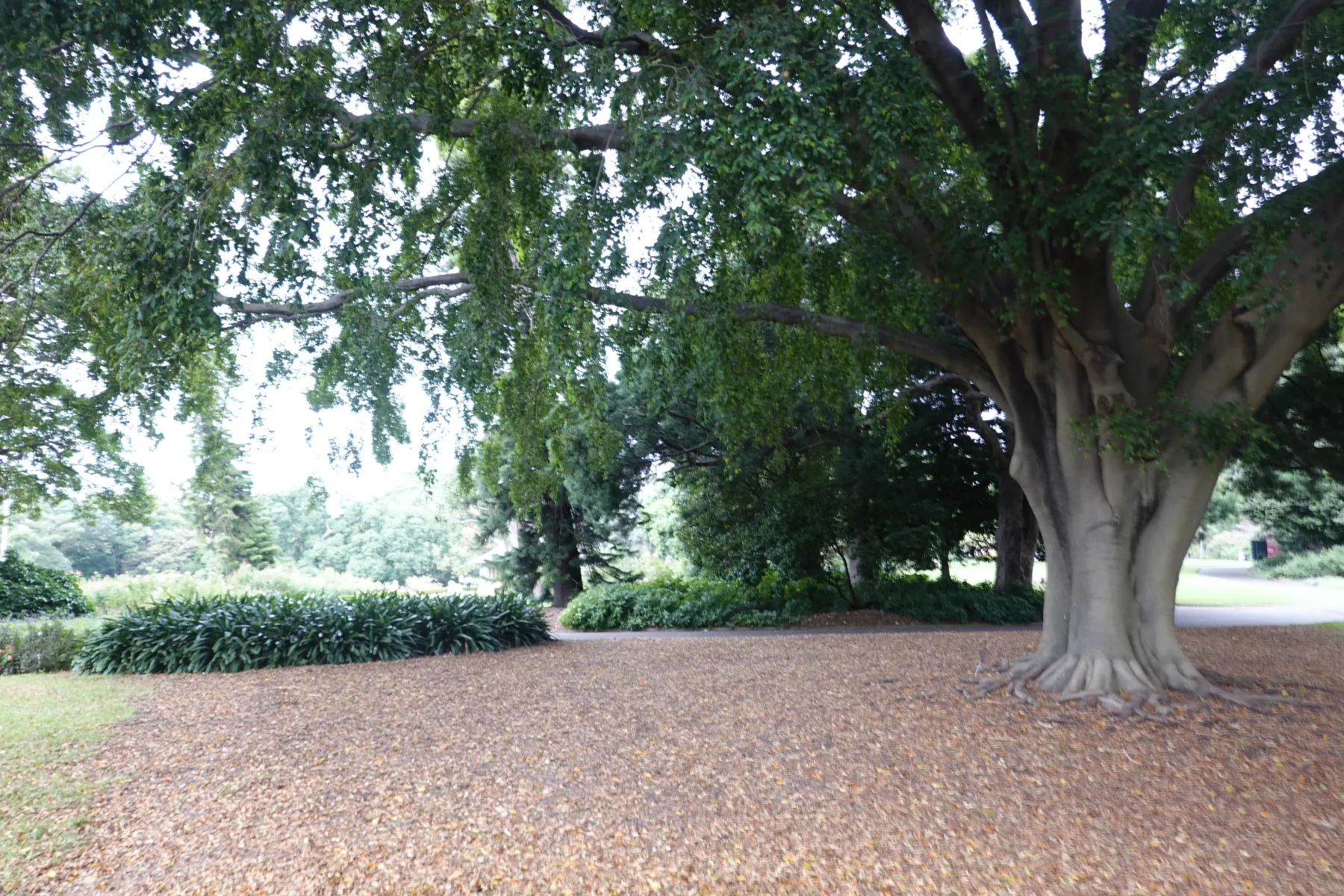
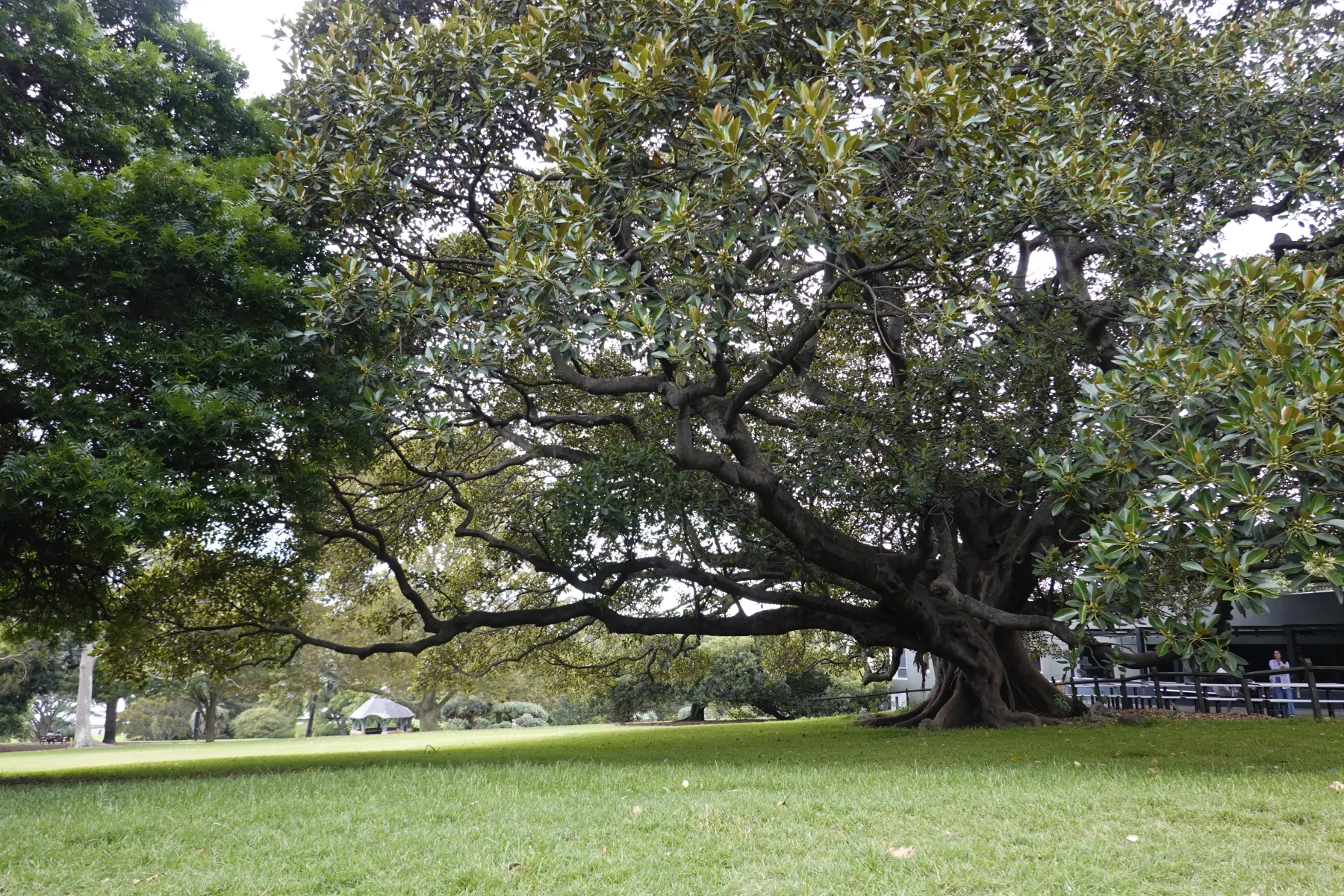
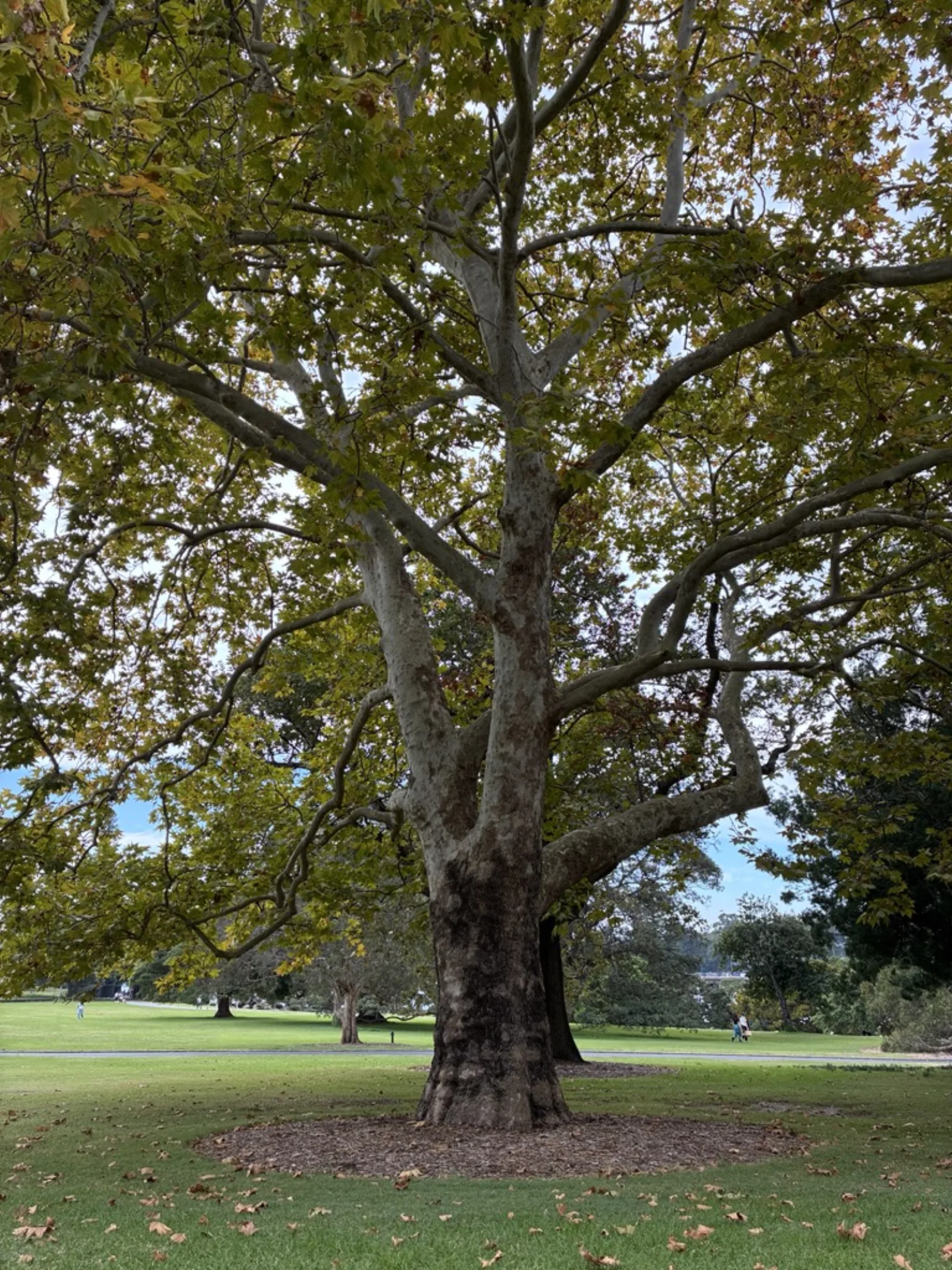
The age of the landscape felt most immediate in the trees. Their trunks and spreading branches made several paths feel enclosed even though the city skyline was close by.
Trees, flower beds and city views
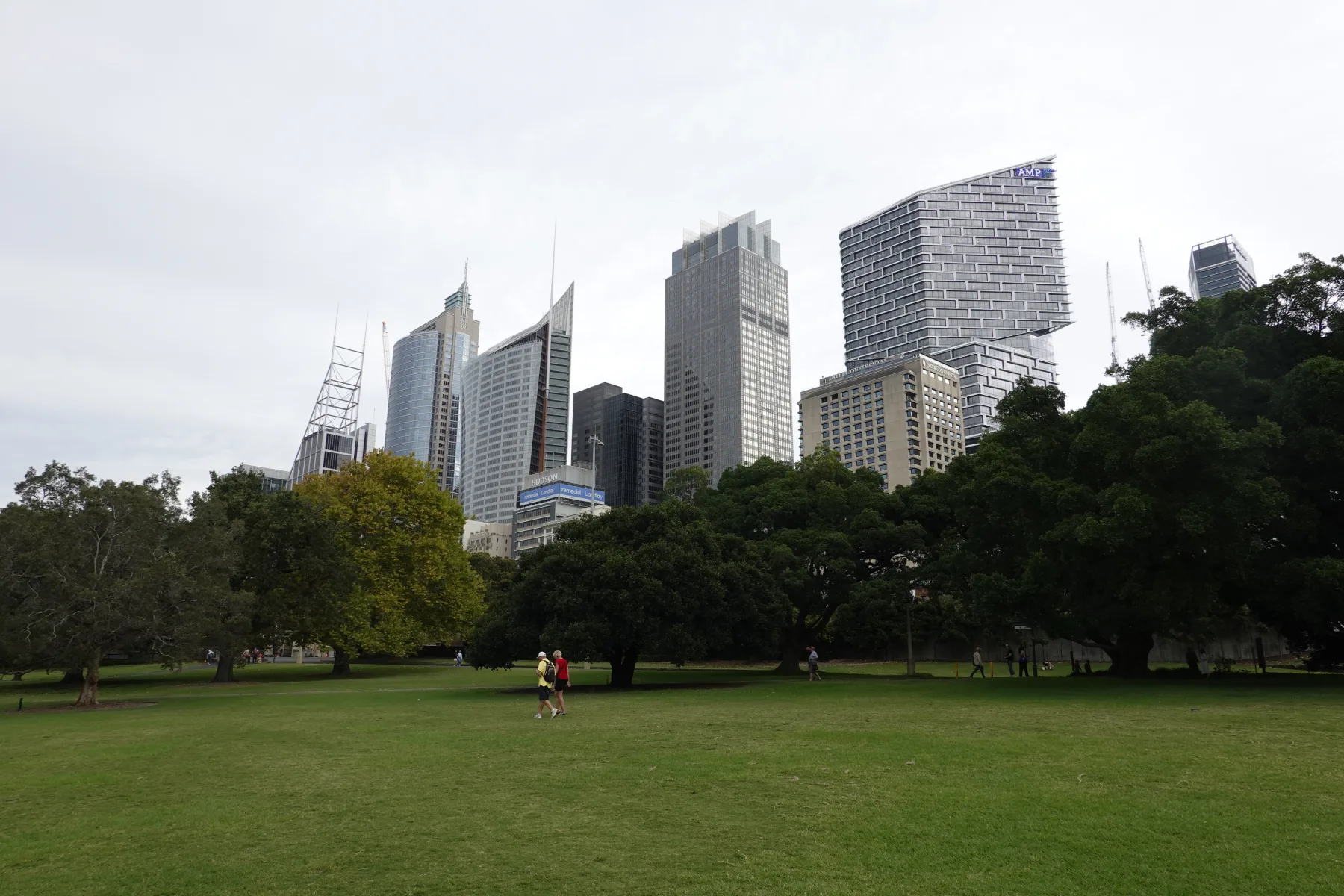
Paths run between lawns and planted beds, with office towers appearing beyond the canopy. The contrast kept changing as we moved between open grass and shaded sections.
We paused at flower beds and watched Australian white ibis walking across the lawn. There was enough variety to make a direct walk towards the harbour take longer than the map suggested.
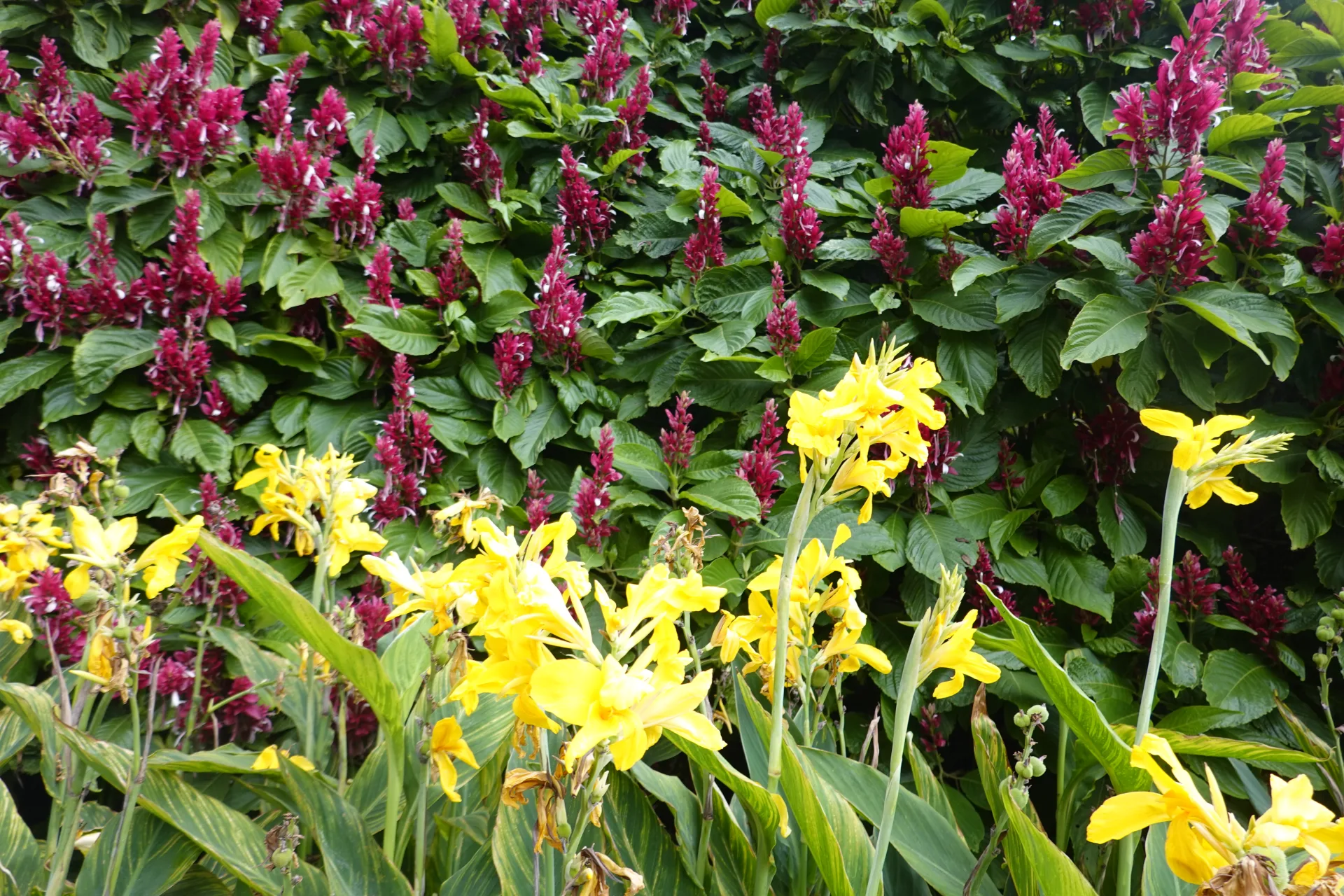
A nearby bed combined bright yellow flowers with a deeper red row behind them. The colours changed from one path to the next rather than repeating across the whole Garden.
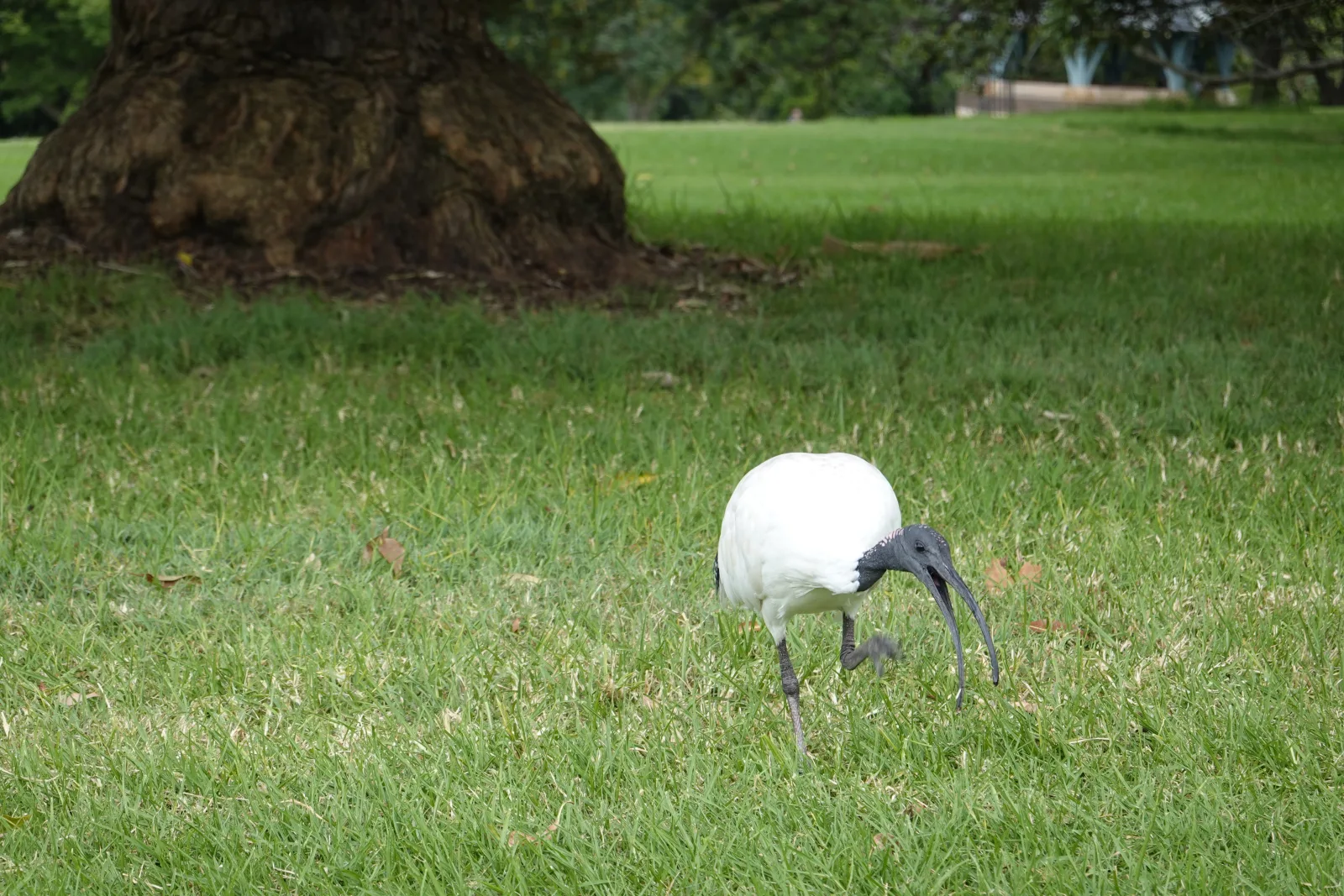
An Australian white ibis searched for food on the lawn close to the path. We watched from a distance and did not feed it.
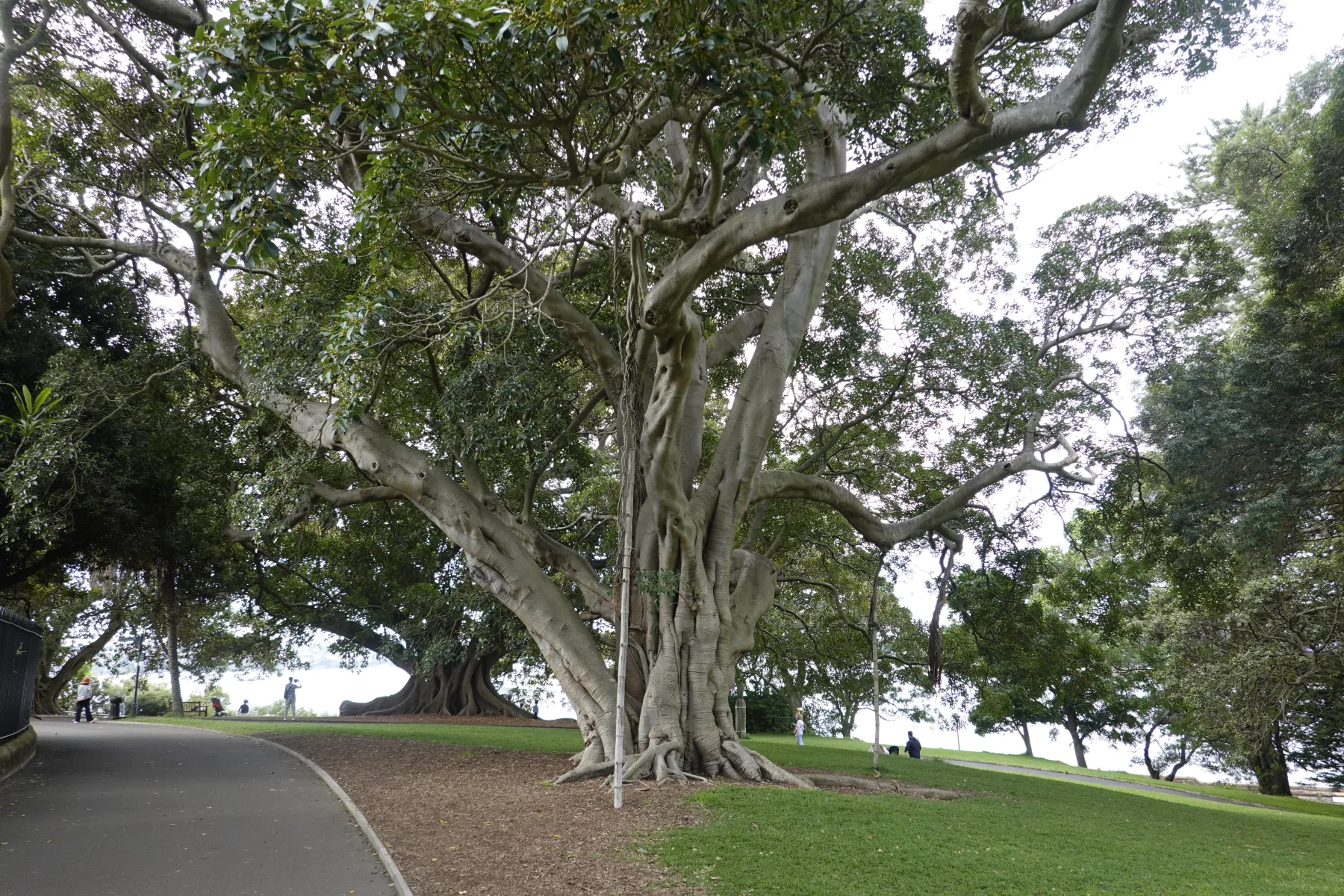
Farther towards the harbour, a huge old fig tree rose through several thick trunks. People walking beside it made the scale much easier to understand.
On a warm afternoon, the large trees mattered more than any formal attraction. We could sit in the shade or choose a patch of lawn instead of keeping up a fixed sightseeing pace.
A long pause on the harbour lawn
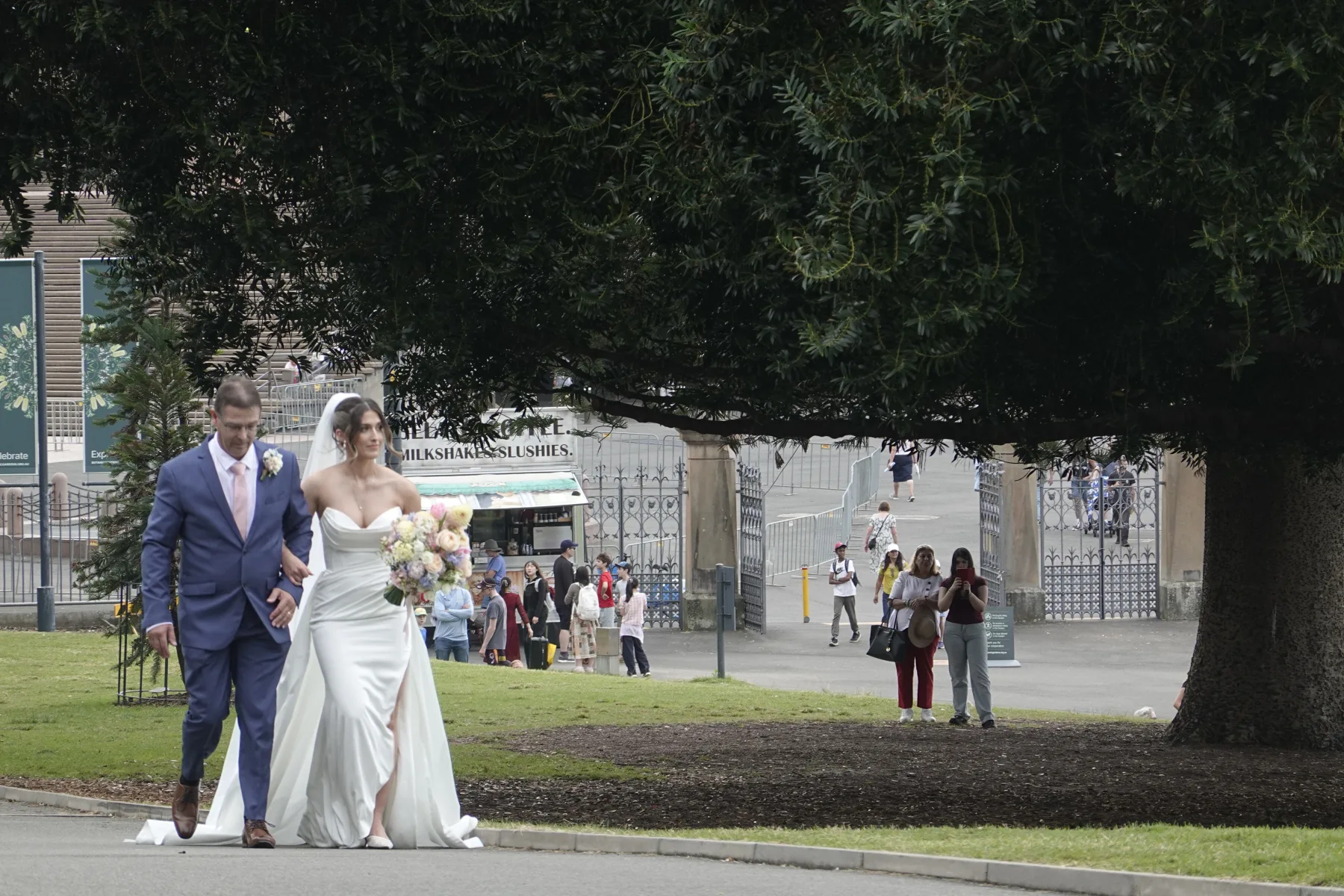
Near Farm Cove, we reached a wedding just as the bride was walking towards the ceremony with her father.
White chairs and flowers faced the harbour, and a violinist performed beside the reserved lawn.
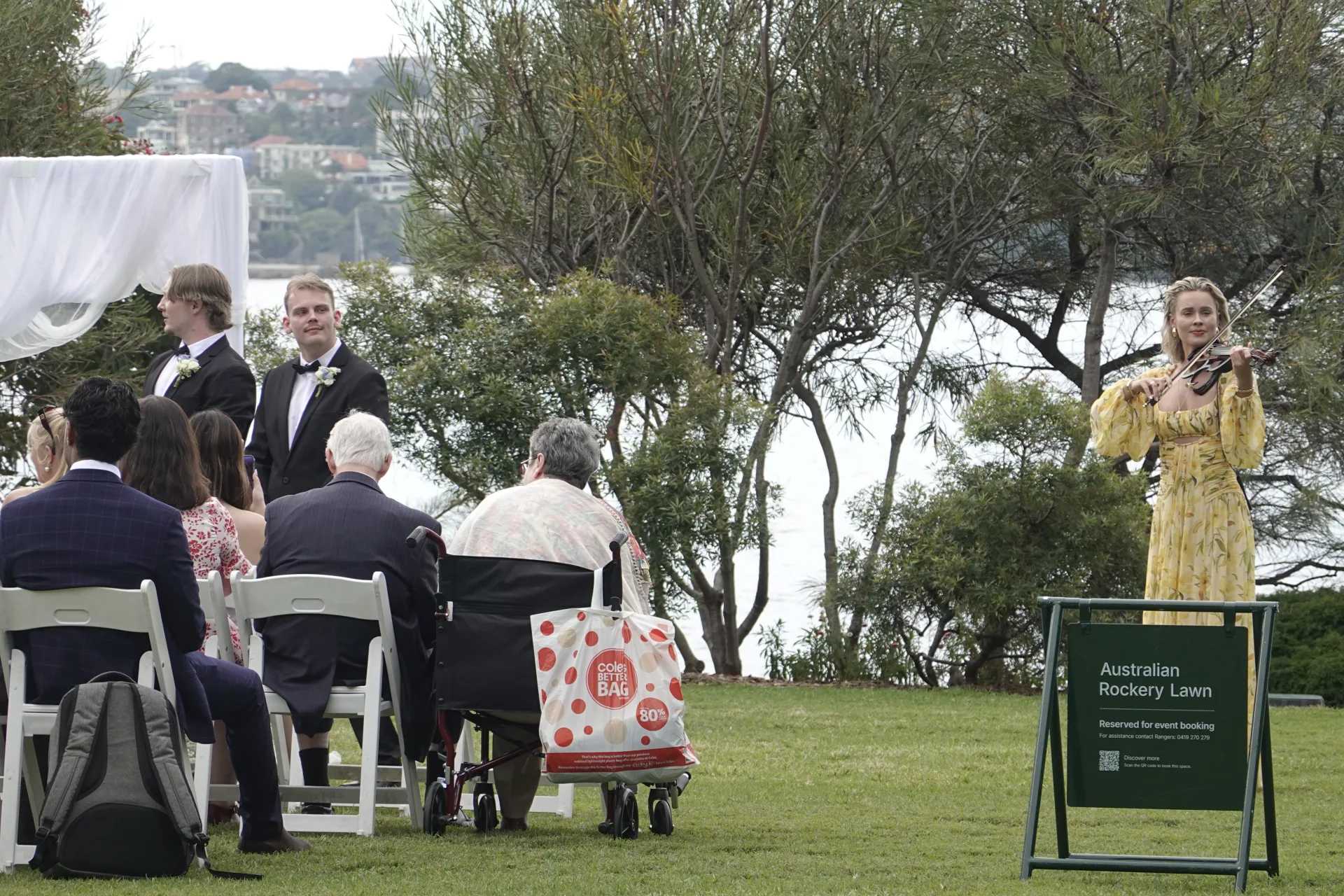
The ceremony sat between trees and the water. We remained outside the event area while the music carried across the public lawn.
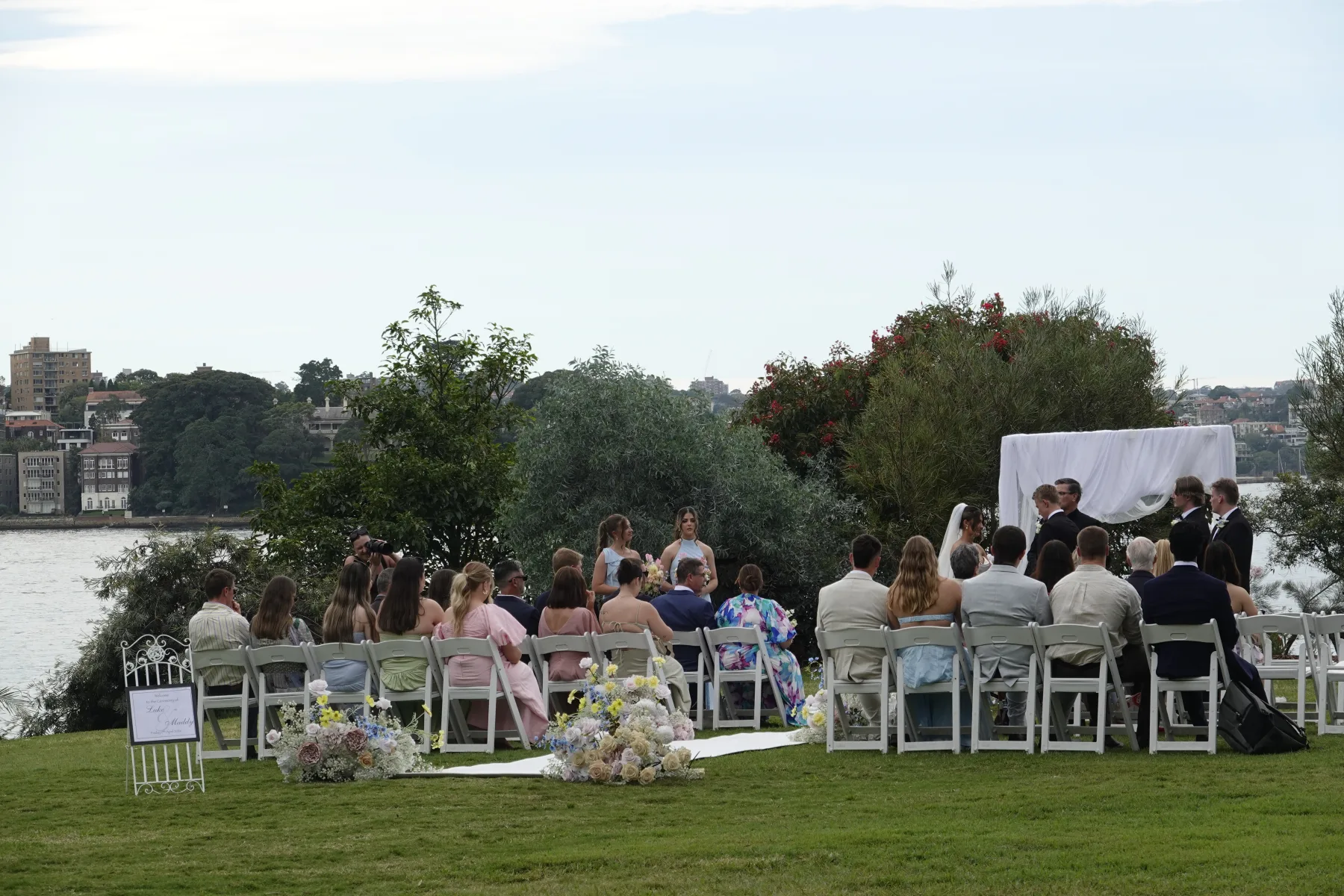
We kept our distance from the event and found another section of grass. Our family lay down there for at least half an hour, looking at the sky and water instead of moving straight to the next stop.
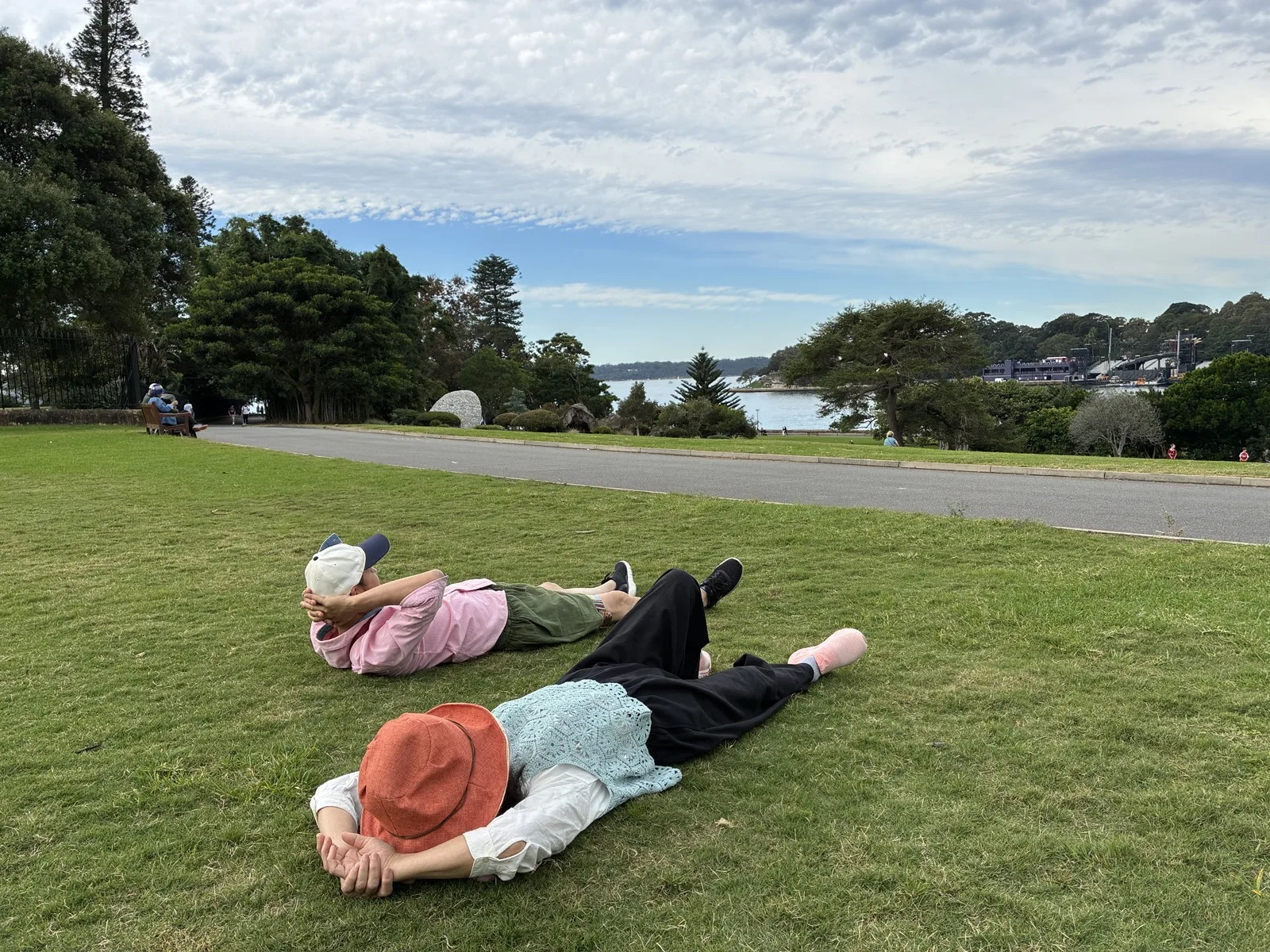
That break changed the rest of the afternoon. Sydney involves plenty of walking, and the Garden gave us a place to stop without leaving the sightseeing area.
Farm Cove and the walk to the Opera House
The path beside Farm Cove looks across the water towards the city and passing ferries. A small domed pavilion stood beyond the grass, reinforcing the sense that the harbour edge remained part of the Garden.
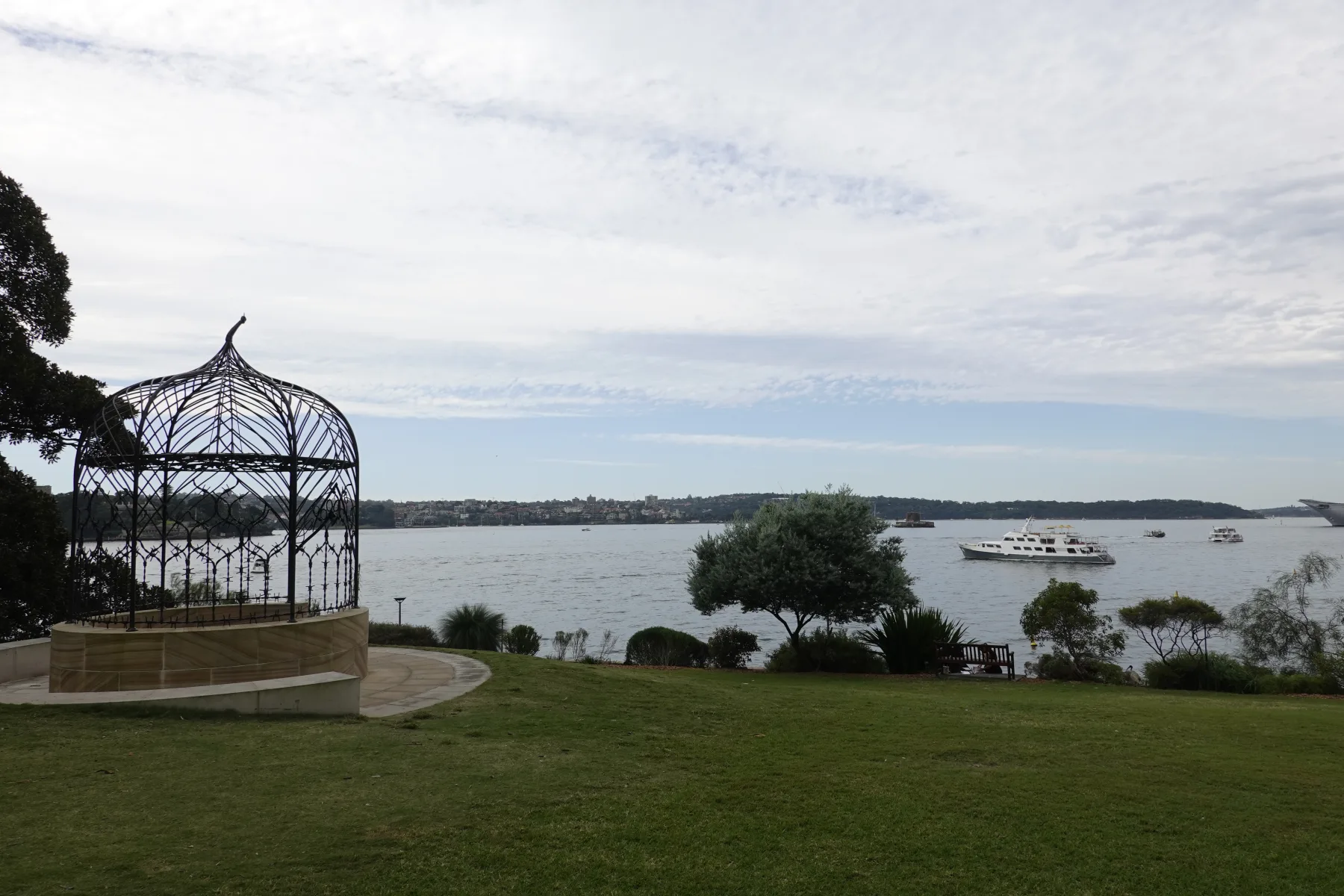
Ferries moved across the water while birds searched the grass closer to us.
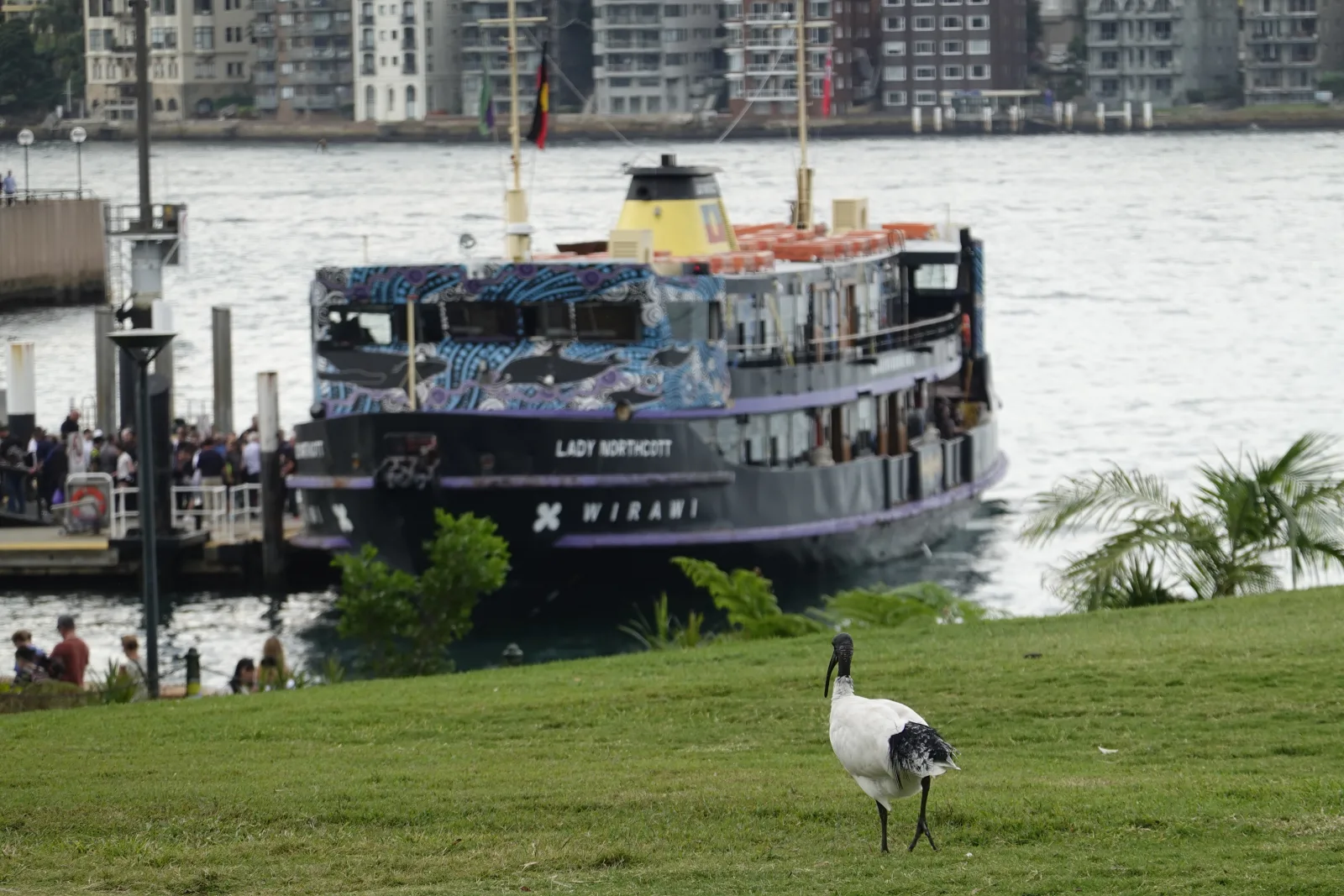
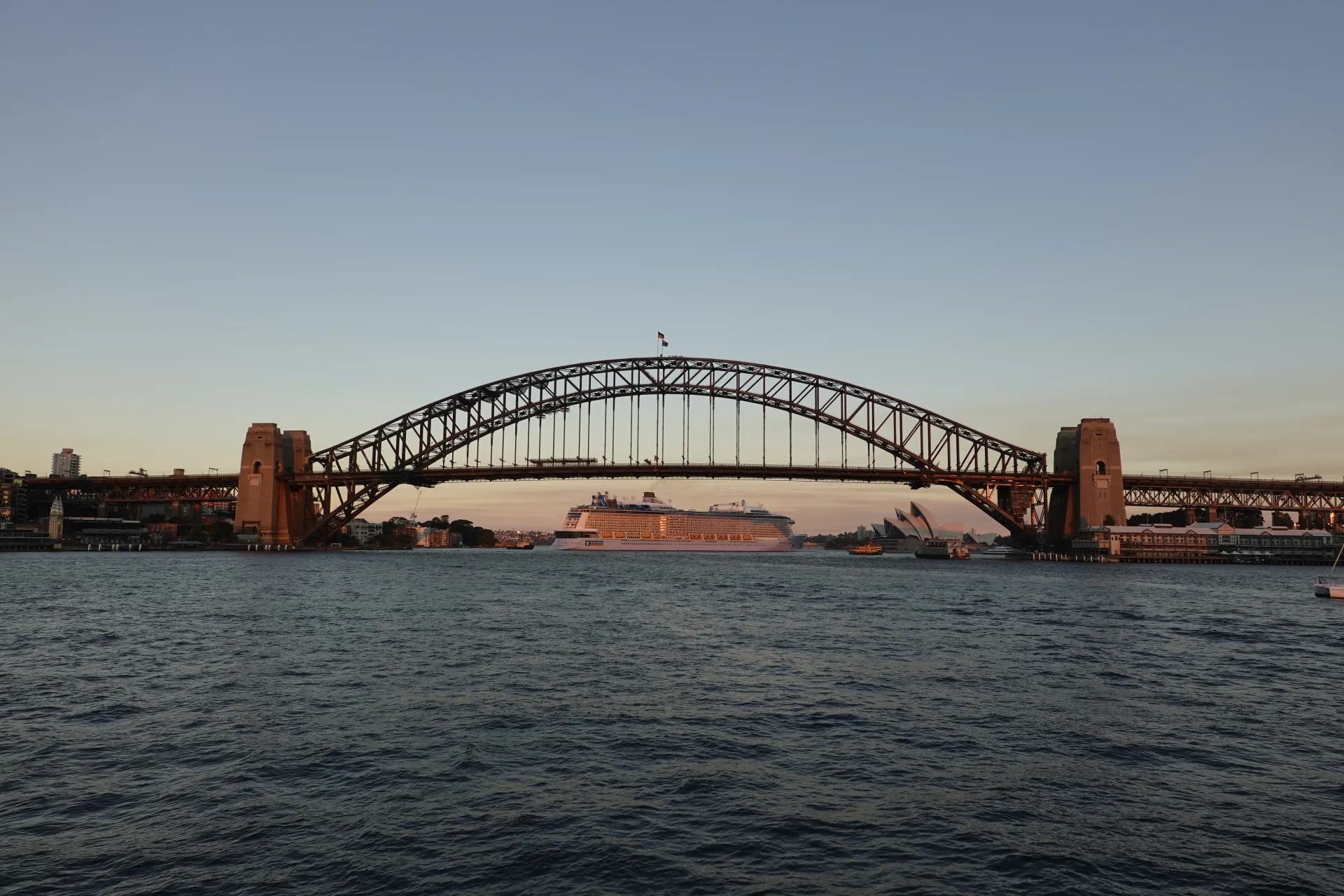
We also saw a large Royal Australian Navy vessel offshore during our visit. Its scale stood out beside the smaller ferries.

Continuing north brought the Sydney Opera House into view between the trees. We could follow the water all the way to its forecourt without returning to the city streets.
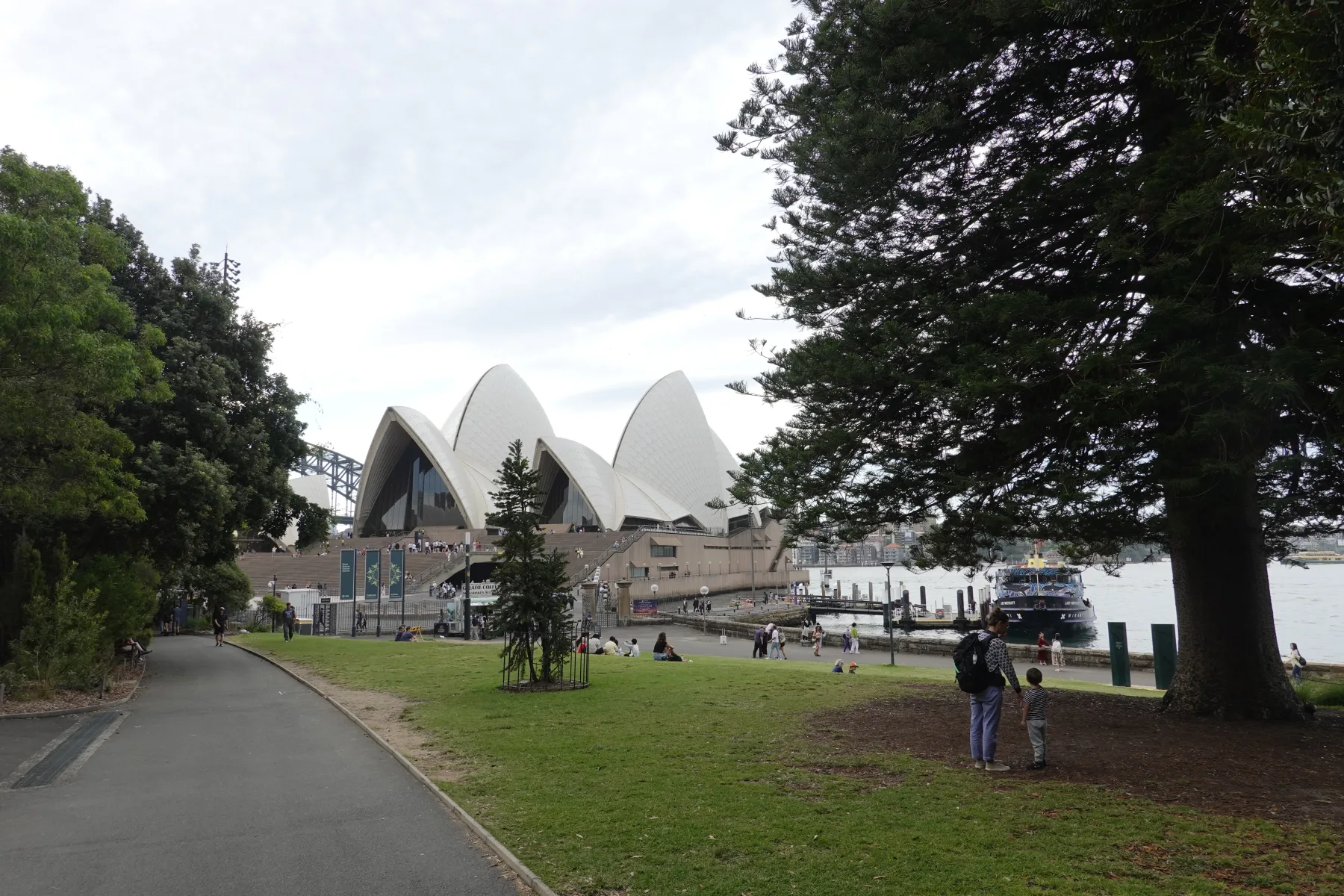
At the end of the Garden route, the quiet lawn gave way to the busier promenade outside the Opera House. We then joined the visit described in our Sydney Opera House guided tour review.
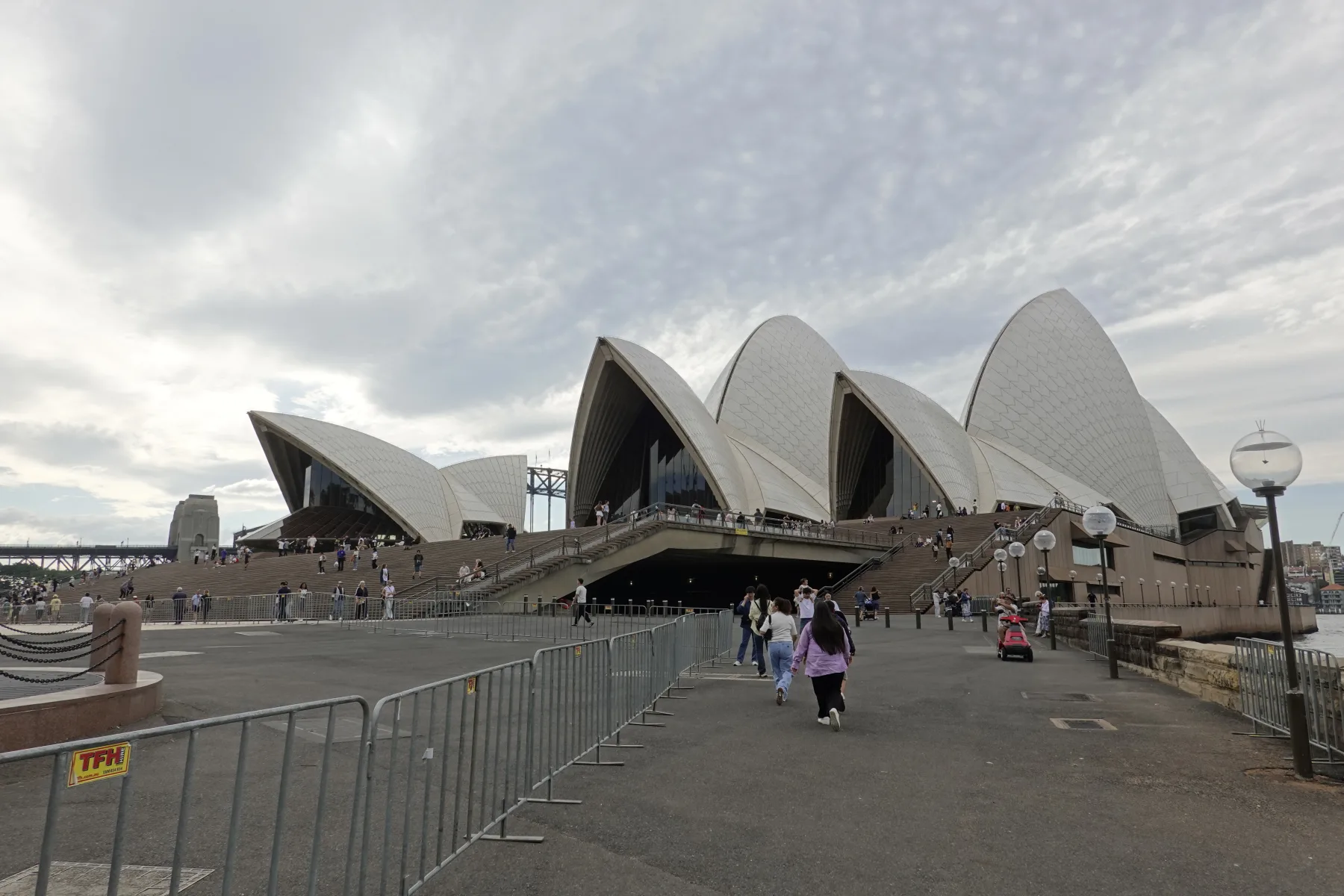
Walking from the city side towards the Opera House was mostly downhill for us. The reverse direction includes uphill sections, so comfortable shoes still matter even though the paths are formed.
Getting there and choosing an entrance
The Garden is large enough that the best station depends on where you want to enter. Circular Quay suits a visit combined with the Opera House, while Martin Place and St James are useful for city-side gates.
- From Circular Quay: walk past the Opera House and enter from the harbour side
- From Martin Place: walk towards Macquarie Street and a western entrance
- From St James: approach through the Macquarie Street side
- From the State Library: continue along Macquarie Street towards the Conservatorium
Use Google Maps to choose a gate near your route. If meeting someone, agree on the entrance or a named landmark inside rather than using only the Garden's name.
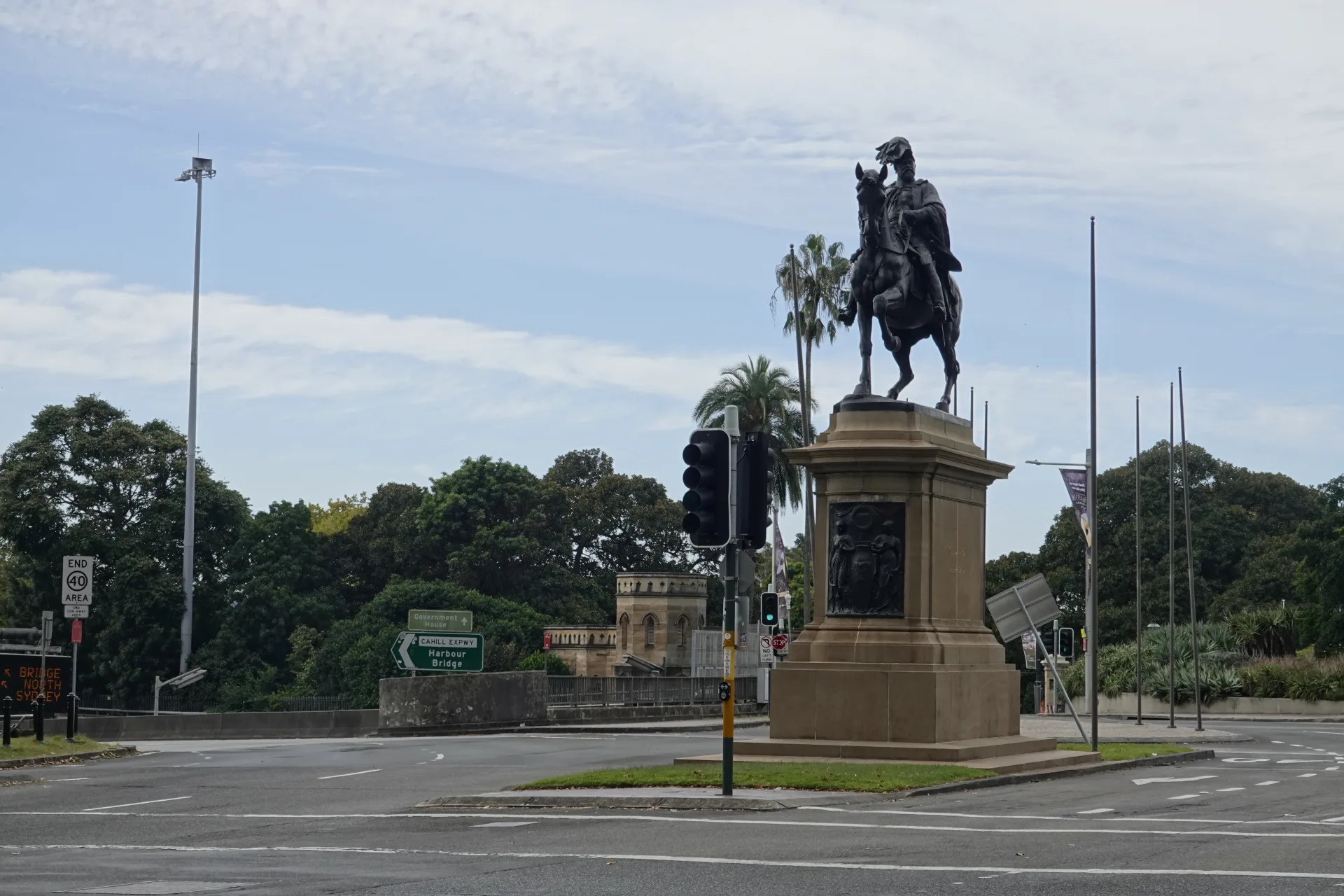
Walking from the State Library, we passed the equestrian statue of King Edward VII on Macquarie Street before reaching the Conservatorium side.
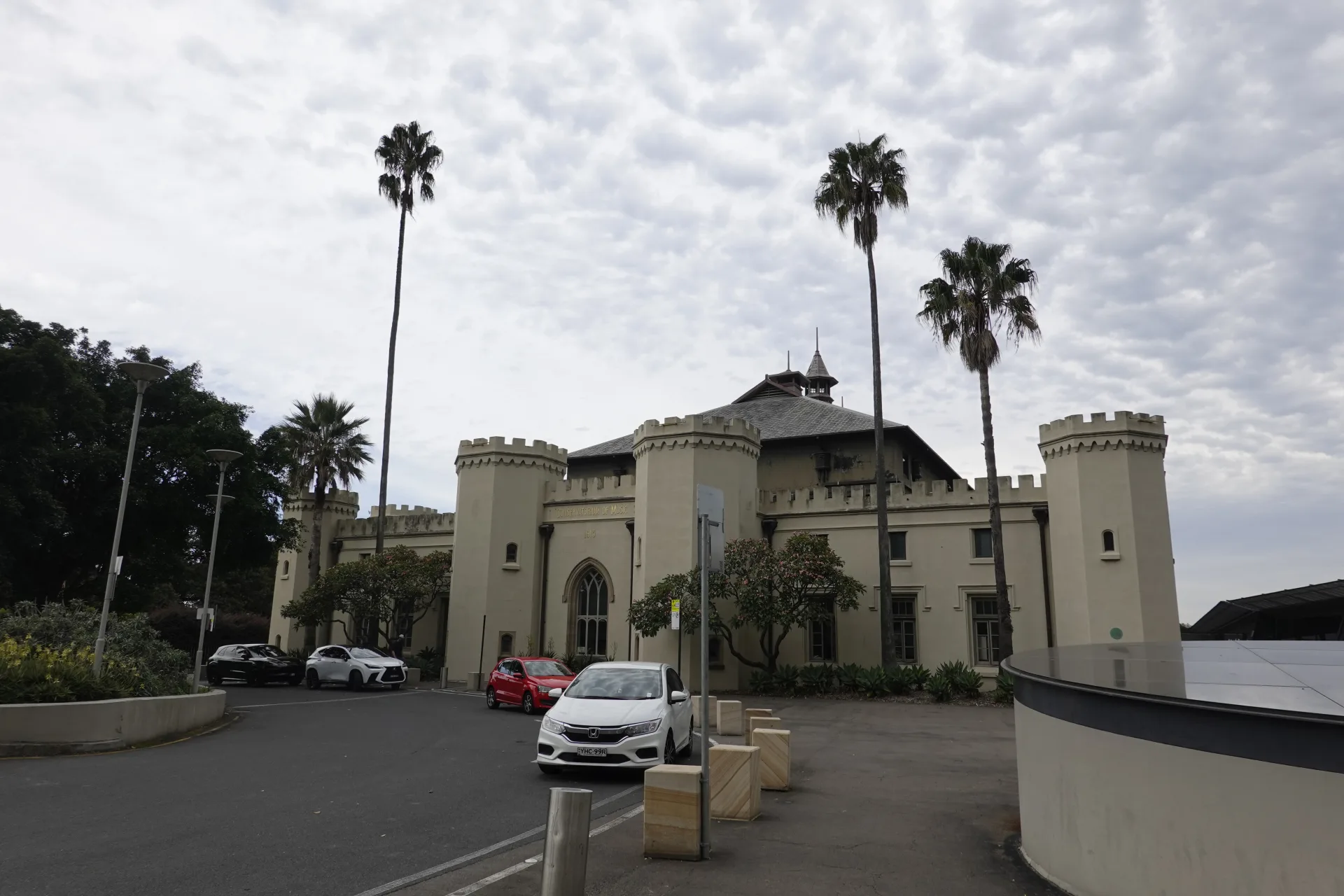
The castle-like Sydney Conservatorium of Music then marked the transition from city streets to the Garden.
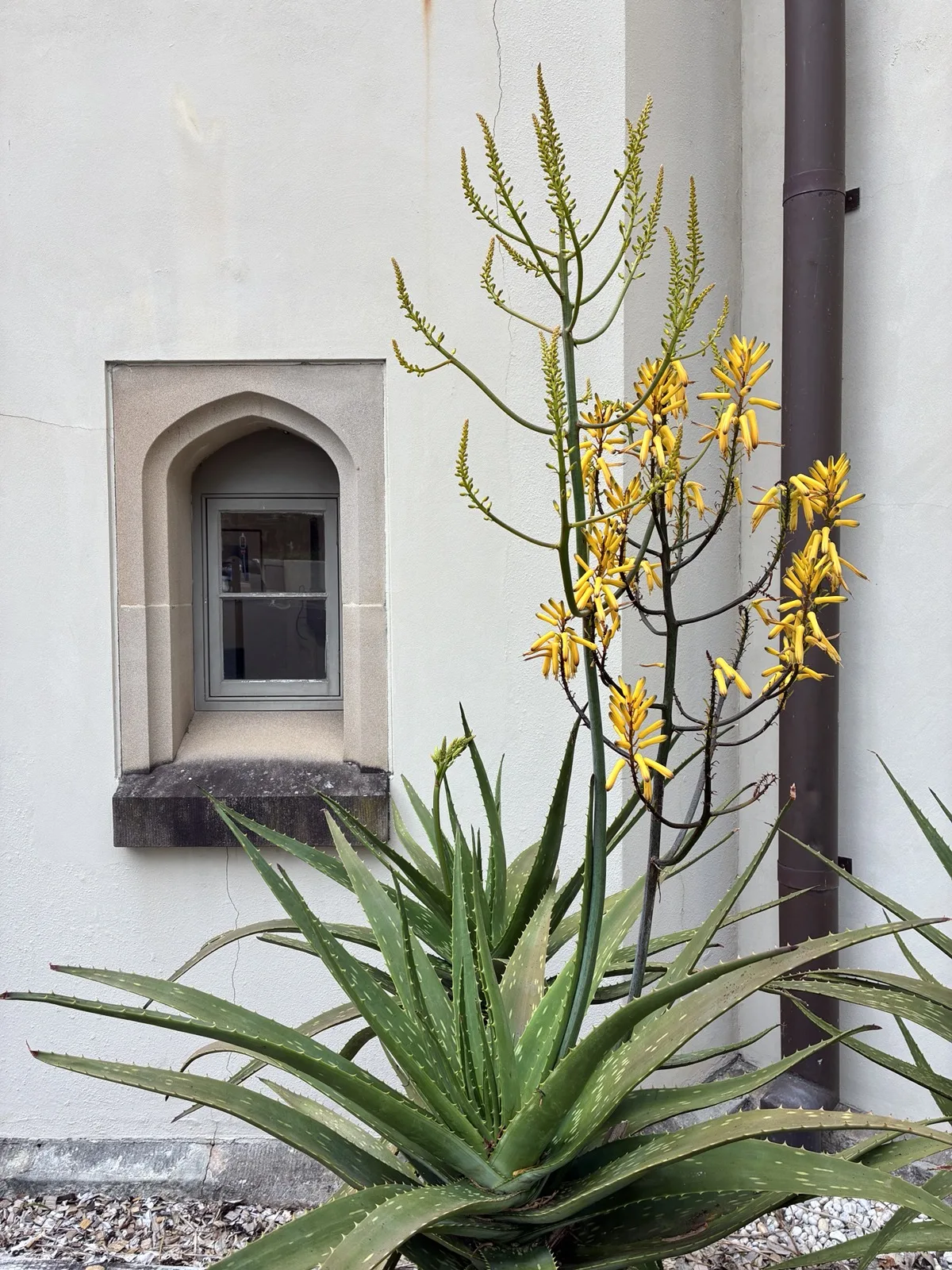
Near its pointed-arch windows, a flowering aloe added a much smaller detail to the stone exterior.
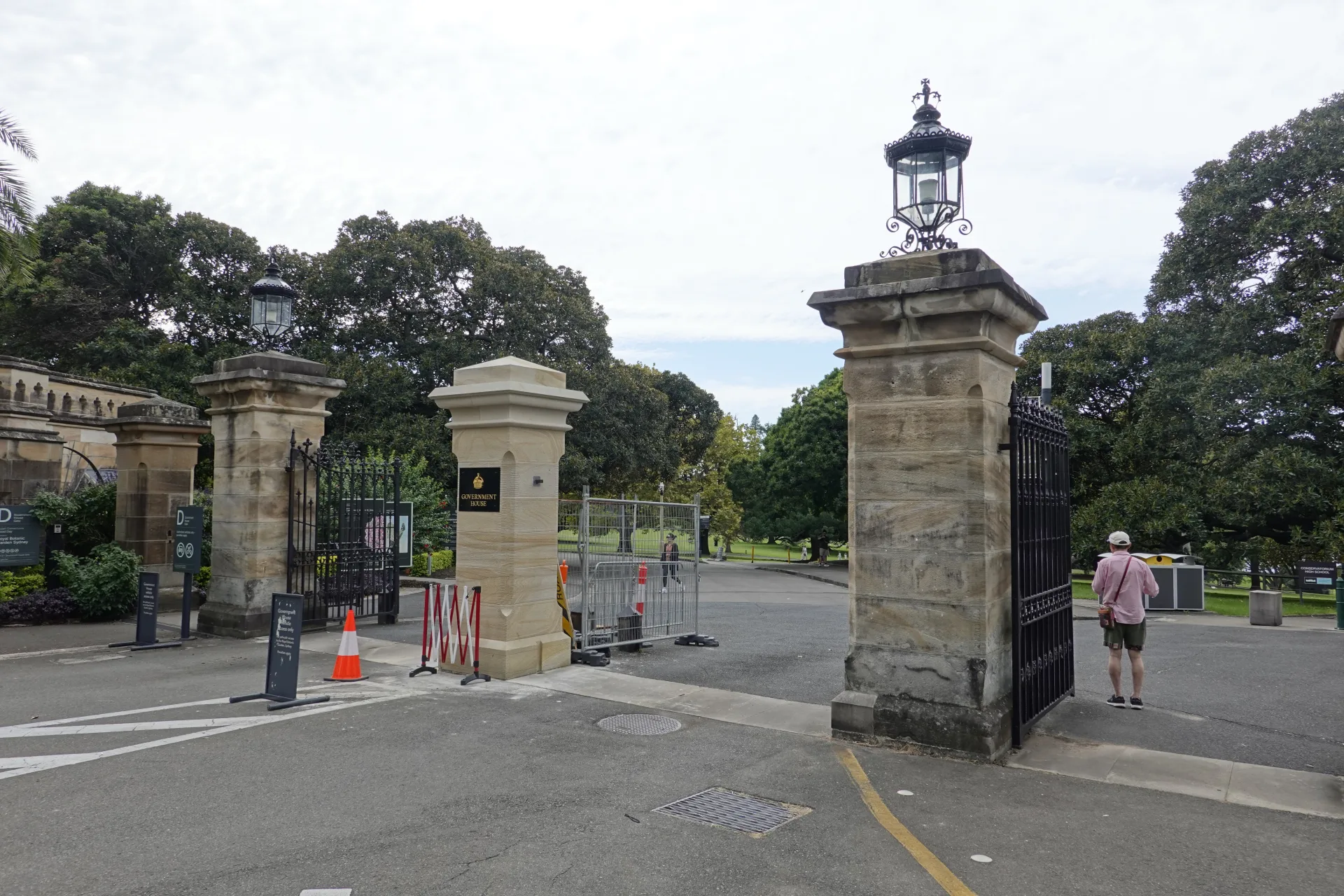
Inside the Garden, we also passed the stone gate to Government House. Access around the residence can change for events, so we viewed it from the public path and followed the signs.
The short transition from historic city buildings into large lawns made this side a good start to our walk. Our State Library of NSW guide shows the reading room and exhibitions we visited before walking here.
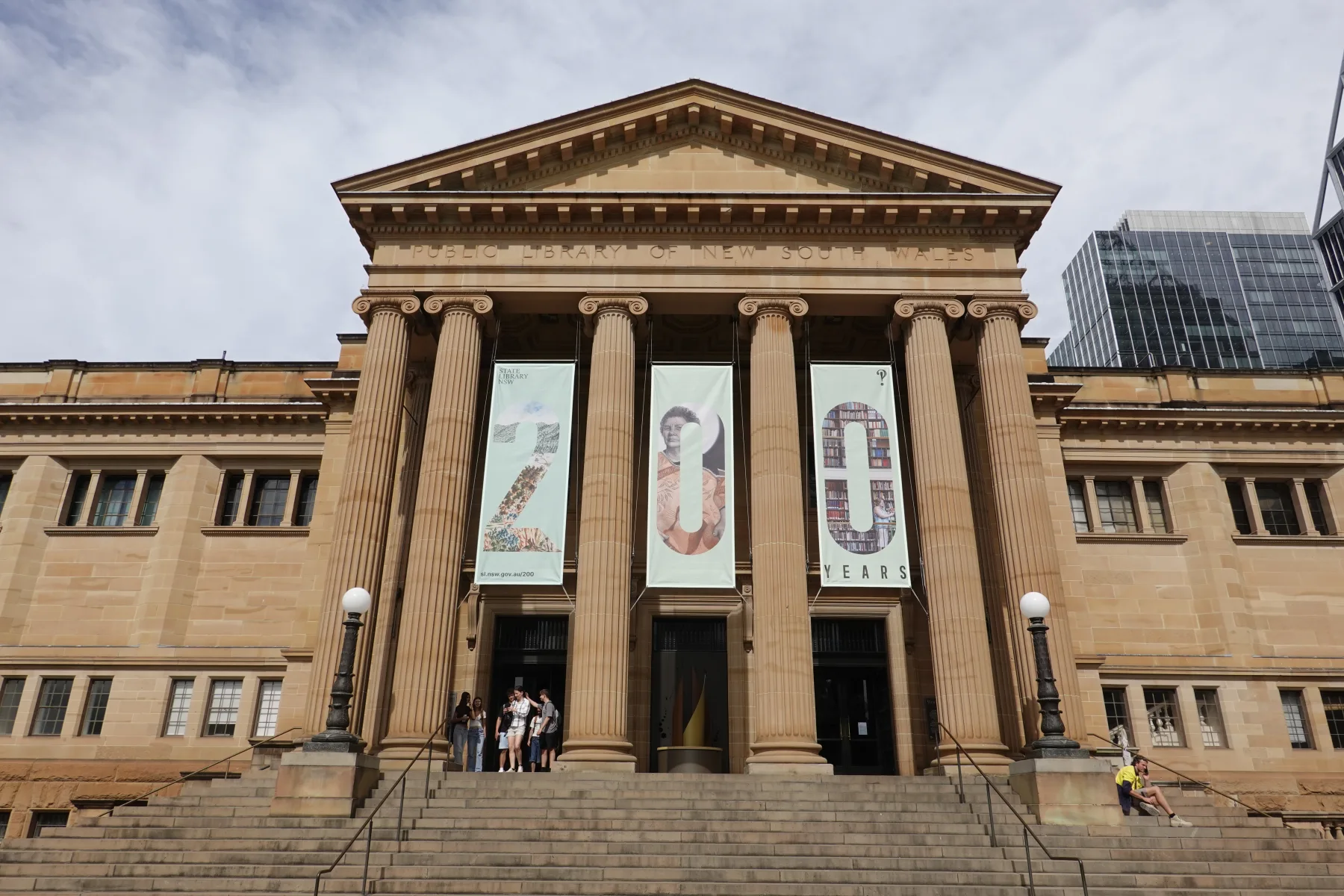
The library and Garden can be paired without transport, giving the same half-day route an indoor historic building and a long outdoor harbour walk.
An English-guided walk through the Garden and central Sydney
We walked independently from the State Library through the Garden to the Opera House. Travellers who would rather hear the city history as they go can compare GetYourGuide's Opera House, Harbour Bridge and The Rocks guided walk, which includes the Royal Botanic Garden.
The current listing is a two-hour live English-guided walk. Check the meeting point, distance, accessibility and exact stops for your date; an organised walk will not leave the same unstructured lawn time that we enjoyed.
Check the guided walk on GetYourGuideFrequently asked questions
Is the Royal Botanic Garden Sydney free?
Yes. General entry is free, although special ticketed events may have separate admission charges.
What are the opening hours?
The Garden opens daily at 7 am and closes at a seasonal time between 5 pm and 8 pm. April's listed closing time is 6 pm. Check the official page before an evening visit.
Which station is closest?
Circular Quay works well for the Opera House side. Martin Place or St James can be more convenient for entrances along the city side.
How long should you allow?
Allow one to two hours for a walk through the main paths and along Farm Cove. Add time if you want to explore several garden areas or rest on the lawns as we did.
Summary
The Royal Botanic Garden gave us more than a walking route between Macquarie Street and the Opera House. Its old trees, lawns and harbour edge offered a genuine pause in a day of city sightseeing.
Entry is free, but the seasonal closing time deserves a check. Starting from the city side and finishing at Farm Cove worked well for us, especially with enough time to stop on the grass.