MCA Sydney Guide: Admission, Opening Hours and Harbour Views
We visited the Museum of Contemporary Art Australia after walking through The Rocks. The galleries were only part of the appeal: its windows and Level 4 terrace also framed Sydney Harbour.
This article contains affiliate links. If you book through them, we may earn a commission at no extra cost to you. Our first-hand views are our own.
Is MCA Australia worth visiting?
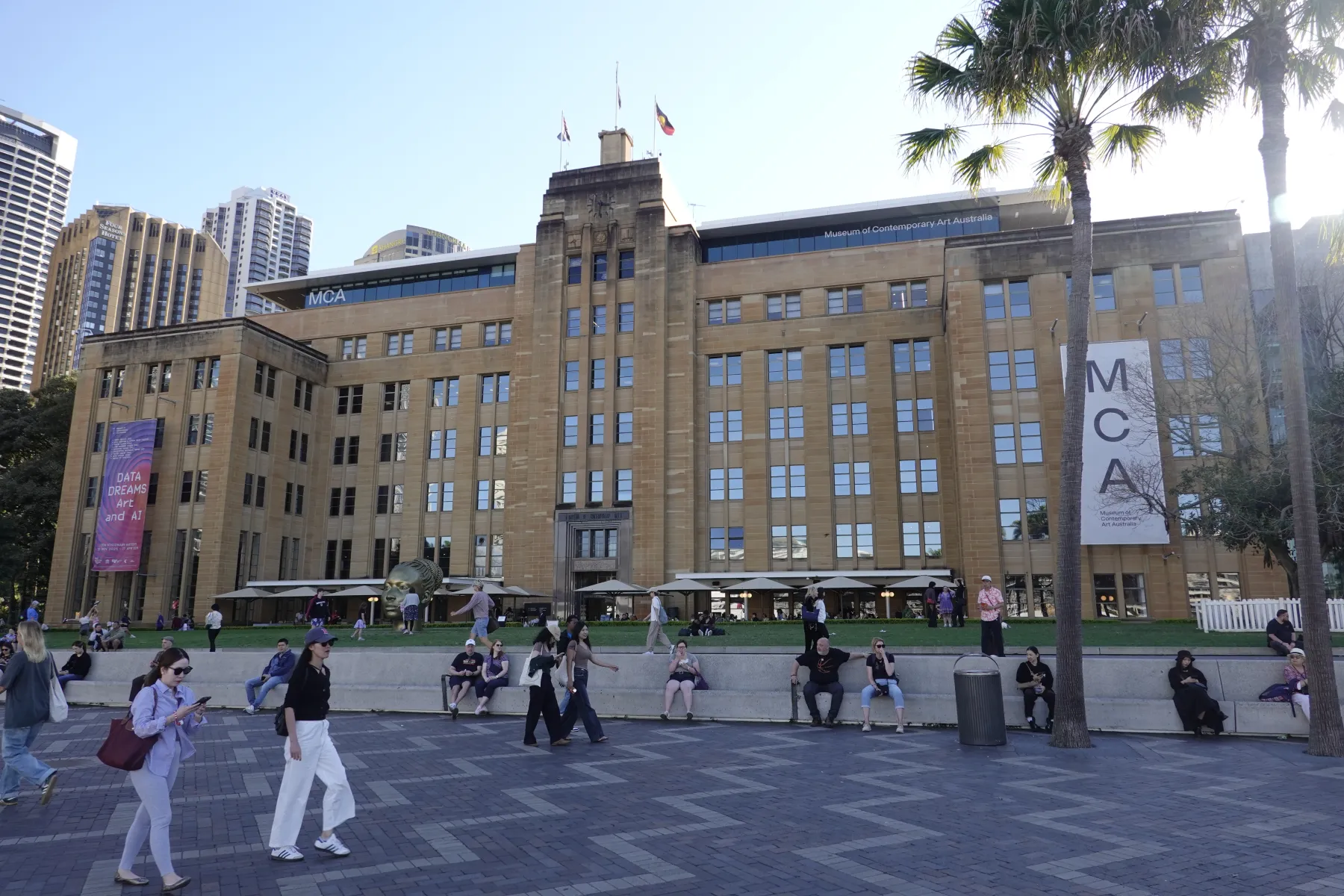
The Museum of Contemporary Art Australia, usually shortened to MCA Australia or MCA Sydney, sits between The Rocks and Circular Quay. It is a useful stop in wet or hot weather because the harbour, historic streets and several major Sydney sights are all within walking distance.
We arrived with my parents on 15 April 2026 after a morning in The Rocks. The visit gave us contemporary Australian art, large installations and harbour views without another long journey across the city.
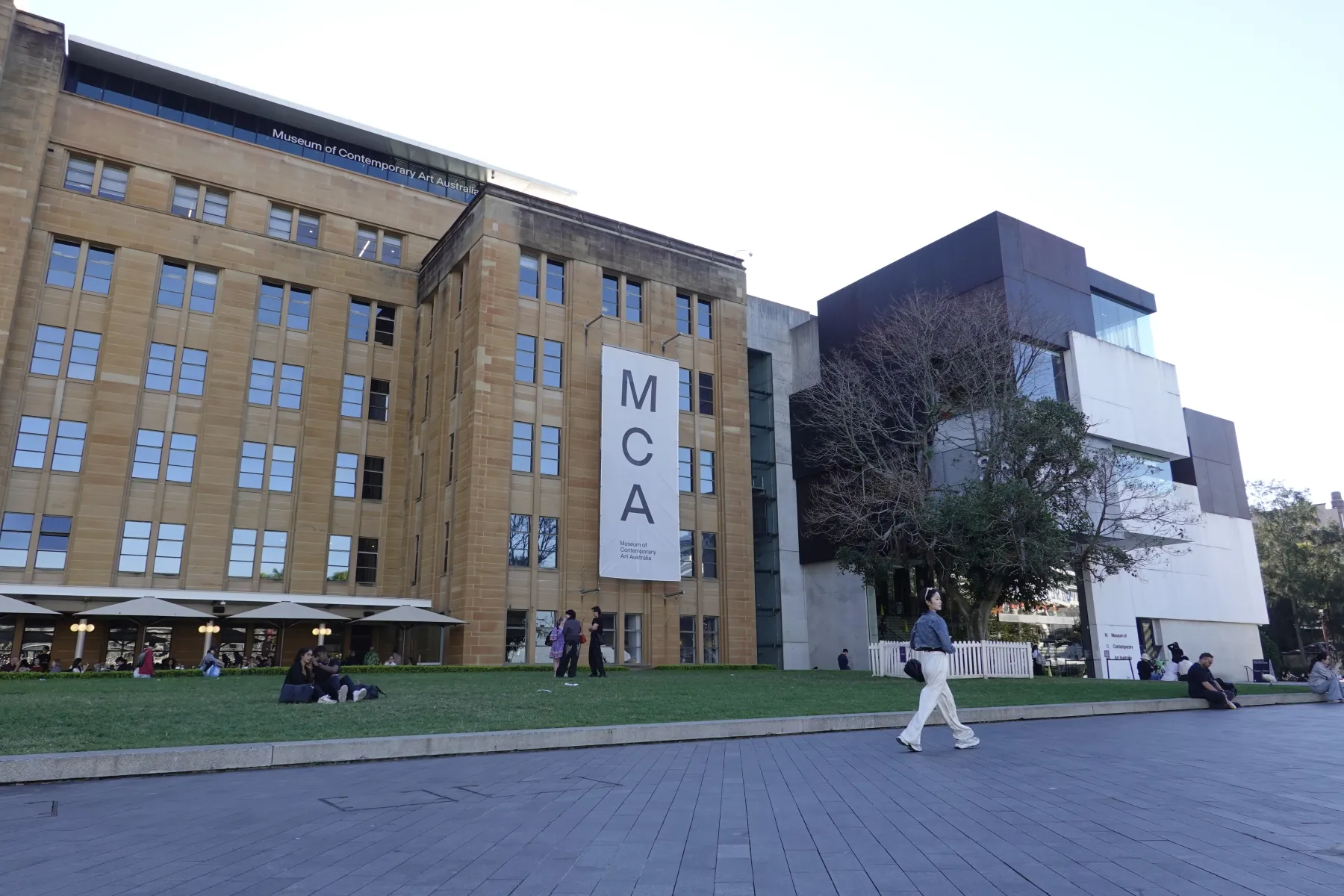
The original museum opened to the public in 1991. A major expansion completed in 2012 added the modern wing and more gallery space, creating the sharp old-and-new contrast visible from the lawn.
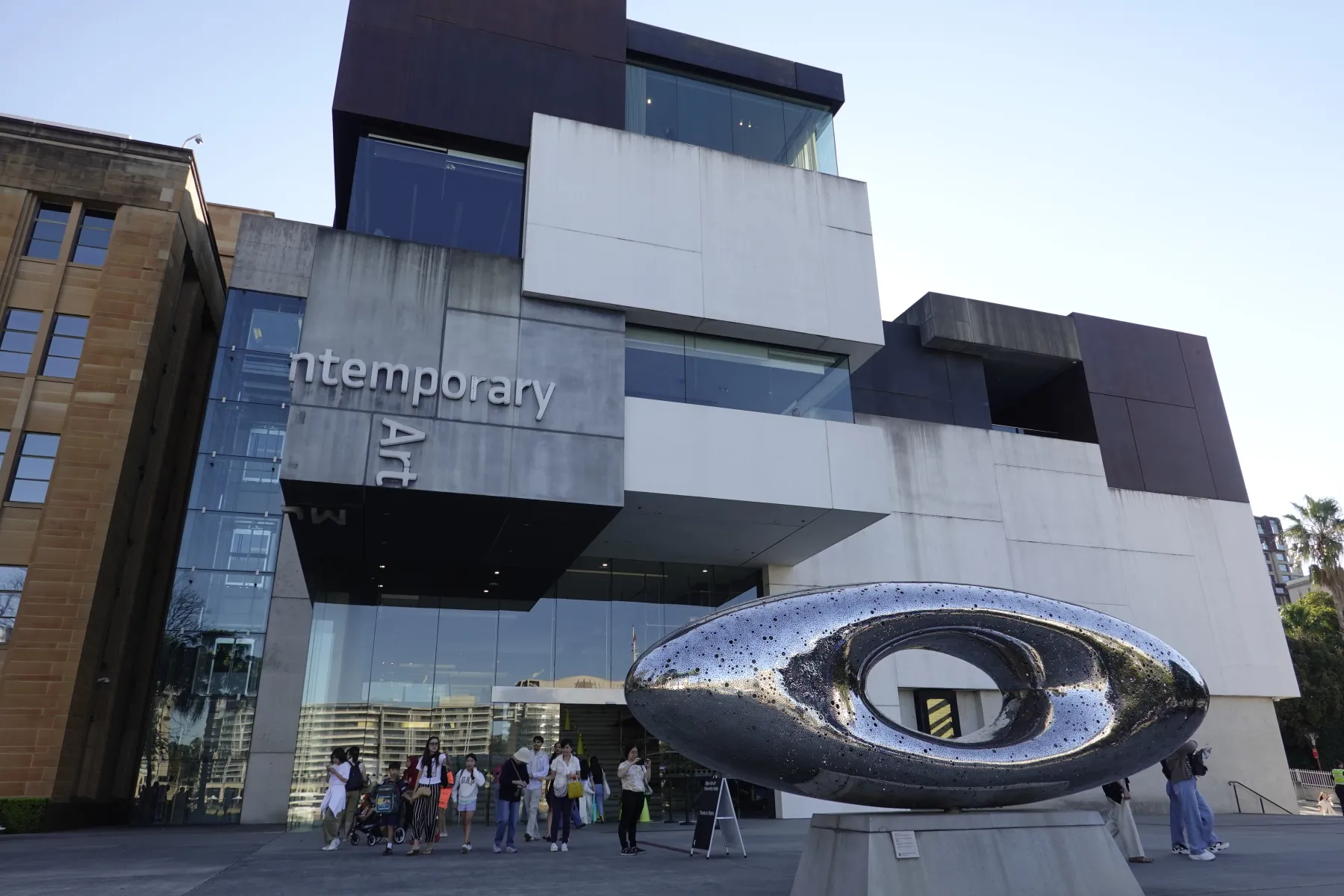
That contrast made the building feel like part of the visit rather than a neutral container for art. Even before entering, we could move from the sandstone and brick of The Rocks into a distinctly contemporary space.
Admission and opening hours
When we visited in April 2026, the standard adult price was A$20 for general admission or A$35 for all access, including the major exhibition. Our date happened to be a Telstra Free Day, so our family entered without paying.
That free day was a special event. MCA Australia now describes museum entry as ticketed, while MCA members and visitors under 18 receive free entry. Prices and exhibition access can change, so use the official MCA ticket page to compare the options for your date.
The museum's current regular hours are:
- Monday: 10am–5pm
- Tuesday: closed
- Wednesday: 10am–5pm
- Thursday: 10am–9pm
- Friday to Sunday: 10am–5pm
MCA says it opens on public holidays that fall on a Tuesday, but closes on 25 December. The venue is cashless. Check the official visitor information again before travelling, particularly around holidays or special events.
We would allow about 90 minutes to two hours for several gallery floors and the harbour views. A major exhibition, a slow look at every label, or a meal can extend the visit beyond two hours.
Inside the galleries on our April 2026 visit
Exhibitions change, so these photographs record what was in the museum on our date rather than what you are guaranteed to see now. The variety mattered more than any single work: one room could be quiet and sparse, while the next was filled with colour or large sculptural forms.
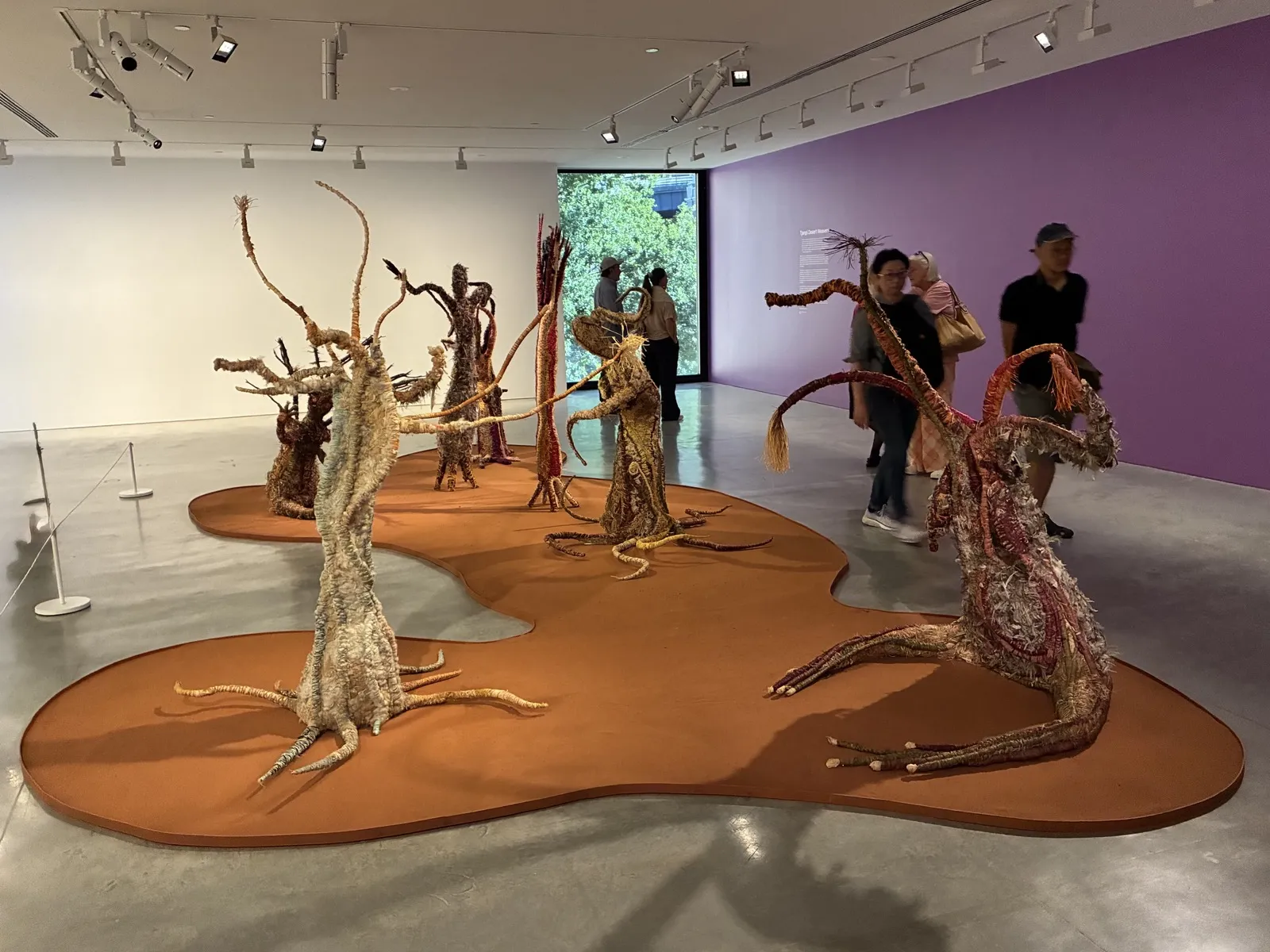
A woven installation stretched across the space like an unfamiliar creature. Its close detail showed the handwork, while stepping back changed the outline completely.
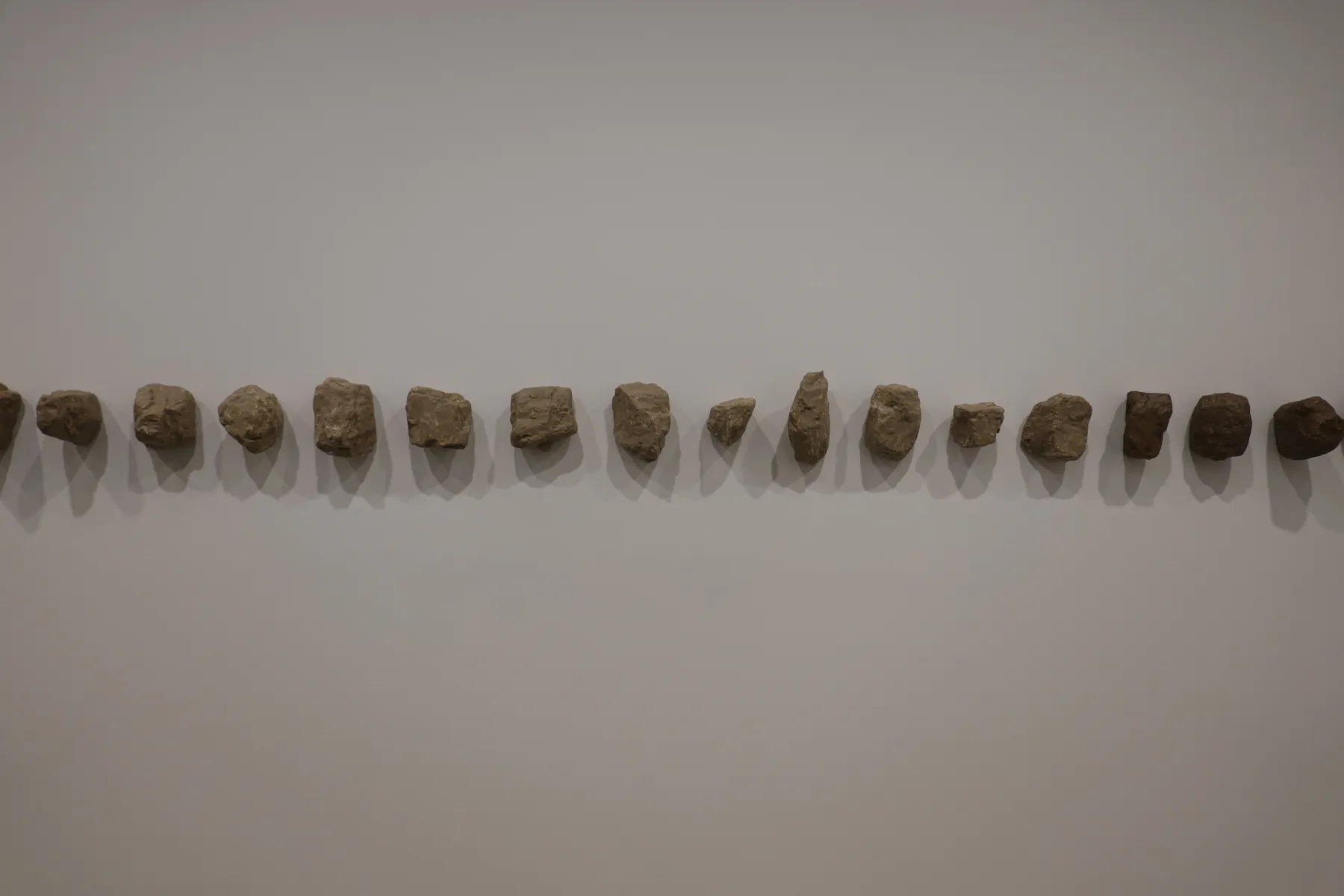
Another work placed stone forms at measured intervals across a white wall. Walking along it revealed that the shapes and shadows differed even though the arrangement first looked repetitive.
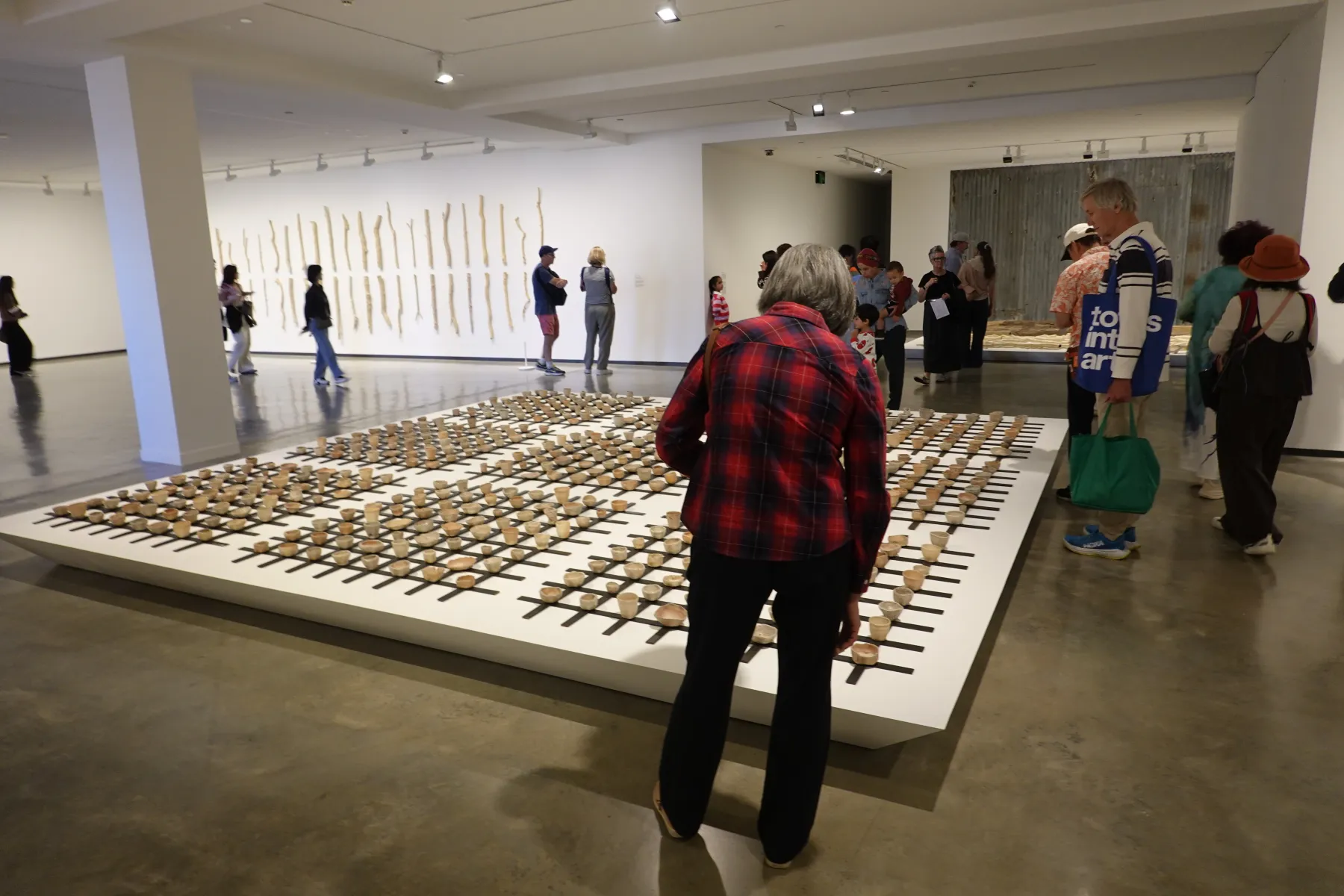
The larger rooms let us walk around installations instead of viewing everything from one marked position. My parents and I often noticed different details because we approached the same work from separate sides.
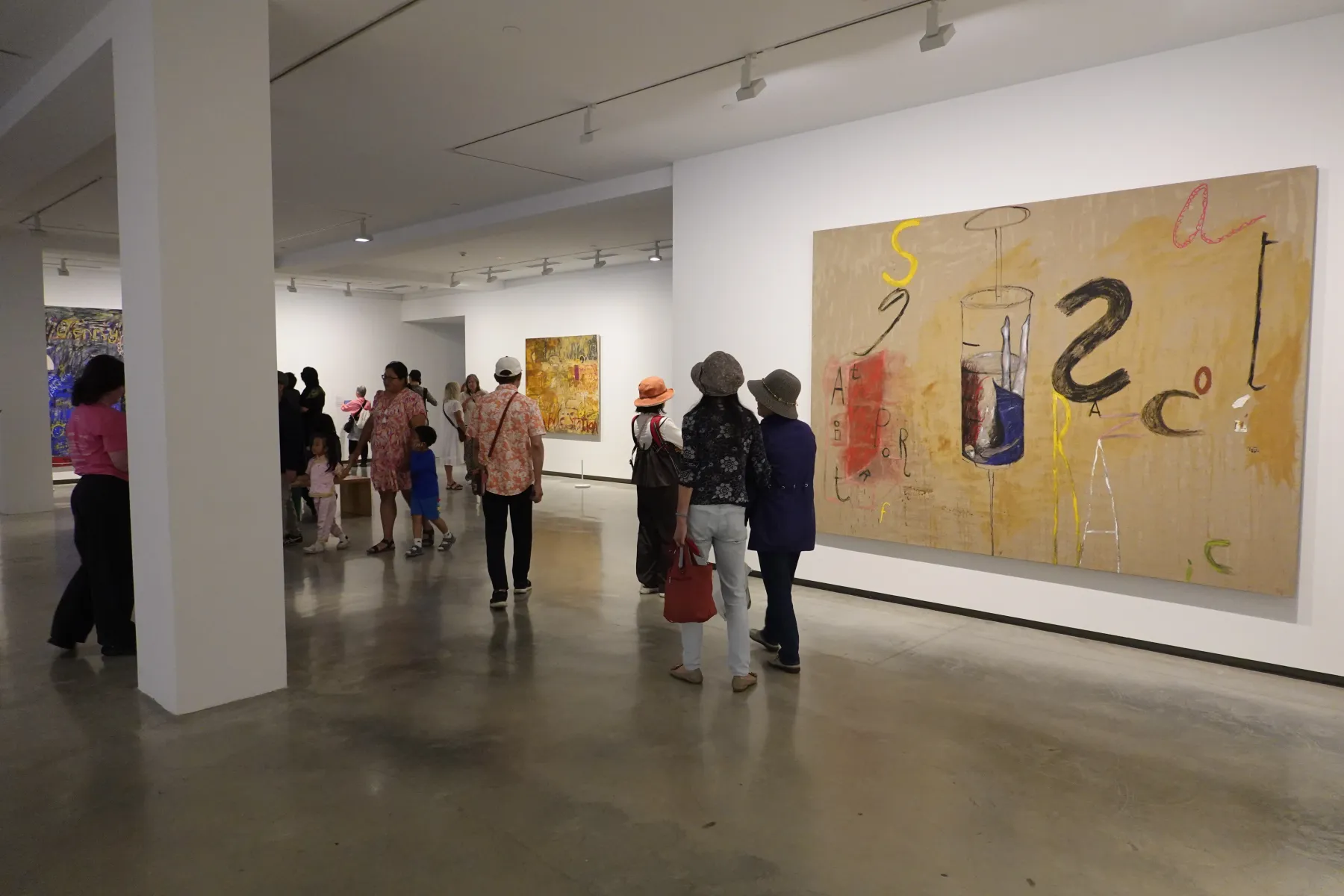
Painting galleries felt calmer, with enough distance to compare colour, scale and texture. Benches and the transitions between rooms also gave us natural places to regroup.
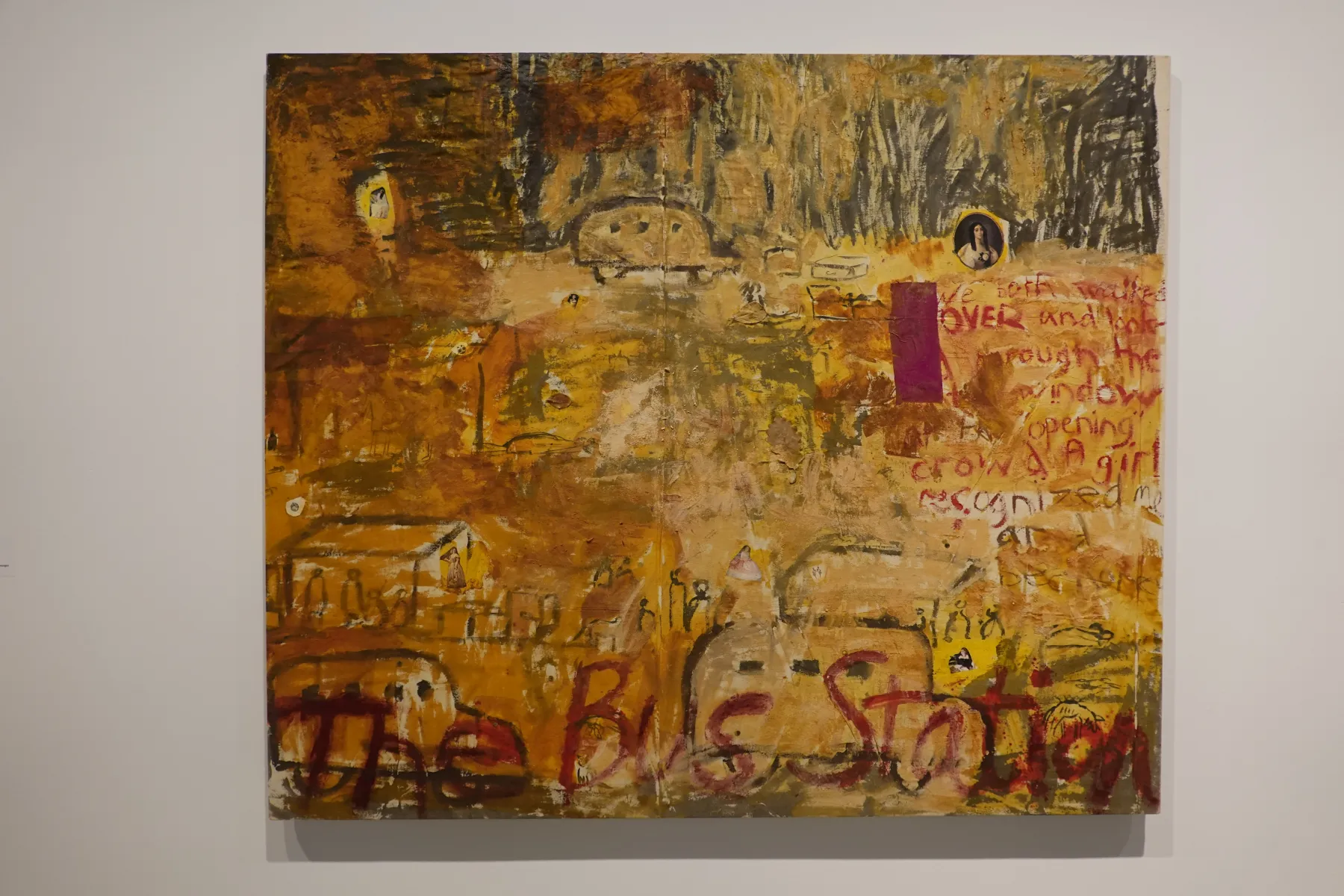
This large ochre-toned work held our attention from across the room. Up close, its layered surface mattered as much as the overall colour.
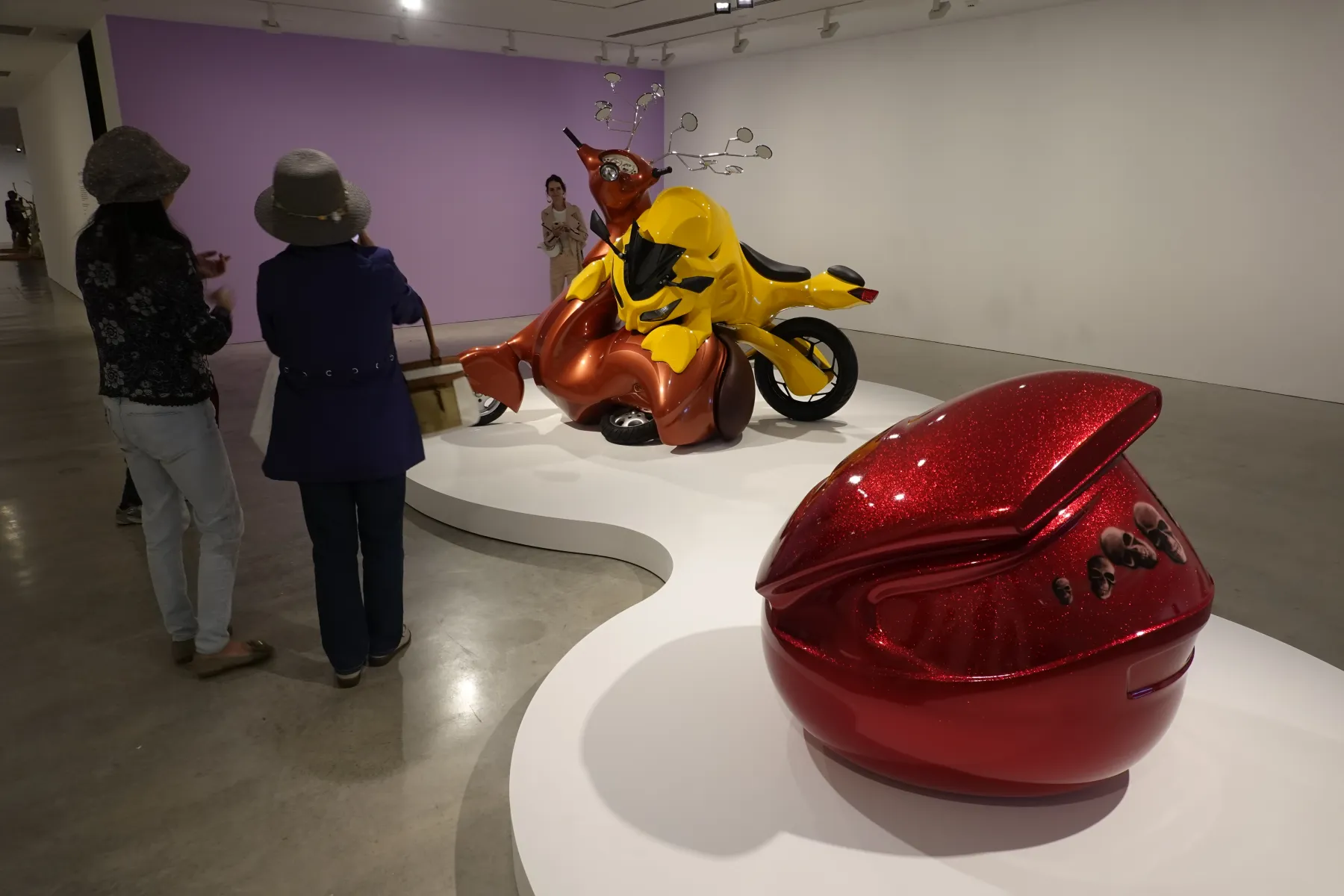
The distorted motorcycle forms prompted the longest family conversation. We kept changing position to work out which familiar parts were still recognisable.
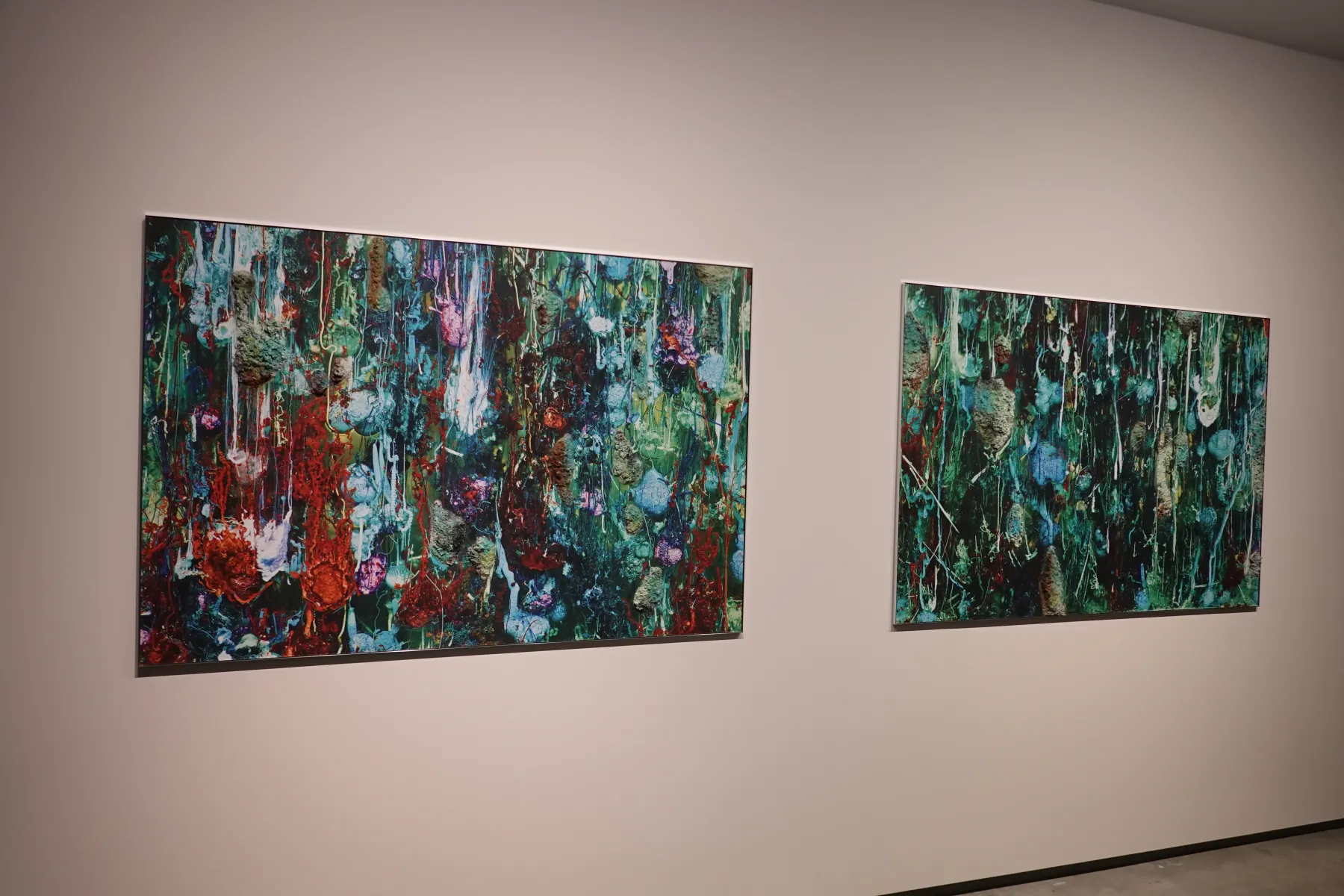
Bright works stood out against the white walls, then revealed much smaller marks and material changes as we moved closer.
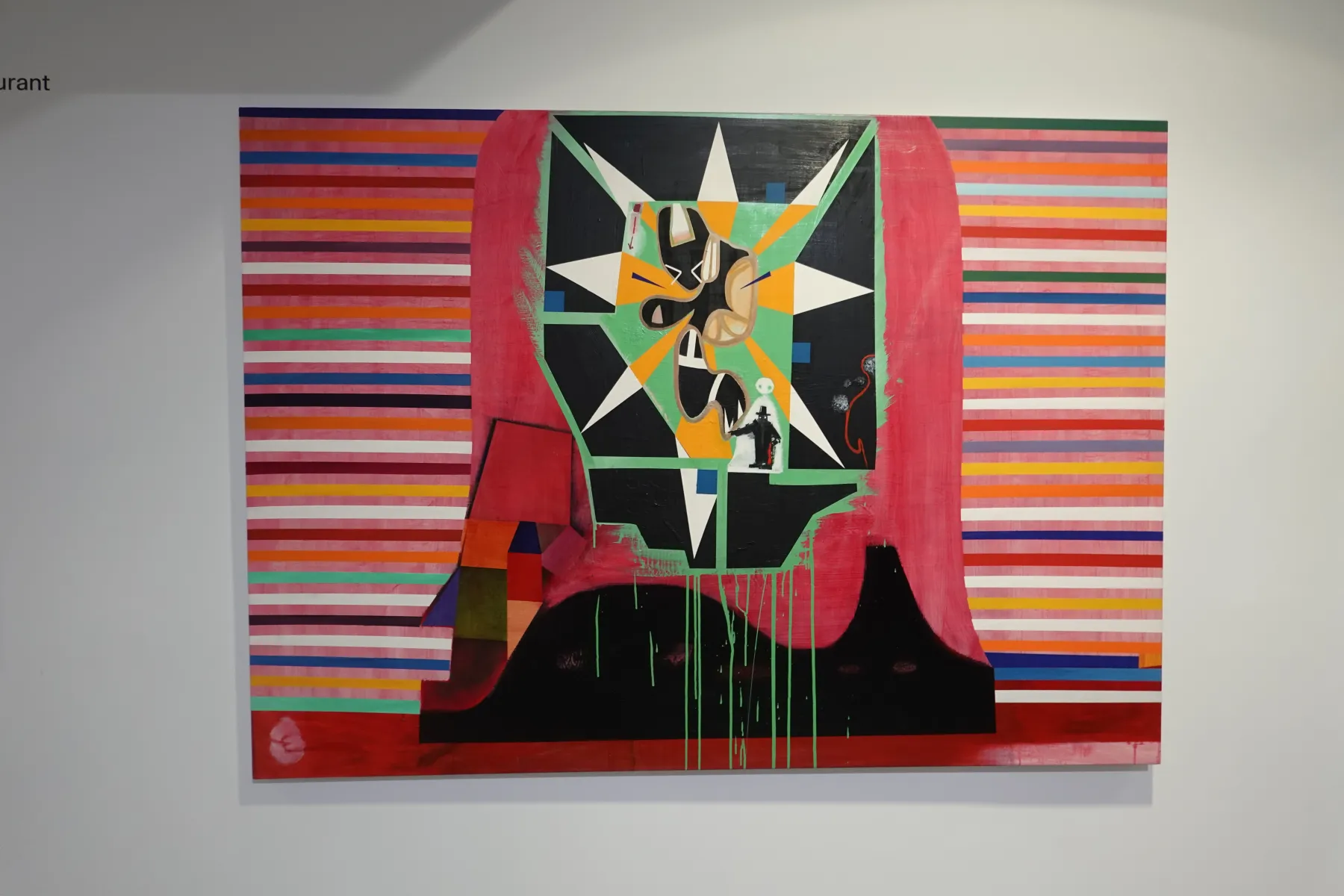
You do not need a background in contemporary art to enjoy this kind of visit. Looking for a shape, material or colour that catches your attention is enough to start, and differing reactions can become part of the experience.
Level 4 harbour views
MCA faces the water, so Circular Quay appears through the windows as you move between floors. Ferries crossing below reminded us how centrally the museum sits within the harbour precinct.
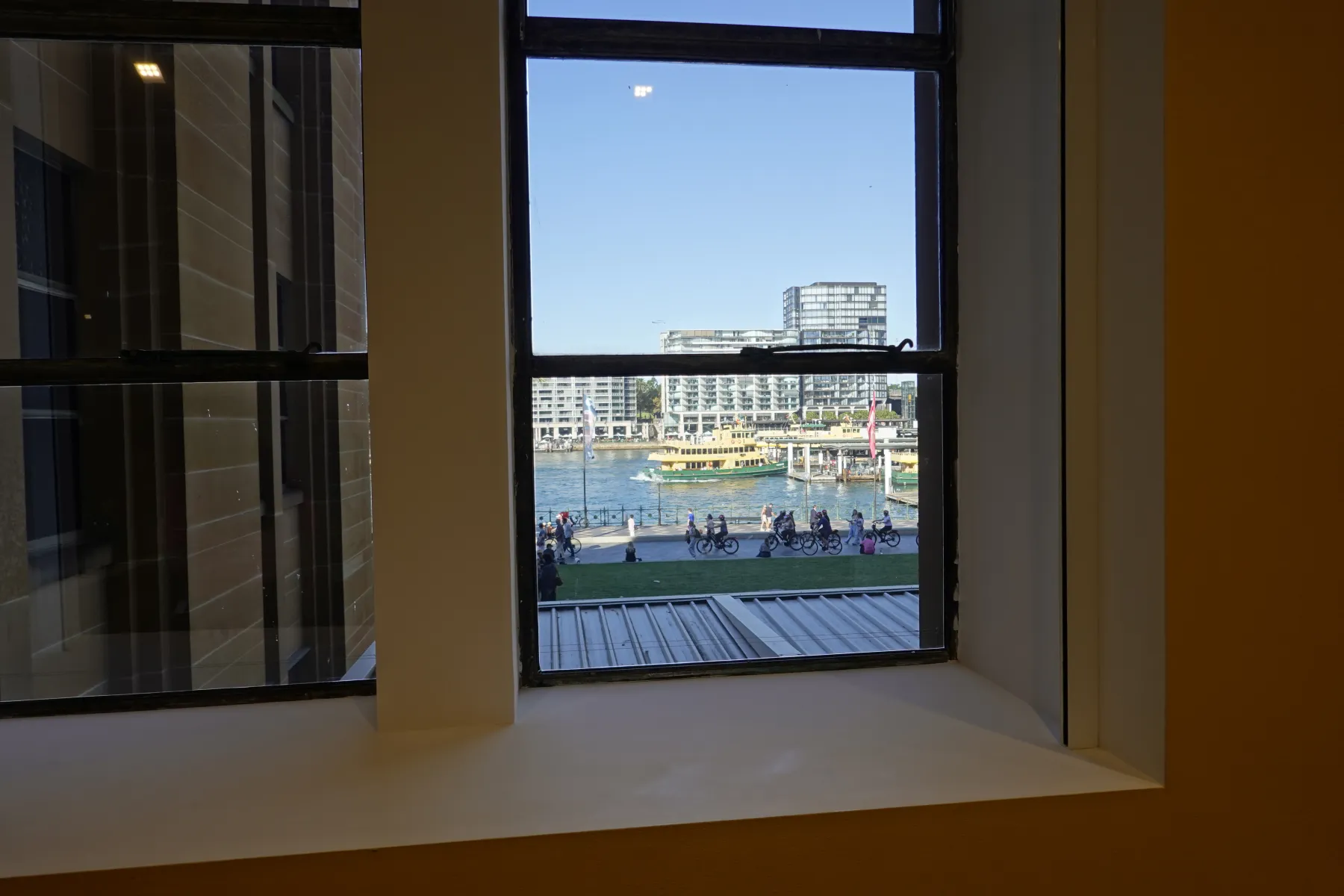
Continue to Level 4 even if you have finished with the galleries. The sculpture terrace brings Sydney Harbour Bridge into the same view as the outdoor artwork.
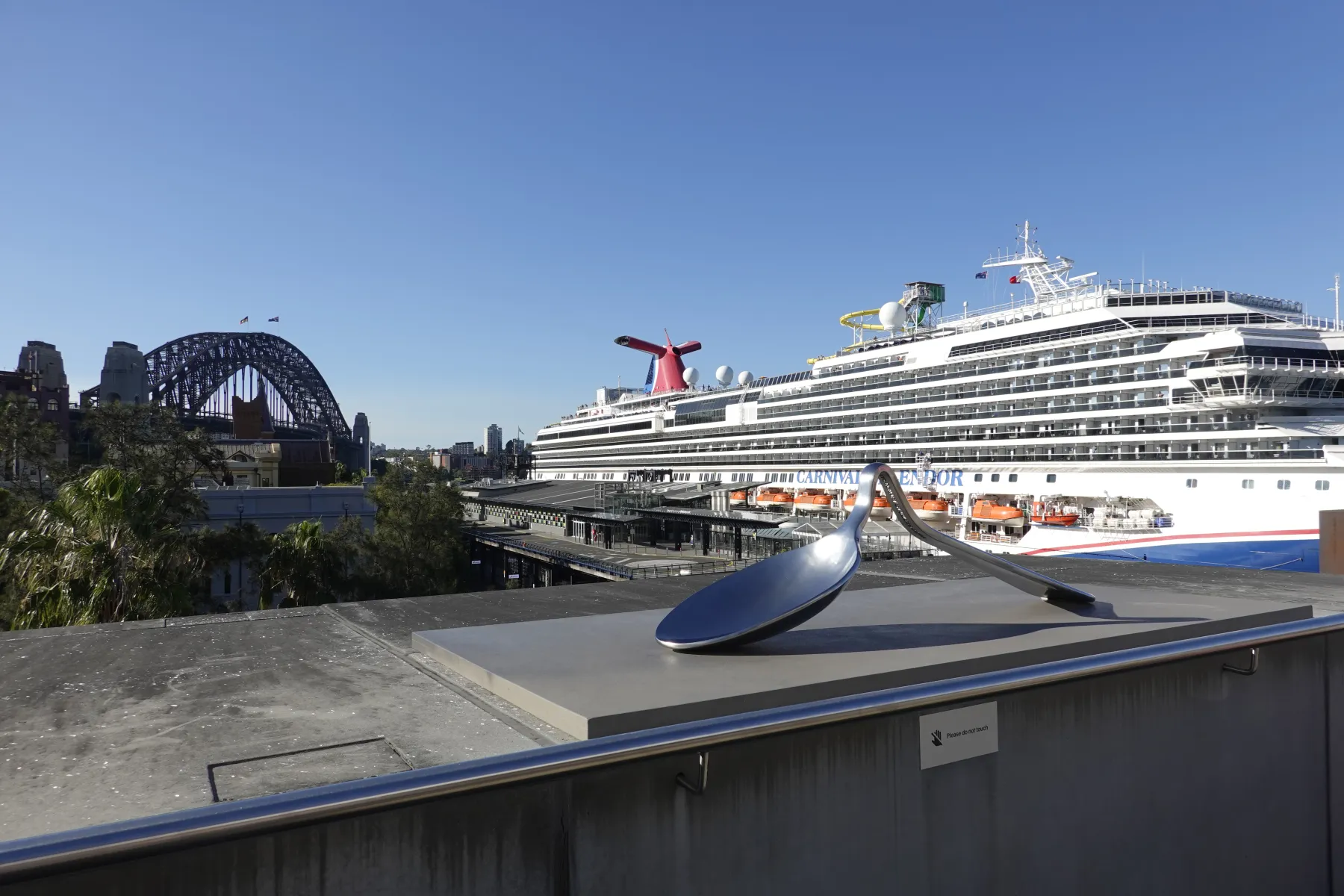
A large cruise ship can partly block the open harbour on busy days, but the elevated view still gives a useful sense of the bridge, ferry wharves and waterfront.
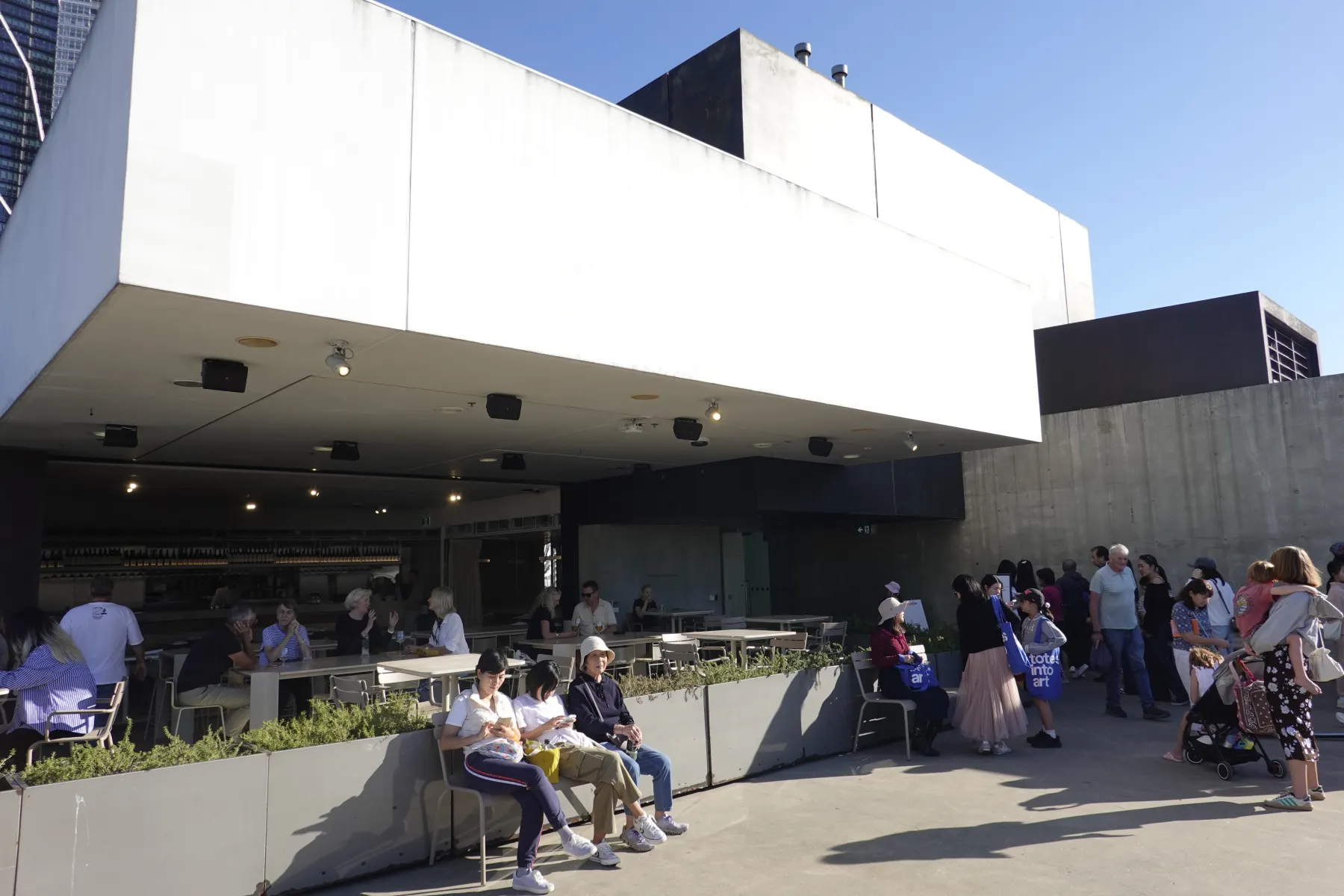
Level 4 has Canvas restaurant and terrace seating, while the museum's cafe is now on the ground floor. Even without ordering a meal, the upper level is worth checking for the view before you leave.
How to get to MCA from Circular Quay
MCA Australia is at 140 George Street, The Rocks. The museum describes it as a six-minute walk from Circular Quay, where trains, ferries, buses and light rail meet.
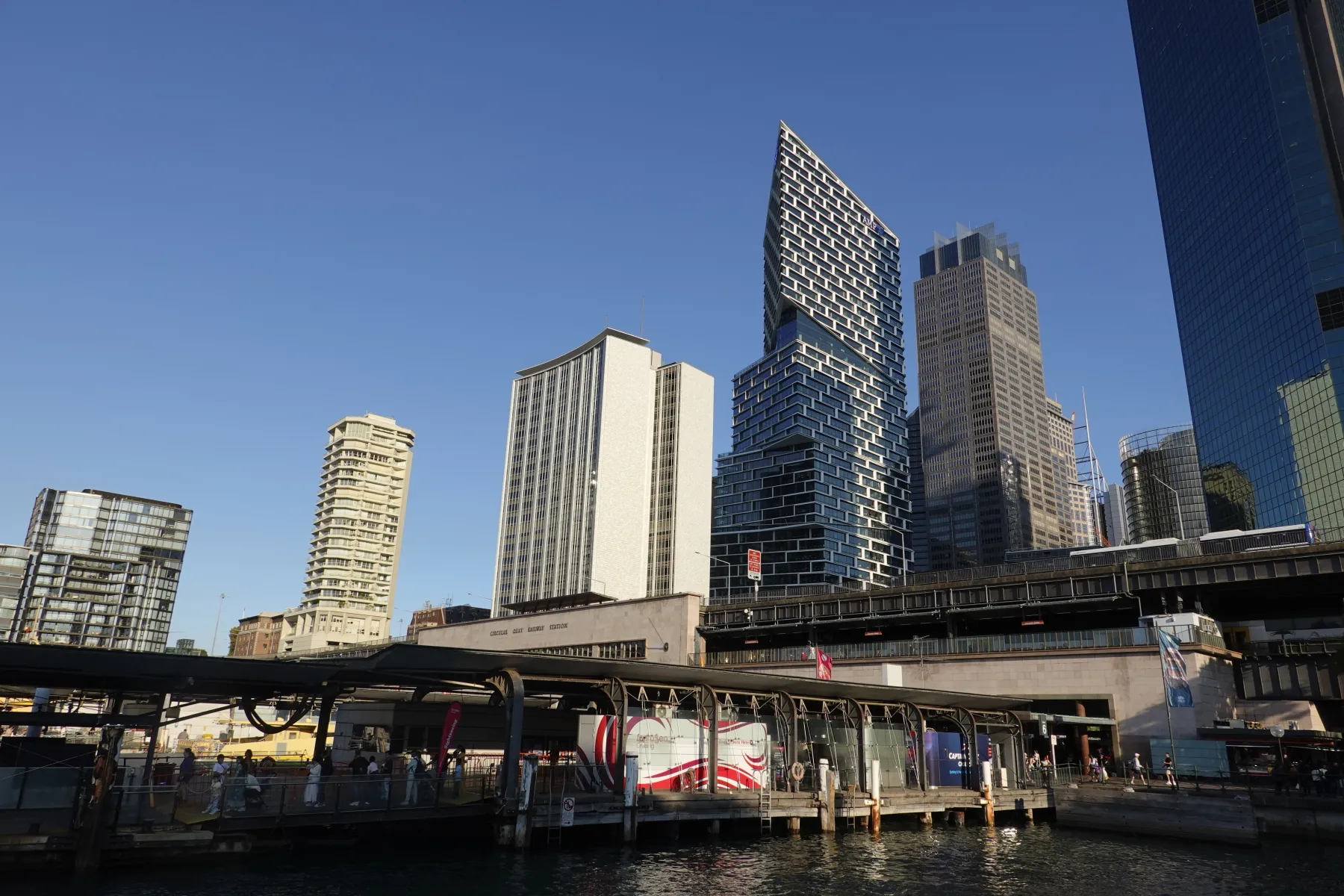
From the station or ferry wharves, walk towards The Rocks with the water on your right. The museum's heritage façade appears beyond the Overseas Passenger Terminal area.
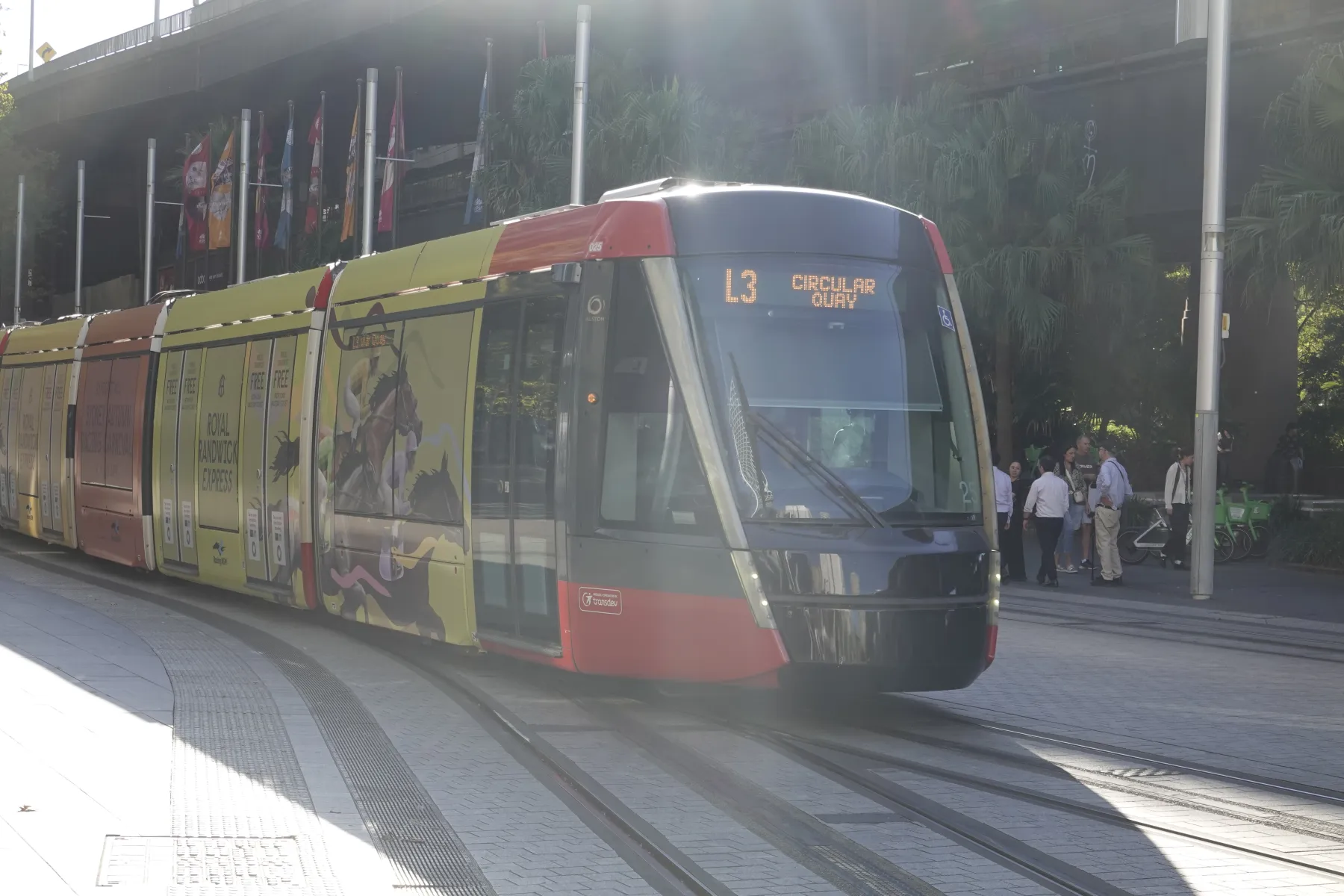
The Circular Quay light rail terminus is another convenient arrival point. If you are already exploring George Street or The Rocks, you can reach the museum on foot without returning to another transport hub.
Check the entrance and walking route on Google Maps. The Circular Quay West and George Street entrances both provide access to public areas.
Accessibility, bags and photography
All public areas are accessible by lift. Wheelchairs are available from the Level 1 information desk, benches are placed around the museum and mobile seating can be requested. Accessible toilets are on Levels 2, 3 and 4.
The cloakroom is on Level 1. Umbrellas need to be left there or kept inside a bag, and backpacks should be cloaked, carried by hand or worn on the front to protect the artworks.
Photography was allowed in the galleries we visited. MCA visitor material also says photography is allowed, but individual exhibitions, works and events can impose restrictions. Read the signs and ask a host before photographing when the conditions are unclear.
- Book the ticket type that includes the exhibitions you want to see.
- Avoid Tuesday unless it is a public holiday and the museum confirms opening.
- Bring a card or phone for payment because the venue is cashless.
- Use the lifts and request a wheelchair or mobile seat if needed.
- Cloak large items and keep backpacks away from artworks.
- Check photography signs in each gallery.
- Go to Level 4 for the harbour view before leaving.
What to do after the museum
We crossed Circular Quay after the galleries and walked towards the Opera House. The waterfront route made it easy to see the building from a distance before approaching the roof shells.
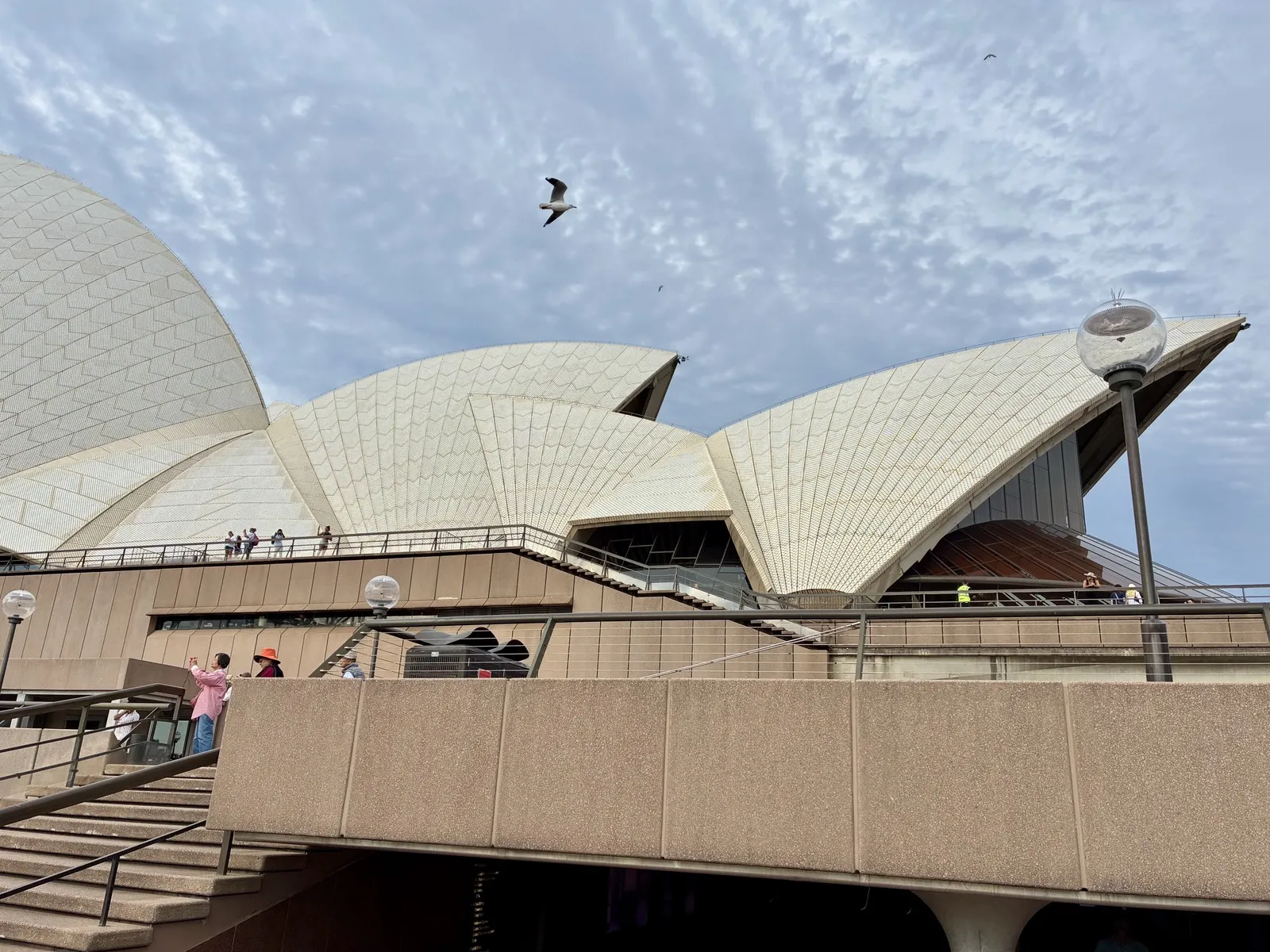
If you want to go inside rather than only see the exterior, our Sydney Opera House guided tour review explains the English option, check-in, stairs and the rooms we entered on our own tour.
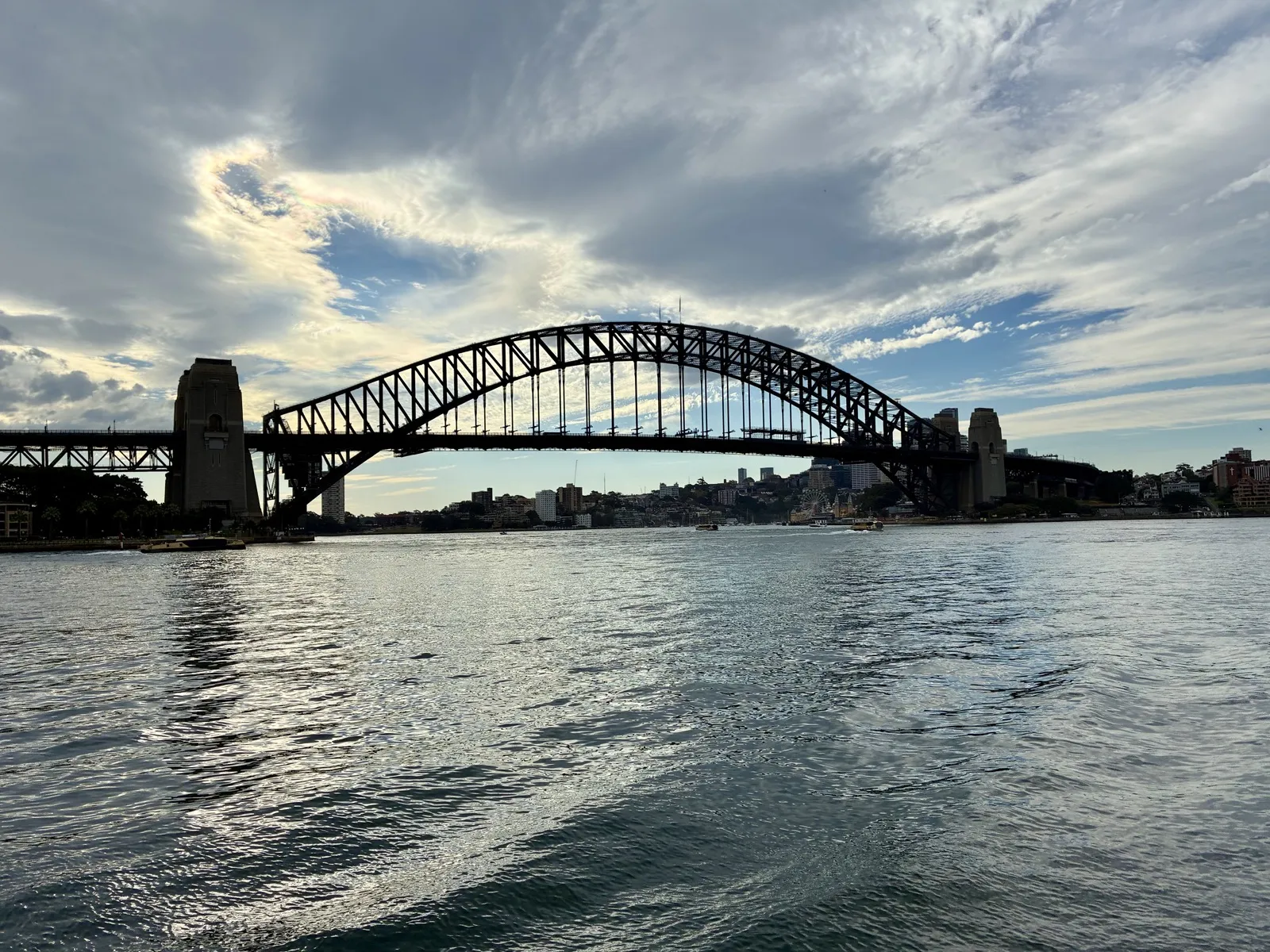
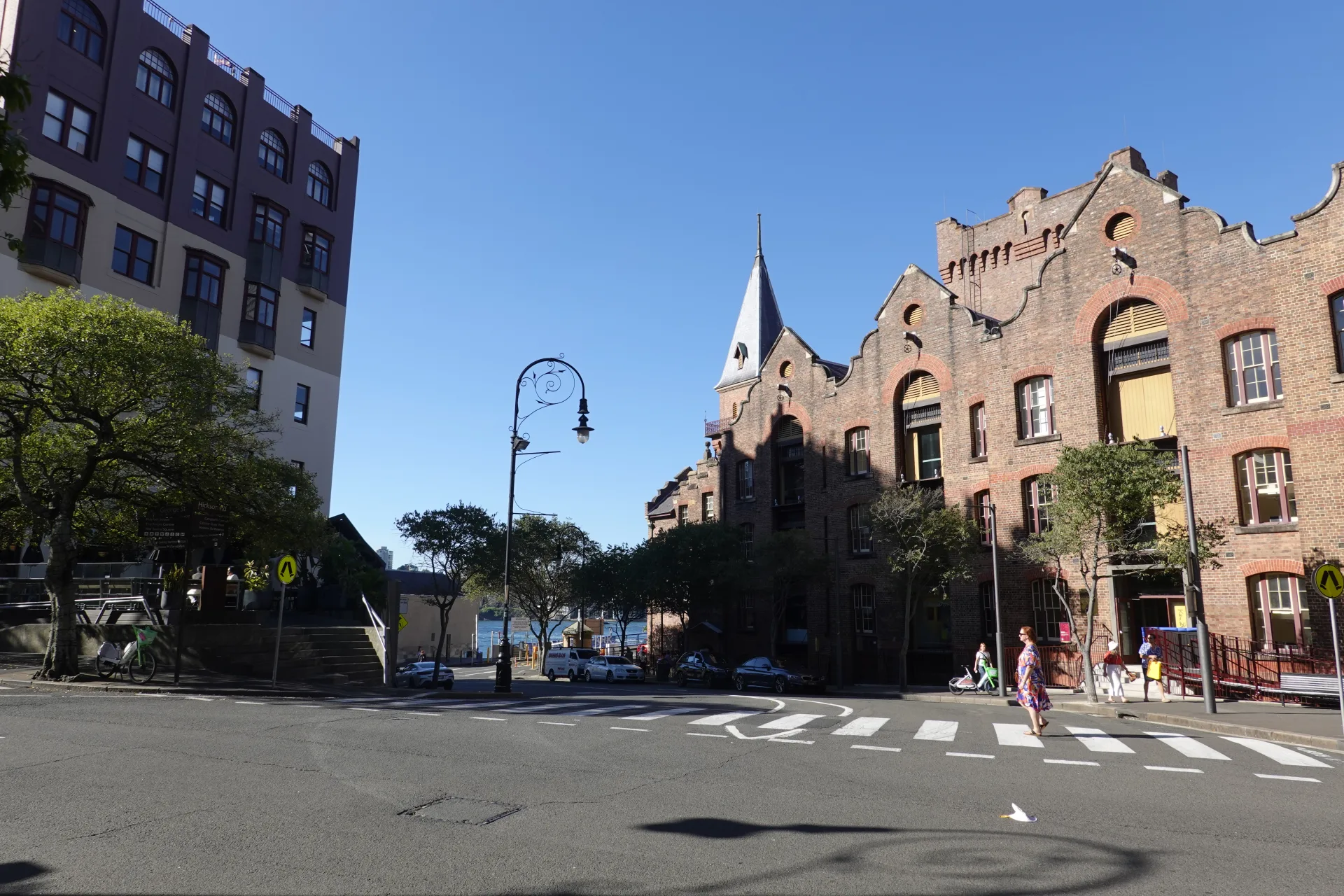
Looking back towards The Rocks brings Harbour Bridge into view. Our The Rocks walking guide continues through the historic streets beside the museum.
A Sydney Harbour sightseeing cruise instead shows the museum precinct, bridge and Opera House from the water if you have another open afternoon or evening.
Returning to central Sydney
After a short waterfront walk, we headed inland and took a bus back towards Hyde Park. Routes change, so check the stop and live destination in a journey-planning app rather than copying our exact bus.
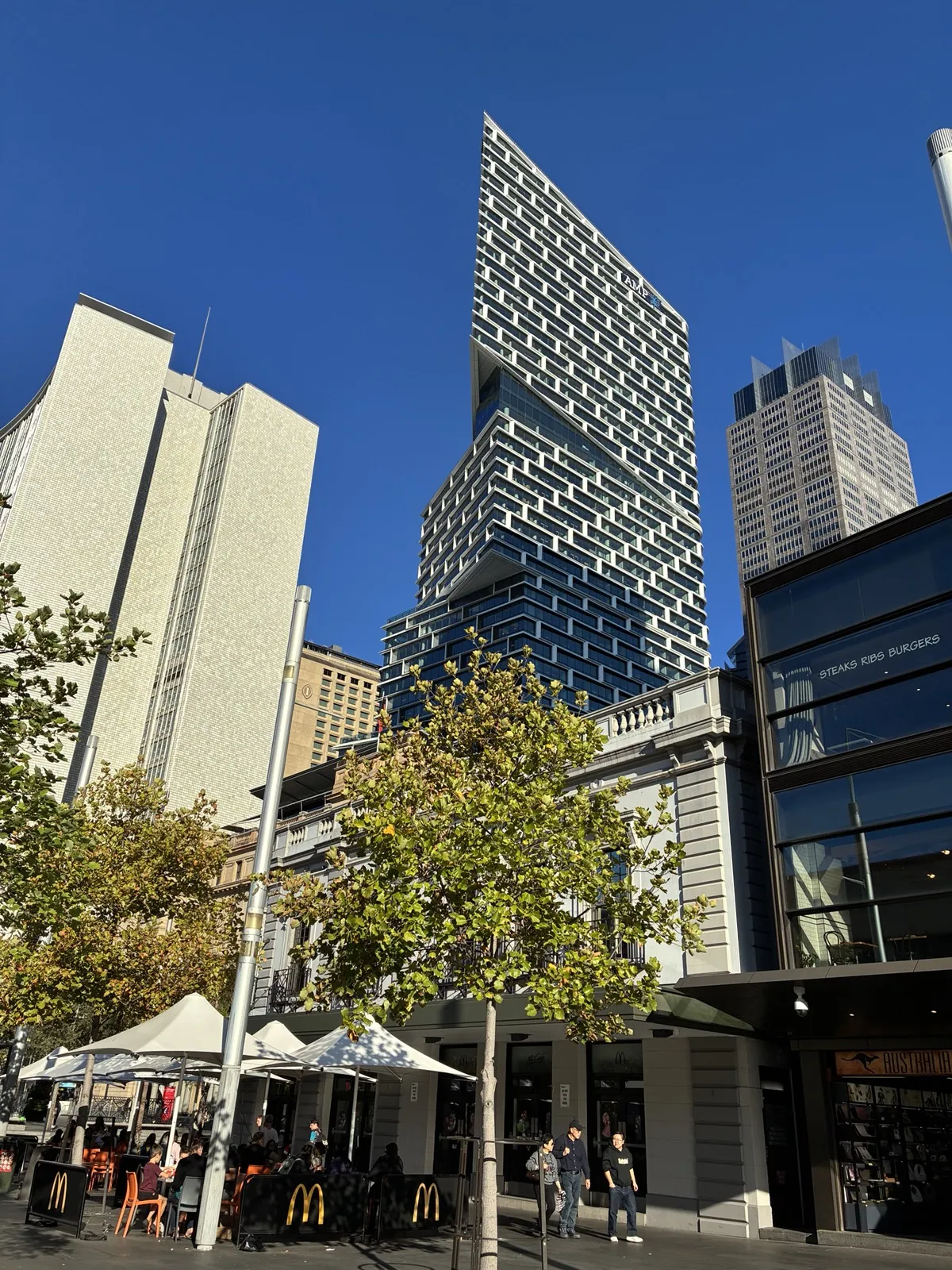
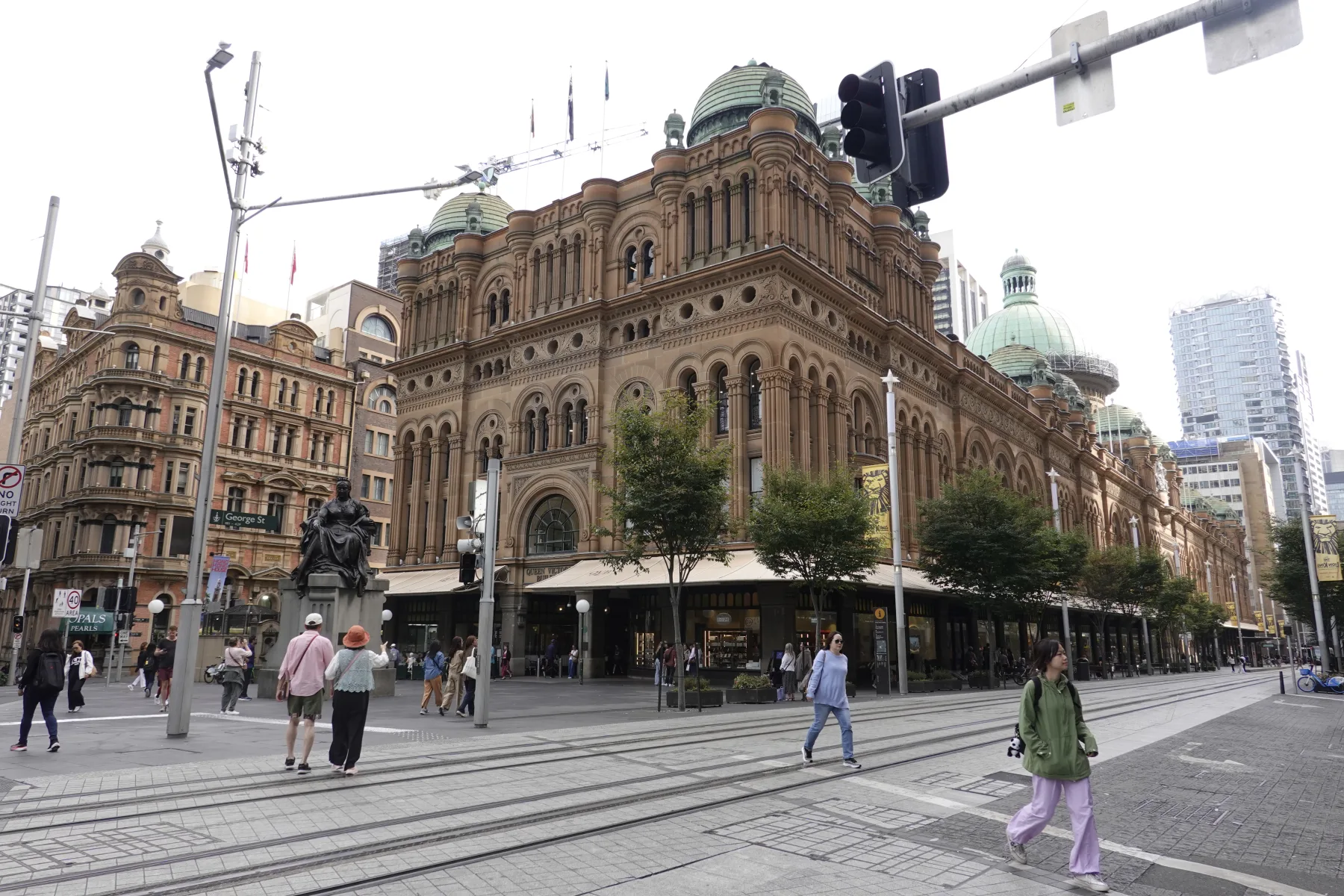
The walk to the stop carried us from the harbour into a streetscape of older façades and modern towers. It became a final short piece of sightseeing rather than simply a transfer.
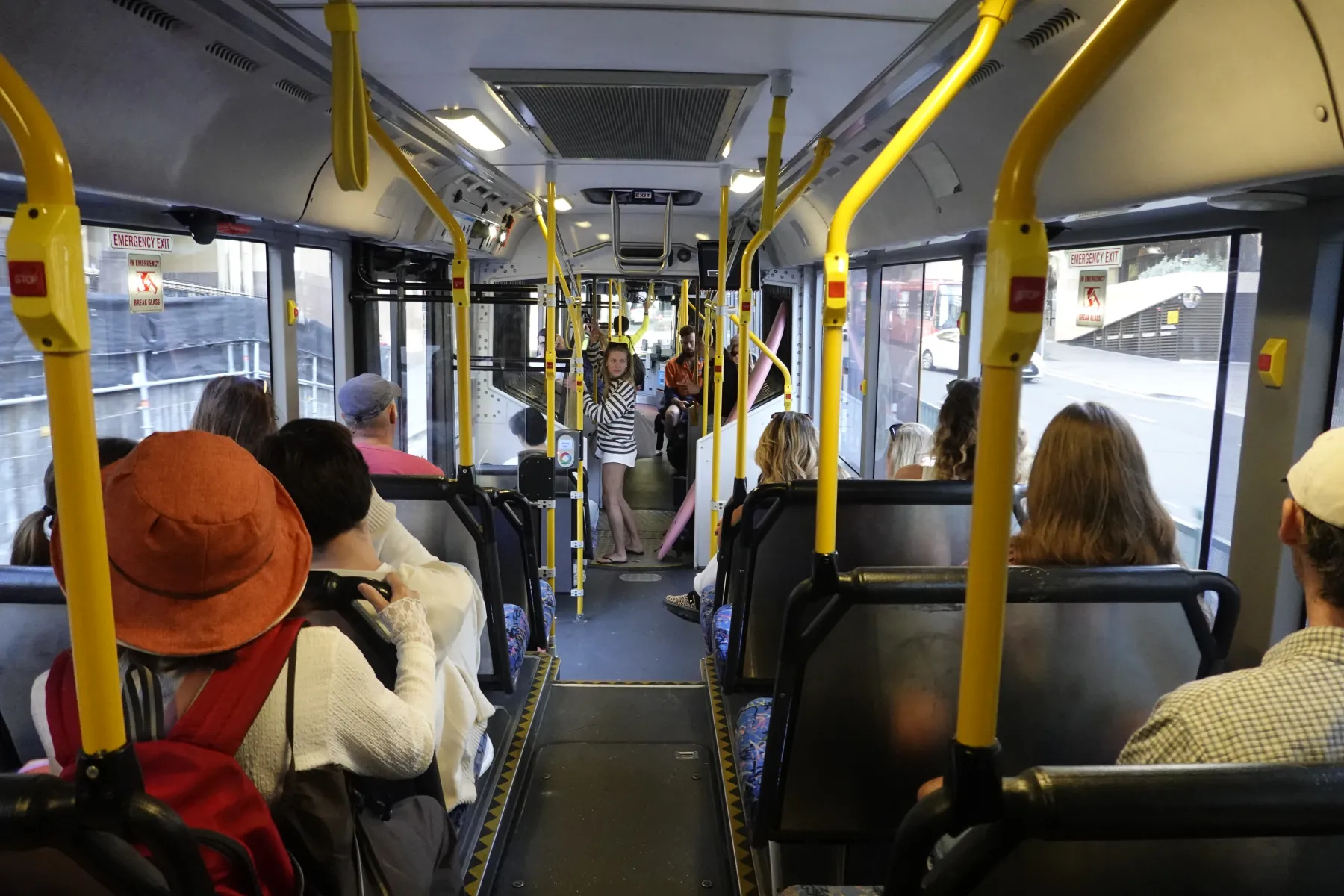
Sydney buses accept contactless cards and devices. We tapped the same payment method when boarding and leaving, then returned to Pullman Sydney Hyde Park on the opposite side of the park.
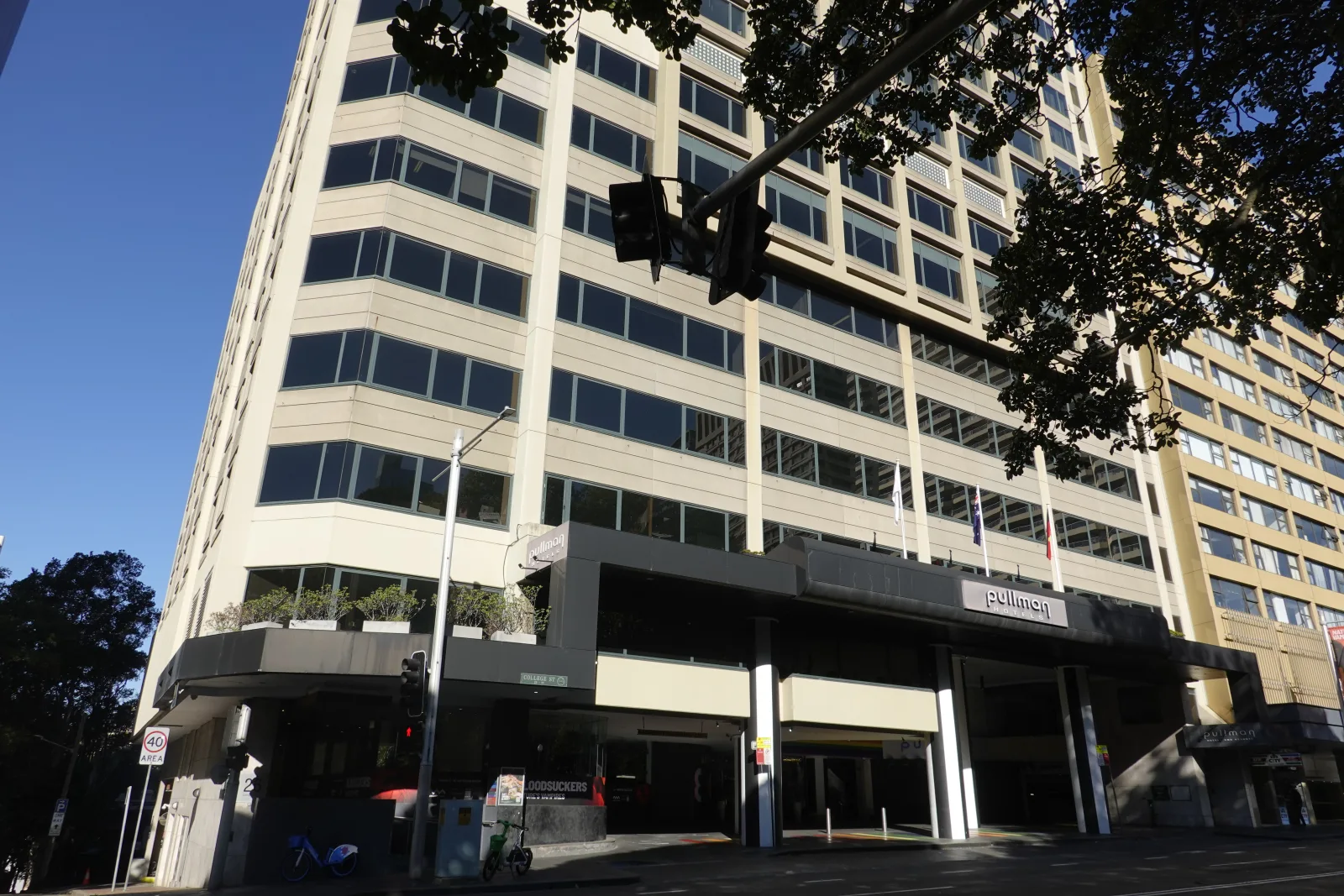
Our full review covers the room, bath, rooftop pool and transport around the hotel. It may help if you want to stay near Hyde Park while keeping Circular Quay within a straightforward bus ride.
Frequently asked questions
Is the Museum of Contemporary Art Australia free?
MCA Australia currently describes museum entry as ticketed, while visitors under 18 and MCA members receive free entry. We visited on a Telstra Free Day in April 2026, but that was a special event rather than the normal daily arrangement. Check the official ticket page for the price and exhibitions on your date.
What are the MCA Sydney opening hours?
MCA Australia currently opens 10am–5pm on Monday, Wednesday, Friday, Saturday and Sunday, and 10am–9pm on Thursday. It is normally closed on Tuesday, although the museum says it opens on public holidays that fall on a Tuesday. It is closed on 25 December.
How do you get to MCA Australia from Circular Quay?
The museum says it is a six-minute walk from Circular Quay. Walk towards The Rocks from the train station, ferry wharves or light rail terminus; the museum is at 140 George Street beside the harbour.
How long should you spend at MCA Sydney?
Allow about 90 minutes to two hours for several gallery floors and the harbour views. Add more time if you book a major exhibition, stop at the cafe or restaurant, or prefer to read each label closely.
Can you take photographs inside MCA Australia?
Photography was allowed in the galleries we visited, and the museum's visitor material generally permits it. Restrictions can apply to particular works, exhibitions or events, so follow the signs and ask a host when unsure.
Summary
MCA Australia combined a varied contemporary-art visit with one of the easiest elevated views around Circular Quay. Its position between The Rocks and the harbour made it simple to add without crossing the city again.
Check the current ticket and exhibition choices, avoid a normal Tuesday closure, and leave enough time for Level 4. The terrace, ferries and bridge gave our family a memorable finish even after we had left the final gallery.